All Posts in Archive

July 2, 2016 - Comments Off on Day one of the Senate’s deliberation on PECB

Day one of the Senate’s deliberation on PECB

A two day meeting took place on Wednesday and Thursday i.e. June 29-30 respectively where the Senate Sub-Committee overlooking the Prevention of Electronic Crimes Bill 2016 deliberated with civil society actors, social media activists and internet service providers, on the many issues within the draft.

This post is the first of a two part series on the proceedings of the meeting.

On Wednesday, the parliamentary panel looked into amending the different clauses that will hurt the cause of human rights in Pakistan. Freedom of expression, social media and the different punishments that are to be meted out were put on the table.

Osman Saifullah Khan chaired the meeting which was also attended by Digital Rights Foundation Executive Director Nighat Dad.

The problem of there being no balance was brought up during the meeting. A multitude of sections were discussed during the meeting and the stakeholders present gave their input as to what should be changed and what should be omitted.

Senator Farhatullah Babar who was also present on the occasion said that the bill required more clarity. He questioned the impact that the bill would have on the flow of information and freedom of expression. He also highlighted that data protection and safeguards to personal data are an issue that needs to be remedied.

The committee placed under consideration Section 19 which talks about offences against the dignity of the natural person.

NayaTel CEO Wahaj-u-Siraj was of the view that other laws already deal with this issue and this clause should be omitted from the bill. He also said that the clause could be used to abuse power and curb freedom on social media. The committee said that the proposed punishment for the section i.e. fine and imprisonment, also needed to be revisited.

Senator Mohsin Khan Leghari said that citizens also needed protection and the bill was failing to provide. It. Senator Shibli Faraz highlighted the ignorance that is prevalent in Pakistan and said that the laws need to be developed in a manner so that they could benefit the average Pakistani.

While the committee said that the clause should be kept because it would play an important role, they also acknowledged that it needed major amendments before it could be allowed to go through.

The committee also looked into Section 22 which has to do with spamming. It was observed that laws against spamming exist in many countries, however, it should not be criminalized.

Here Nighat Dad pointed out that the bill had no protection for whistle blowers or those who leaked information with public interest in their mind. The FIA official present was adamant that anyone giving out information was committing a crime, irrespective of their intent. Officials responded to a question by Babar by saying that the spamming had to do with commercial and marketing spamming and not unsolicited communication.

They advised that the imprisonment should be removed, however, the fine penalty should be retained. During the next meeting, a comparison of EU and Singaporean law will also be brought to the table to see what improvements can be made to the PECB.

For Section 21, which deals with cyber stalking, the committee recommended that the content of the bill be tightened for better clarity.

July 2, 2016 - Comments Off on PTA powers on censorship, Data Protection and Privacy become focal point on Second day of PECB consultation at Senate

PTA powers on censorship, Data Protection and Privacy become focal point on Second day of PECB consultation at Senate

The meeting of the Senate Standing Committee on Information Technology’s Sub-Committee on the PECB continued on Thursday, June 30 and was rife with discussion on data.

The problems pertaining to data sharing and data protection took centre stage with all stakeholders trying to come to consensus as to what should be done. The question of whether the Pakistan Telecommunication Authority (PTA) and PEC itself require the powers that are being allotted to them was also brought up.

Once again, Osman Saifullah Khan took his position as the chair and was joined by other senators at the session.

Section 39, which has to do with international cooperation was brought up during the meeting. This section allowed the government to share information with spy agencies and foreign governments.

Senator Farhatullah Babar said that the section was flawed and made him feel vulnerable. He questioned why the government could provide his information and details to any country or agency without any safeguards in place to ensure that the data was not mishandled or misused.

He also asked what guarantee there was to ensure that the investigation officer would not use the data to manipulate, harass or extort another person.

The Digital Rights Foundation proposes that this section needs rules and procedures for its implementation. It should not be the prerogative of the Pakistani government to share any information with another government without due processes.

Section 38, which has to do with confidentiality of information, also came under discussion. The committee pointed out that the ministry needed to ensure that the seized item and their data remained protected.

The officials present said that a proper channel would be used to share data under international cooperation law. The blanket authority being granted to the PTA as per section 29 was questioned by both the civil society and the committee members.

Civil society said that the clause should be deleted because of the privacy violation of the entire internet users in Pakistan. However, Senator Osman Saifullah said that in a country like Pakistan this is not possible and we need to look for a middle ground solution.

In response to that, Senator Farhatullah Babar mentioned that if ISPs need to retain internet users data they need to include judicial oversight and only retain data of criminals and terrorists once they have reasonable suspicions.

Even to retain data for those criminals they need a judicial warrant and follow procedure mentioned in the Fair Trial Act. Dad also pointed out that while larger ISPs could afford the cost of retaining so much data, smaller ISPs would not be able to do so. Ultimately, the burden of that cost will be thrown to the average user who will end up paying a lot more for their online presence.

As an advocate of privacy our organization is of the view that there is no evidence to support the assertion that data retention leads to a decrease in terrorist activities.

Research has demonstrated that many countries have rejected data retention, including Austria, Belgium, Greece, Sweden, Germany, Bulgaria etc. Serious crimes continue to exist in these countries, and they continue to tackle them without data retention that hurts civil liberties. This clause should be omitted as it violates the right to privacy.

Section 34, which gives powers to PTA to block anything they want, also came under discussion. For a little background readers should know that PTA’s ability to block content at will is already being challenged in court.

The civil society present said that it should be removed but some of the senators said that deletion is not a proper solution and some powers should exist. They proposed that these powers be not added to this legislation and instead the PTA act should be amended to include these powers.

However, this solution is facing resistance because of the lengthy process involved.

Members of the civil society also asked that Section 10 be removed from the bill. The section has to do with cyber terrorism.

Dad said that there is no need for this section when the entire section already exists in the Anti Terrorism Act 1997 and the section is 11 W.

Apart from this it was also mentioned that this section mentions a 14 year penalty, whereas the ATA only mentions 6 months. So an offline act of terrorism, which includes many things, only 6 months are mentioned but for online terrorism act they are mentioning 14 years of imprisonment.

The reason for pointing this out was to highlight that there is a replicability between laws and there is a lack of consistency. Why can’t they implement existing legislation instead of making new ones, Dad questioned.

Dad further said that amendments need to be made to existing legislation to include new provisions that are needed - there is no agreed definition of cyber terrorism globally, she explained and further asked how it would be defined in Pakistan.

It is also disheartening that repetitions and provisions that are glaring examples of what should be removed from the bill are being allowed to only go through 'amendments' by the sub-committee. Despite the civil society stakeholders having submitted their recommendations and highlighting how this law could backfire later, redrafting has been restricted to actions that are simply not enough.

The speculations that civil society actors were not prepared and didn't submit formulations is incorrect. Farieha Aziz from Bolo Bhi read out many alternative formulations of clauses at the meetings.
DRF believes that civil liberties should not a be a casualty in the name of security and the fight against terrorism under such legislations. Pakistan should set a good precedent by enacting a cyber crime law that is a balance between security and human rights

May 17, 2016 - Comments Off on Senators Commit to Stopping The Cyber Crime Bill

Senators Commit to Stopping The Cyber Crime Bill

L-R: Farieha Aziz (Bolo Bhi), Senator Farhatullah Barbar (PPP), Senator Afrasiab Khattak (ANP), Nighat Dad (Digital Rights Foundation)

L-R: Farieha Aziz (Bolo Bhi), Senator Farhatullah Babar (PPP), Senator Afrasiab Khattak (ANP), Nighat Dad (Digital Rights Foundation)

ISLAMABAD: Digital Rights Foundation and Bolo Bhi held a consultation today on the Prevention of Electronic Crimes Bill 2015, on the day that it was set to be discussed by the Pakistani Senate, in Islamabad.

Legislation that protects citizens from cybercrime and terrorism is needed more than ever, provided that a fair and progressive balance is struck between security and liberty. The Prevention of Electronic Crimes Bill does not meet that balance - rather than protect the rights of Pakistani citizens as its authors and supporters claim, its passage will in effect criminalise freedom of expression, and put the privacy of Pakistani citizens at risk.

The aim of the consultation was to provide Senators, parliamentarians, members of civil society organisations and the media with the context of the process behind the PECB, and to discuss the problematic provisions and amendments that have been suggested in the most recent versions. Senators and Members of the National Assembly gave their thoughts on the process, and expressed their concerns and opinions on how the Senate would treat the PECB when it would be debated in the Senate. Senators Farhatullah Babar (Khyber Pakhtunwa-PPP), Shahi Syed (KP-ANP), Chairman of the Senate Standing Committee on Information Technology and Information, and Rubina Khalid (KP-PPP), also a member of the Senate Standing Committee on IT, participated in the discussions on the PECB, as did other lawmakers.

Senator Farhatullah Babar reiterated that the PECB should be subject to a true public hearing, to allow for experts in IT and law to discuss and examine the Bill. Senator Babar also stressed that proper public oversight is necessary, as is a strong balance between security and civil liberties.

L-R: Senator Rubina Khalid (PPP), member of the Senate Standing Committee on IT; Senator Shahi Syed (ANP), Chairman of the Senate Standing Committee on IT

L-R: Senator Rubina Khalid (PPP), member of the Senate Standing Committee on IT; Senator Shahi Syed (ANP), Chairman of the Senate Standing Committee on IT

Senator Rubina Khalid expressed the concern that the language of the PECB as it currently exists would be used for not just political victimisation, but religious victimisation. Senator Khalid also recounted how the PML-N government had taken advantage of the National Assembly walkout by the PPP in order to push through the PECB. Senators Khalid and Babar also stressed that the PPP has a clear stance that they will not pass the Bill in its current form, and that the Bill was in such a state that it did not deserve to be amended, but to be rebuilt from the ground up, with proper input from multi-stakeholders.

Senator Shahi Syed said that the Senate would not pass the PECB in its current form, and that a public hearing on the Bill would be organised, to allow the public to take part in the process.

MNA Syed Ali Raza Abidi (MQM)

MNA Syed Ali Raza Abidi (MQM)

Raza Ali Abdi (MQM) echoed these sentiments, saying that all efforts to push for change in the National Assembly by MQM have been exhausted, and now the responsibility lies with the Senate to scrap the PECB and start over.

All lawmakers present at the consultation agreed that rather than one faulty bill like the PECB, separate coherent and thought-out bills are required that focus on cybersecurity, cybercrime and cyberterrorism independently. It was also agreed upon that the development and implementation of strong privacy protection mechanisms – to protect Pakistani citizens, their privacy and freedom of expression – was urgently required. Iqbal Khattak, a journalist and member of Reporters San Frontieres (Reporters With Borders) echoed this statement, criticising the current lack of legal protections of legal protections regarding personal data, if said data is handed over to the authorities for any reason.

Senator Farhatullah Barbar reading the latest legal analysis of the PECB, prepared by DRF, Privacy International and Article 19 DRF

Senator Farhatullah Babar reading the latest legal analysis of the PECB, prepared by DRF, Privacy International and Article 19 DRF

Saroop Ijaz of Human Rights Watch agreed, making the important point that to date the PECB has been framed in the context of security – when we look at the Bill, he said, its failings regarding privacy and human rights must be flagged and urgently discussed.

Participants agreed that while comprehensive and well-researched cybercrime legislation is required, the PECB is not that legislation, not as it currently exists. The Bill needs to be redrafted from scratch, subject to a public hearing, and then legislation that truly reflects the concerns and input of multiple civil society stakeholders can be crafted that protects the citizens of Pakistan, but not at the cost of their privacy and freedom of expression. Digital Rights Foundation hopes that the Senate fulfils the commitments that they had made today, to ensure that any future cyber crime legislation reflects these concerns, and will working with Senators to ensure that this is the case.

IMG_2191

May 15, 2016 - Comments Off on Stop The Bill! DRF + Bolo Bhi Consultation on the Prevention of Electronic Crimes Bill

Stop The Bill! DRF + Bolo Bhi Consultation on the Prevention of Electronic Crimes Bill

The PECB is now on its way to the Senate. Stop the Cyber Crime Bill!

With the onset of the digital age, legislation that protects citizens from cybercrime and terrorism is needed more than ever, provided that a fair and progressive balance is struck between security and liberty. The Prevention of Electronic Crimes Bill does not meet that balance - rather than protect the rights of Pakistani citizens as its authors and supporters claim, its passage will in effect criminalise freedom of expression, and put the privacy of Pakistani citizens at risk. The Bill has attracted criticism from Pakistani and international observers and rights organisations, including the UN Special Rapporteur on freedom of expression, and from members of the opposition in the Pakistani National Assembly. This has not stopped this flawed legislation from being passed by the NA Standing Committee on IT, however, on April 13, 2016, with more than 90% of MNAs not present. The fate of the PECB now rests with the Senate.

On Tuesday, May 17, 2016, Digital Rights Foundation and Bolo Bhi will hold a consultation with the Senate of Pakistan, on the Prevention of Electronic Crimes Bill, to tackle the bill and stop it from being law. Join us!


May 10, 2016 - Comments Off on Pakistan: A top malware destination?

Pakistan: A top malware destination?

% of Malware Infections Worldwide in 4Q2015. Courtesy of Microsoft.

% of Malware Infections Worldwide in 4Q2015. Courtesy of Microsoft.

Microsoft released its annual Security Intelligence report in the first week of May, covering the last half of 2015, from June to December. This report, now in its 20th volume, examines and breaks down what the Seattle-based tech company calls the “threat landscape of exploits, vulnerabilities, and malware using data from internet services and over 600 million computers worldwide”. According to the company, Microsoft looks as upwards of at least “10 million attacks” a day – nearly half of which originate in Asia.

To gauge which countries are the biggest targets for malware, Microsoft gathers the data from global computer systems that run its security software in real-time, reporting all incidents of malware attacks, regardless of success penetration or not – this metric is referred to Microsoft as the "encounter rate". Another metric used is the "Computers Cleaned per mile" or CCM, which is defined as the number of “computers cleaned for every 1,000 unique computers executing the Malicious Removal Tool (MRST)”, a free tool Microsoft uses to clean or remove over “200 highly prevalent or serious threats from computers.

Infection & CCM Graphs, indicating malware attacks in 4Q2015, regardless of success or otherwise

Infection & CCM Graphs, indicating malware attacks in 4Q2015, regardless of success or otherwise. Courtesy of Microsoft.

Utilising the "encounter rate" and CCM metrics, what Microsoft found was that the countries that were most under threat from attempted malware attacks last year were Bangladesh, Palestine, Nepal, Indonesia, and Pakistan. They found that while the worldwide encounter rate and CCM by the end of the last quarter of 2015 were 20.8% and 16.9% respectively, Pakistan experienced a 63% encounter rate, and a CCM rate of 71.3%. The three most common forms of malware attacks that Pakistani computer systems were experiencing by the end of the last quarter of 2015 were:

  • Worms, “encountered by 35% of all computers”, marking an increase from 25.6 in the third quarter of 2015;
  • Trojans “encountered by 25% of all computers”, marking an increase from 23.3 in the third quarter of 2015;
  • Viruses “encountered by 11.6% of all computers”, marking an increase from 8.5 in the third quarter of 2015.

The Microsoft Security Intelligence (MSI) report on Pakistan, which breaks down what these numbers mean for users, can be downloaded here.

PLATINUM Threat

In addition to malware, the MSI report also covers the history and activities of a targeted activity group (TAG) that it has codenamed PLATINUM – a group that has garnered concerned interest due to its “aggressive, persistent tactics and techniques as well as its repeated use of new zero-day exploits to attack its targets.”

TAGs are generally opportunistic, with no fixed geographic target profile or attack strategy per se, looking globally. Much like other TAGs, PLATINUM shares an interest in stealing very sensitive intellectual property “related to government interests”. Where PLATINUM differs, however, is that unlike many other groups, it appears to have a specific geographic focus, in this case South and South-East Asia. Making use of “zero-day exploits” (where an attacker makes use of vulnerabilities in a computer system to exploit the system and networks) and “spear phishing” (target-specific phishing attacks), PLATINUM has targeted “governmental organizations, defense institutes, intelligence agencies, diplomatic institutions, and telecommunication providers.”

According to the MSI, PLATINUM has been able to carry out several “espionage campaigns” going back to 2009, making use of custom software tools and techniques to access their desired data, and then in turn make efforts to delete any trace of their “infection tracks.” The length and breadth of their activities, not to mention their focus on state data, could indicate either funding and support from a state actor, or a private group funding for the same reason. More information can be found on PLATINUM, and its troubling implications for national security mechanism in South Asia and South-East Asia, can be found here.

Keeping the entire blog in account, the best practice for everyday internet user would be stay safe in every way possible. Basic human practices such as changing passwords frequently and not clicking unknown links would benefit in a larger scale

There are concerns that we have with this report by Microsoft, however, which users should note: the report does not make mention of malware attempts on other major operating systems such as Apple's OSX, or Linux. The lack of mentions of Linux is especially important, as a growing number of governments are looking to move away from proprietary OSes such as Windows, and towards open source alternatives – usually modification of Linux distributions - that can be tailored to be more stringent and with less bloat present.

Microsoft itself has come under fire in recent years, due to its heavy retention of, and demand for user data – which this report is itself is heavily reliant on – present in Windows 10, gathered via data collection from a number of input devices and services, such as: location, camera, microphone, speech, inking, typing, account info, contacts, calendar, messaging, radios, devices, feedback, diagnostics, and background apps. These demands, as well as the keylogger built into Windows 10, put the private data and security of users at risk, and conversely make systems running on Microsoft products much more appealing to malware operators.

The findings of the report, however, do have merit: to be as safe as possible, it is important that all internet users implement best practices to safeguard their security, especially at a time when malicious attacks are evolving. Simple techniques such as changing passwords frequently, not clicking on unknown and suspicious links, and keeping systems up to date are just some of the small steps that users can take to defend themselves.

Written by Adnan Chaudhri

May 7, 2016 - Comments Off on The peculiar timing of NA’s decision to release Cyber Crime Law’s final draft

The peculiar timing of NA’s decision to release Cyber Crime Law’s final draft

Despite having passed the Cyber Crime Bill on April 13, 2016, the National Assembly made little to no efforts to disseminate the document anywhere. The Bill did not make an appearance on the official website and had till now eluded the general public.
May 7th, 2016 was chosen as the lucky day when the document was finally released - and the decision to pick this date is no accident. By stalling for this long the NA has ensured that no actual criticism or debate could take place within public domains. Why the NA felt the need to hide the bill from public scrutiny is a question that really needs to be asked right now. Had it been released before there would have been a healthy debate for a long enough time before the next Senate session which begins on May 9th and ends on May 20th.
Had an actual debate taken place it would have really helped the cause of the public and civil society organizations. The Bill still has the potential of being stopped when it goes to the Senate floor. Why the government is hell bent on approving a version of the bill that will be problematic for years to come is another question that we must ask. It has become painfully obvious that the government has no interest in investing any of its time in ensuring transparency when it comes to the process of law making - or any other process for that matter.
A law is no joke, undoing, repealing or amending parts of any law is a herculean task. Such efforts have historically not gone over well. If this Bill is allowed to go through then we can welcome in a new era of censorship and tyranny.
To take a better look at what the law entails and how it's about to hit the public hard, go to the following link: National Assembly's approved Cyber Crime Bill

April 30, 2016 - Comments Off on Know a country where women can get killed for using mobile phones

Know a country where women can get killed for using mobile phones

A man stabbed and killed his 16-year-old sister on Wednesday because she was using a mobile phone. While to some the very idea may sound ludicrous, to many Pakistanis this is just another day.

Technology related instances of violence are not scarce in Pakistan, although many are not reported. The case is the most recent example of women paying the price for using digital tools such as cell phones, laptops or computers.

Hayat Khan, the 20 year old in question, threw the body out of his house in plain sight. His sister breathed her last as neighbours scrambled to help. While the Digital Rights Foundation condemns the incident and finds the behavior of the brother in question absolutely repugnant, we also know that such kind of cases are nothing unique. 

Media has reported that Khan had asked his sister who she was talking to on the phone. When she responded that it was none of his business she paid the price with her life. Khan said that he had originally intended to only scare her with a kitchen knife but somehow ended up killing her instead. While he claims that he feels immense grief, the fact that he chose to throw his sister outside the house instead of finding her medical help tells another story.

Already, the father of the girl has said that he has forgiven his son for his crime. Interestingly, the police has made itself the complainant in this case so that the relatives of the victim cannot forgive the assailant. Many a times, men who have committed murders in the name of honour killing go scot-free because the family officially pardons them. Moreover, in other cases blood money is offered in return for freedom - and it is currency that is widely accepted. Under the legal loopholes present in Pakistan's laws women have lost their lives repeatedly under the guise of honour. 

In Pakistan, women’s access to technology can lead to violence. Our work through our Hamara Internet project has helped alert us to many such cases where use of technology endangered a young woman’s life. In 2013, two sisters were killed in Gilgit because a video of them playing in the rain was leaked - the assailants included their step brother who felt that they had dishonoured the family.

In another case, a woman asked her  husband to kill her for 'honour' after a video of her an another man getting intimate was released. The incident took place in February in Khyber Pakhtunkhwa. The husband turned himself in and told the authorities he felt no regret or shame over his actions because his wife had told him to restore his honour by ending her life. Whether the woman truly did ask for her own death can never be ascertained for sure.

We have come across many instances of young women fearing for their lives over reasons entirely out of their control. In cases of blackmail, online harassment, and even revenge, there is a higher likelihood of families taking action against the victims instead of supporting them.

Examples where use of technology has led to a woman's death are countless. Who should know this better than us. However, this culture of blaming the victim has to end - this culture of violence against women needs to be stopped - and it is high time we started taking women’s access to technology and information as their fundamental rights, and not privilege.

The question we must ask ourselves is this: how many more women need to die before using something as mundane as a mobile phone stops being controversial? How many more will be blackmailed, harassed, and yes, killed, before women's existence in digital spaces is acceptable? The time is now to right back against patriarchy and the time is now to reclaim online spaces.

April 14, 2016 - Comments Off on The Prevention of Electronic Crimes Bill 2015 Conundrum – Major Documents

The Prevention of Electronic Crimes Bill 2015 Conundrum – Major Documents

Though many do not yet realise it, April 13 was a dark day in the history of digital rights for the people of Pakistan. The Prevention of Electronic Crimes Bill (PECB) 2015 was passed by the National Assembly despite a lack of quorum. The processes through which the bill was created lacked representation of key stakeholders. In its current form the Bill is set to serve the interests of those who rule, instead of serving the interests of the common Pakistan.

The following documents contain important information about the Bill:

Minister of State for Information Technology Anusha Rahman's statement on the objects and reasons behind PECB2015. While the statement highlights the many reasons that new legislation is needed, it fails to address the many shortcomings of the present bill.

These are the amendments that were entered into the PECB as drafted on February 16, 2016. What stands out is that the amendments on display have all been pushed forward by Ms. Anusha Rahman, Pakistan's IT Minister.


March 19, 2016 - Comments Off on “Why is security for women a threat to many?”

“Why is security for women a threat to many?”

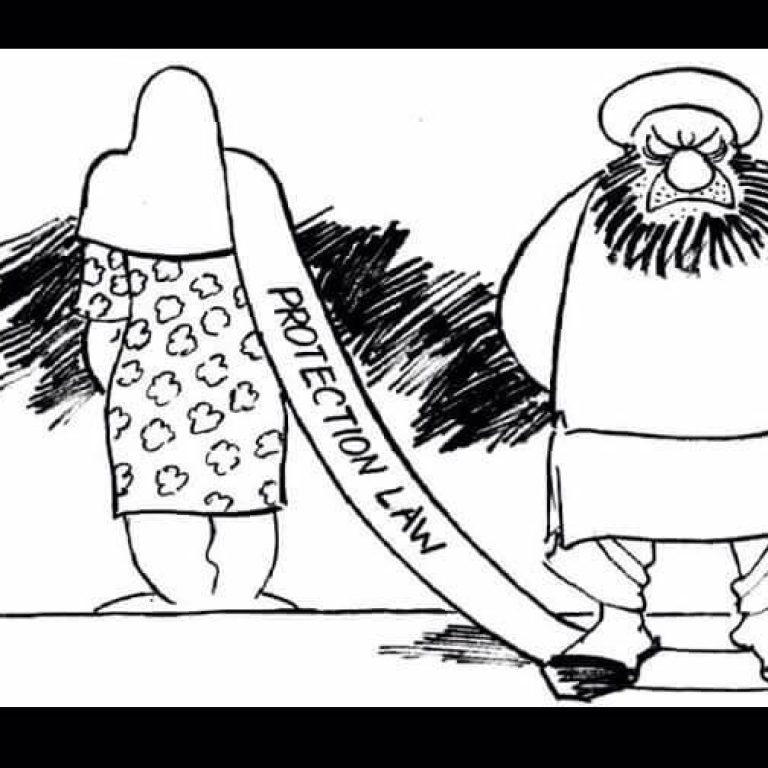
Long before activists and organizations could begin scrutinizing Punjab’s Women’s Protection Act, they found themselves instead having to fight for its very right to exist.

The law, which essentially helps protect women from abuse in domestic scenarios, has been collectively spoken against by almost all the religious parties that are part of our social fabric. Numbering at a staggering 35, the parties - the leadership for which is unsurprisingly and predominantly made up of men - have termed the legislation un-Islamic and said that it would result in the collapse of the family system in Pakistan.

Despite the fact that the law is only provincial in stature, it has resulted in a backlash that has extended itself to the entire country. At present, the chaos just may extend itself to the Khyber Pakhtunkhwa bill which is currently being worked on.

The religious groups, in a joint statement said that the law would make matters worse for women instead of helping them:

“This controversial law to protect women was put into operation to accomplish the West’s agenda to destroy the family system in Pakistan,” it read.

The main question that we must ask is how a law that is meant to help women remain safe from domestic, psychological and sexual violence will result in the collapse of the family system in the country. The opponents of the Act, which consist of not just the religious parties but also regular people, fail to mention how allowing a woman space for safety in her own home can lead to the destruction of her family.

Jamiat Ulema-e-Islami leader Maulana Fazlur Rehman himself has attacked the law and said that it would make men insecure and turn Pakistan into a western colony again. This begs the question: is a Pakistani man only as secure in his marriage, as his chappal on his wife’s face? Can he not build a relationship through love and respect? What many are effectively doing is opposing the rights that are being allotted to women to secure their own bodies against harm that comes from the people closest to them. By saying that the law will lead to the collapse of the family structure in Pakistan, what the religious right is really saying is that a family cannot exist unless a man has the right to abuse his wife in numerous ways.

And what the religious right is at present engaging in nothing short of extortion. The “give us what we want or we revolt” tactic is akin to blackmail. The reason for this is simple: the law was not imposed on the people of Punjab, it was passed through due democratic process. It cannot and should not be undone over the whims of a few. With this we also need to revisit our own mentality as a nation. Why is it that anytime violence is committed against women there is deafening silence, but when efforts are made for the betterment of women there is great outcry. The assertion that all pro-women efforts are western agendas is the very reason that Pakistan is seen as a backward country. The very religion that is being used to call the Violence Against Women Act un-Islamic has several provisions that require the protection and care of women - do we now see those too as western?

We must return the right of safety and security to women. They deserve to have control over their lives and exist without fear. They too deserve to feel free and avoid both physical and mental abuse.

What threatens the Pakistani family structure is not a tool for protection but the very mindset that is opposing it. Instead of encouraging the Act and investing efforts into stronger marriages that are based on love and respect, the religious right is saying that tactics of fear and intimidation are wonderful substitutes.

And that is not something any of us should stand for.
Image credit: Dawn.com 

February 25, 2016 - Comments Off on Protection of Women Against Violence Act 2015 – A [shaky] step forward

Protection of Women Against Violence Act 2015 – A [shaky] step forward

Punjab’s violence against women problem is no small one. And the Protection of Women Against Violence Act 2015 is a good first step in addressing the oft ignored elephant in the room.

Punjab has had a real issue with violence against women. Data from 2014 produced by the Aurat Foundation has shown that the problem comes with big numbers. Punjab has the largest number of domestic violence cases reported of any province in Pakistan, and over 7,010 cases were reported during 2014 alone.

A 2002 study published in the Lancet showed that 99% of housewives and 77% of working women were subjected to domestic abuse by their husbands. Lack of data makes it impossible to figure out whether these numbers have reduced or worsened - but the larger picture is not a pretty one.

With this scenario in mind, the idea of the new Act is a welcome one - but for it to become a well oiled machine, there are still some problems that need weeding. In 2015 the Protection of Women Against Violence Bill was put before the Punjab Assembly, with the specific purpose of providing women in the Punjab with a form of legal protection against violence. On Wednesday, February 24, 2016, the Bill in question passed and became an Act.  

Though the Act in question does ostensibly afford women protection, it requires further serious scrutiny. It defines “violence” as:

“…any offence committed against the human body of the aggrieved person including abetment of an offence, domestic violence, sexual violence, psychological abuse, economic abuse, stalking or a cybercrime”

The bill mentions several forms of violence, and includes stalking and other cybercrimes. However, the bill fails to provide clear indications and explanations of what those terms mean and entail; in comparison, the newly added terms “economic abuse” and “psychological violence” are further elaborated upon in greater length.

But what’s a cybercrime?

It is regrettable that what constitutes as cybercrime is not clearly explained in more detail, especially in the context of cybercrime-related cases that are constantly on the rise. Cyberstalking, harassment through social media, sharing of inappropriate (and usually stolen) material, unauthorised power and access of computer systems, and the distribution of personal information belonging to other people all constitute cybercrimes; it is important that the legislation mentions this salient point, so that laypeople, women in particular, can easily understand what manner of acts can be reported, and what the penalties are.

Moreover, the bill fails to clearly mention which authority body will be looking into cybercrime, and whether it is the role of the police or the Federal Investigation Agency to take on cases relating to it. Should the Prevention of Electronic Crimes Bill (PECB) be passed, furthermore, we must examine and determine which law will supersede the other.

Complicating the matter is the fact that many cybercrime offenders - including in particular online bullying and cyberstalking - will create numerous fake social media profiles. In doing so, quickly ascertaining who is actually behind the profile, and is the guilty party sought after, before they are aware of police being on their scene, becomes more difficult.

The GPS tracker problem

The bill also utilises abstracts without clear definitions. Provision 7(d) of the bill, for instance, suggests that the defendant:

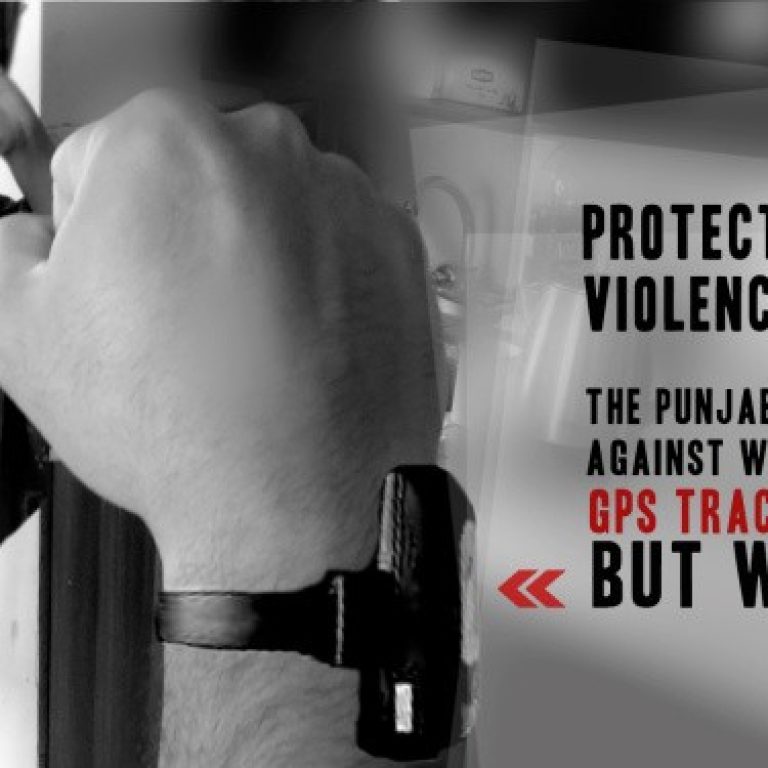
“wear ankle or wrist bracelet GPS tracker for any act of grave violence or likely grave violence which may endanger the life, dignity or reputation of the aggrieved person;"

The bill does not clarify in what is defined by “dignity or reputation.” Further to this, the wearing of an ankle or wrist GPS tracker does not to be an effective enough deterrent, especially when it comes to harassment, whether online or offline.

There is also the question of what the repercussions maybe for a wife that reports her husband and leads to him being tracked with a wrist GPS. There is the potential danger that a man may react even more violently to the social ridicule and ostracization that may come with it.   

Moreover, there are no provisions to indicate who will be monitoring on the GPS trackers. We also do not know whether Pakistan even has the mechanism or capacity to handle such a medium of monitoring someone. Who will prevent this provision from being abused and how? Will the police, which is already lacking in resources, be able to react in time to a man violating the GPS order and staying away from his victim? There are many questions that need to be posed about these trackers, and the answers are nowhere in sight.

All in all, the bill is a good first step in the right direction. Pakistan, and Punjab, desperately need protective legislation such as this one. However, no legislation should be accepted without scrutiny. And the weaknesses in this Act could pose major problems in the future. In it’s current state, it is a fabulous work in progress that requires improvements.

Have a look at the full text from the Act hereProtection Of Women Against Violence Act 2015