All Posts in Archive

April 24, 2019 - Comments Off on What Gender Based Bullying Looks Like in Pakistan

What Gender Based Bullying Looks Like in Pakistan

The Pakistani society is strictly hierarchical – power and control structured around various factors including gender, race, religion and sexual orientation. This hierarchy eventually manifests itself in online spaces as well. It then reproduces and exerts the power and control over women and minorities through technology. Technological advances and the growing use of the internet has nevertheless provided us with many opportunities to have our voices heard and stories shared beyond physical space. However, it has also resulted in the same online platforms becoming a medium for men to bully, harass, humiliate, attack, shame and silence women.

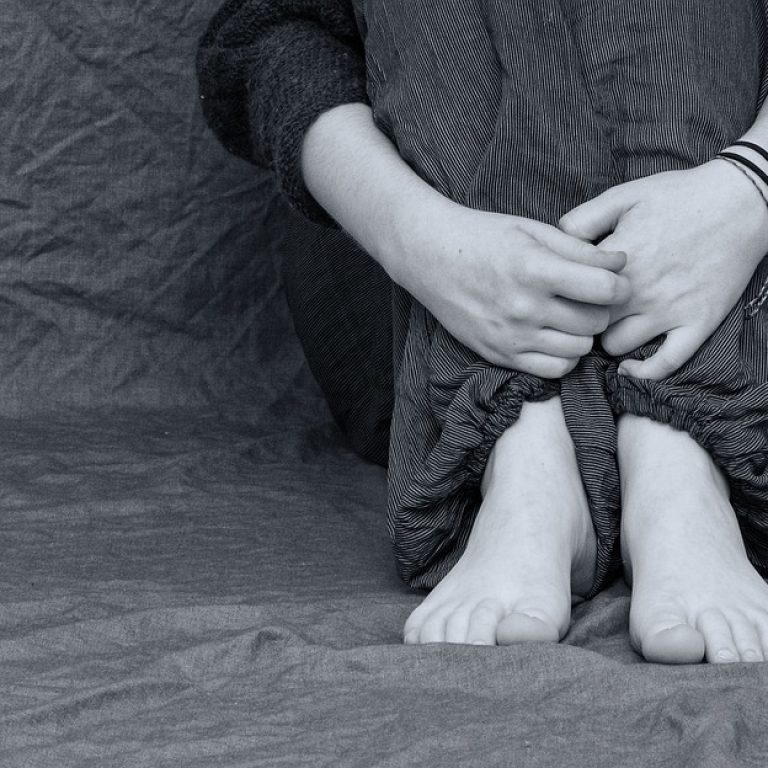
One of the cases of technology-facilitated gender based violence and bullying that we came across at our Cyber Harassment Helpline was of a girl who was targeted by a group of men online. The complainant joined a Facebook group of sport fans where she would actively engage just like any other member. The group was male dominated who started to bully her in the comments section for having an interest in sports– a stereotypically men’s interest. They trolled and abused her with gender based slurs intending to “show her the space she belongs to i.e. kitchen and/or fashion”.

However, the bullying did not stop here. They stalked her Facebook profile and not only attacked her with lewd comments and messages but also started posting her pictures in the same group with sexually offensive captions.This ordeal went on for several days and took a serious toll on the complainant’s mental health which led to her deactivating her Facebook account.

The cultural factor of toxic and hegemonic masculinity took no time in seeping into the online spaces and neither did the stereotypical gender norms and expectations. Even though the offline culture of a society shapes its online culture, but the repercussions of online bullying or harassment can be equally traumatizing and have the tendency to translate into an offline threat. This creates a vicious cycle of violence against women curtailing their visibility in online spaces.  The power dynamics in these spaces make them a lot less safer for women, however, in today’s day and age, cutting oneself from internet means cutting oneself from the opportunities and knowledge that the world brings.

Written by: Maria Arshad


April 24, 2019 - Comments Off on DRF released its report on ‘Female journalists in new media: experiences, challenges and a gendered approach’

DRF released its report on ‘Female journalists in new media: experiences, challenges and a gendered approach’

soon

Digital Rights Foundation (DRF) has launched its report on the gendered, online harassment that female journalists face in the media and how this resonates in their offline spaces in the report titled, ‘Female Journalists in new media: Experiences, challenges and a gendered approach’. The report aims to generate a much needed debate around the problems that women journalists face in the new media and how they often have to take a step back from the media due to their vulnerable position in the field.
The report records the experiences of female journalists in a qualitative manner in order to understand the kind of harassment and intimidation women face in the digital platforms due to their work. It also explains how online violence of female journalists translates into offline violence. The report talks about how there are numerous issues that women face in their field like trivialization of gendered issues by their male counterparts and limited support from media houses and institutions.
Highlighting the findings of the report, DRF’s Executive Director, Nighat Dad, notes that “It is extremely hard for women in the media to move ahead in their careers due to the gendered harassment that they face both in the online and offline spheres. Women are often the subject of criticism in the field and they are usually judged on their looks and clothing as compared to the work they do.” She adds that, “The first step towards trying to eradicate this problem of online harassment of female journalists is acknowledging that due to the emergence and more usage of digital platforms for journalism, women are subjected to gendered harassment online, as opposed to their male counterparts”.

DRF celebrates International Women’s Day

soon

On this International Women’s Day, March 8th, DRF joined Free Press Unlimited and media professionals around the world to take part in Move4Women; a global movement to show solidarity and take action in support of women in the media. To celebrate the women in the media and highlight the importance of gender equality in the media, DRF’s friends and members of the Network of Women Journalists took pictures holding posters that had captions supporting the cause. The pictures were compiled in a video and were uploaded on DRF’s social media accounts. Today and every day, DRF and its friends strive for equality of women in the media. Click here to see the video.
Also, on International Women’s Day, some of the employees of DRF also took part in the Aurat March Lahore on an individual level. Hundreds of women, including members of DRF, took to the streets in Lahore to reclaim public spaces, celebrate the struggle and movement of Pakistani women and fight for their fundamental human rights.
Among other things, the women pushed for economic justice, implementation of labour rights, access to a fair justice system, reproductive justice, rights of religious minorities, promotion of an anti-war agenda and gender equality in political participation. The March was followed by overpowering performances by talented women.

DRF acknowledged by the Foreign Minister of Pakistan on International Women’s Day

On International Women’s Day, which is celebrated every year on 8th March, the Foreign Minister of Pakistan released a message acknowledging the efforts of women in Pakistan from all walks of life. The message states that despite the social and economic challenges, women of this country have carved destinies and have shaped the future of the globe and this very nation. Nighat Dad, the Executive Director of DRF, was also appreciated for her contributions to the society through her work at DRF.  Click here to read the full message.

Nighat Dad features on The Tempest’s list of ‘40 Women to Watch 2019’

DRF’s Executive Director, Nighat Dad, was featured in The Tempest’s list of ‘40 Women to Watch 2019’, which highlights extraordinary women and femmes making waves in their industries or passions of choice. Click here to view the article and have a look at other amazing women in the list.

DRF at Asia Liberty Forum 2019, Sri Lanka

Soon

A two-day conference, Asia Liberty Forum (ALF) 2019, was held in Colombo, Sri Lanka on 28th Feb and 1st March. The Forum brought together friends of the freedom movement across Asia to discuss challenges faced by the region and to learn from one another how to most effectively advance free-market reforms. Nighat Dad attended the conference and was part of the panel discussion called ‘Challenges to Privacy in the Digital World’, where the panelists gave an overview of the legal and policy frameworks and discussed the challenges facing privacy advocacy.

Nighat Dad at Pakistan in the Digital Age conference, London

soon

On March 2nd, Nighat Dad spoke at a conference held by University College London on Pakistan in the Digital Age. A very interesting discussion took place in the context of women in the digital age, governance & policy and the economic challenges and opportunities. Ms. Dad talked about her work as an activist and the challenges she faces in this field. She also explained how she started working on issues relating to digital rights and the formation of the Digital Rights Foundation. She mentioned that when she was practicing law, she started looking into policies and legislations and found that there was nothing addressing the issues of online violence and harassment, especially for marginalized groups. That is how she started advocating for rights of people online. Geo News covered the conference. Click here to view the video.

The Role of Social Media in Journalism - a discussion on policy & regulatory context

Soon

Digital Rights Foundation (DRF), Media Matters for Democracy (MMfD) and DAI-Tabeer partnered to organize a roundtable discussion on the role of regulation and policy-making in digital, titled “The Role of Social Media in Journalism”. The event was held on March 20, 2019 in Islamabad. The roundtable was attended by new social media platforms as well as traditional media platforms, along with civil society groups and members of academia. Policymakers, including representatives from the Pakistan Telecommunications Authority (PTA), national Senate and political parties also attended the session. The aim was to foster a multi-stakeholder dialogue and generate policy-driven discussions around issues of online content regulation, media law and data protection.

Focus Group Discussion at Kinnaird College

Soon

In collaboration with Google, DRF held a focus group discussion with students of Kinnaird College, on the gendered aspect of online hate speech and aggression and the effects that moral policing and cyber stalking have on the female presence online.

Session at Bahria University

Soon

Digital Rights Foundation in partnership with UN women, conducted a session at Bahria University Islamabad. 95 undergraduate law students were in attendance. The discussion, which was kept as an interactive session, focused on harassment in general then streamlined into cyber harassment in specific, and a discussion of the prevalent laws and case laws.
The session was conducted by two trainers, one of whom was a lawyer and the other a clinical psychologist.

Session at Pakistan College of Law

Soon

Our Executive Director, Nighat Dad, conducted a session at Pakistan College of Law. The presentation included an introduction to cybercrimes and digital rights in Pakistan, as well as a comprehensive discussion on the various issues faced by victims of cybercrimes seeking justice. Since the session was designed for law students, the focus was primarily on the legal and procedural aspects of the existing laws, and prospective amendments in the area of cyber regulation. The session was attended by at least 90 students and remained an interactive discussion throughout.

DRF at Lahore Grammar School, Phase 1 DHA

school training

On March 22, DRF conducted a session at Lahore Grammar School, Phase 1 DHA branch on cyberbullying and digital rights. Representative of DRF, Ms. Jannat Fazal, talked about the rising cases of cyber harassment due to more usage of social media. She explained the students about digital rights and how they can take various measures to protect themselves in the online spaces.

Members of Network of Women Journalists for Digital Rights continued to pen blogs

Soon

Members of DRF's Network of Women Journalists for Digital Rights continued to share articles and blogs on digital rights issues which can be found on the Hamara Internet website here. The Network advocates for women and other minority groups to have safe access to online platforms, where they can exercise their constitutional right of free speech without facing constant threats. The Network members pen articles to document these threats, bring forward issues in the implementation of legislation to prevent and protect women journalists from gender-based discrimination and sexual harassment both online and offline and also advocate their access to effective remedies.

March 29, 2019 - Comments Off on Digital Rights Foundation launches report on Female Journalists in new media: Experiences, challenges and a gendered approach

Digital Rights Foundation launches report on Female Journalists in new media: Experiences, challenges and a gendered approach

Digital Rights Foundation (DRF) has launched its report on the gendered, online harassment that female journalists face in the media and how this resonates in their offline spaces in the report titled, ‘Female Journalists in new media: Experiences, challenges and a gendered approach’. The report aims to generate a much needed debate around the problems that women journalists face in the new media and how they often have to take a step back from the media due to their vulnerable position in the field.

The report records the experiences of female journalists in a qualitative manner in order to understand the kind of harassment and intimidation women face in the digital platforms due to their work. It also explains how online violence of female journalists translates into offline violence. The report talks about how there are numerous issues that women face in their field like trivialization of gendered issues by their male counterparts and limited support from media houses and institutions.

Highlighting the findings of the report, DRF’s Executive Director, Nighat Dad, notes that “It is extremely hard for women in the media to move ahead in their careers due to the gendered harassment that they face both in the online and offline spheres. Women are often the subject of criticism in the field and they are usually judged on their looks and clothing as compared to the work they do.” She adds that, “The first step towards trying to eradicate this problem of online harassment of female journalists is acknowledging that due to the emergence and more usage of digital platforms for journalism, women are subjected to gendered harassment online, as opposed to their male counterparts."

According to DRF’s findings most women are excluded from press clubs because of their gender and are usually subjected to criticism by their families and society if they want to move ahead in their careers. The report also mentions the impact of cyber harassment on women in the media and how women usually end up self censoring or leaving the media because of being subjected to criticism by the public.

DRF also has recommendations to the state, media houses, civil society and press clubs in the country and how these spaces need to be more inclusive and adopt an approach to protect women if they are subjected to abuse or harassment online.

Digital Rights Foundation is a registered research-based advocacy non-governmental organization in Pakistan. Founded by Nighat Dad in 2012, DRF focuses on ICTs to support human rights, inclusiveness, democratic processes, and digital governance. DRF works on issues of online free speech, privacy, data protection and online violence against women.

March 7, 2019 - Comments Off on What is a Helpline and When You Should Call One:

What is a Helpline and When You Should Call One:

In order to deal with the problems that accompany today’s highly digitalized age, the Digital Rights Foundation has initiated a Cyber Harassment Helpline. This helpline aims to guide the people and provide emotional support to people of Pakistan through any obstacles they may be facing, whether big or small.
Here are a couple of frequently asked questions to clear any doubts that you might have about our helpline and helplines in general.

What is a helpline?

A helpline is a telephone service, which offers advice and aid to people of all ages and gender status. Helplines aim to provide an non-judgemental listening ear to any caller who is facing trouble and address them with the best possible path they can take in ending their concern.

Why call a helpline?

We are all well aware of the multitude of challenges that people face daily when it comes to the digital world. Often times you need guidance to help us navigate through the obstacles you face. You may not feel comfortable sharing them with family or friends out of fear of being shunned or criticized, and that is okay. This is where public helplines comes in.

Helplines can be very valuable to you due to the free support that they offer. Not only are most helplines free, but certain helplines also guarantee 100% confidentiality. Trained agents listen to any issue you face, albeit emotional or otherwise, and guide you in the best way possible, customized specifically to your individual needs. If further aid is necessary, agents will point you in the right direction and get you in touch with those aids closest to you.

Is a helpline only for life threatening situations?

Contrary to popular belief, a helpline does not exist solely in the case of life threatening situations. For example, our Cyber Harassment Helpline is available in case of any form of help or information an individual may need regardless of whether the issue is incredibly pressing or not.

You may call on behalf of yourself as well as on the behalf of others you may feel are in need of help. The help line is also available as a source of emotional counseling to those facing distressing situations. However, if we do feel that your issue is out of our hand we will direct you to other professionals who will be able to better help your case.

Can DRF’s Cyber Harassment Helpline only help me through phone?

The Cyber Harassment Helpline not only provides help through the means of our number 0800-39393 from 9am to 5pm, but you may also email us at helpdesk@digitalrightsfoundation.pk if needed.

What problems can I call a helpline for?

Our helpline services cover a wide range. The agents at the helpline will try and assist you with all forms of digital crime, such as:

  • Impersonation/Fake accounts
  • Blackmailing
  • The contraction of malicious software known as malware which harms data and devices
  • Social media hacks and spamming
  • Cyber stalking
  • Cyber bullying etc

If you are going through a similar situation, need advice or just someone to talk to, don’t hesitate to call on 0800-39393 between 9am to 5pm.

March 7, 2019 - Comments Off on February 2019: DRF launches Ab Aur Nahin – a legal portal for survivors of harassment and abuse

February 2019: DRF launches Ab Aur Nahin – a legal portal for survivors of harassment and abuse

DRF is proud to launch it's latest venture Ab Aur Nahin which is a legal portal for survivors of harassment and abuse. The portal aims to help individuals stand up against abuse and help bring us closer to achieving our goal for creating safe spaces everywhere. The portal has a network of lawyers from across Pakistan who will be providing legal assistance to victims of abuse and harassment. The portal comes in light of current #MeToo movement in Pakistan and the growing number of cases of harassment that DRF has been receiving. Click here to read the details about the portal.

DRF releases a Policy Brief on Online Harassment in Pakistan

Policy Brief

In view of the increasing problem impacting all users especially women online, DRF has prepared a policy brief regarding online harassment through a gendered lens. The policy brief significantly expands the discussion on legal remedies available to the victims of online harassment and the lack of awareness regarding Information and communication technologies amongst masses. Click here to view the policy brief.  

Nighat Dad at ‘The Conversation’ held at IBA, Karachi

IBA, Karachi hosted an event for the BBC titled, ‘The Conversation’ where Nighat Dad also took part as a panelist. The panel also consisted of Pakistan’s football captain Hajra Khan, actress Mahira Khan and a comedian Faiza Saleem. The panel discussion was moderated by Kim Chakanetsa where the panelists probed into the challenges, frustrations and joys of being a woman in Pakistan. Ms. Dad, talking about DRF’s cyber harassment helpline, discussed that around 60 percent of the people that call for help comprise of women facing blackmail and dealing with sexual assault issues. She addressed the audience and highlighted the necessity of speaking up about mental health issues and cautioned them about the safe usage of social media and the internet. Click here to listen to the whole session.

DRF at ‘Imagine a Feminist Internet South Asia’, Sri Lanka

Sirilanka

Jannat Fazal represented DRF at ‘Imagine a Feminist Internet South Asia’ held in Negombo, Sri Lanka on 21st and 22nd February. The two-day regional conference brought together researchers, practitioners and policymakers from across South Asia for critical conversations seeking to answer the question: What opportunities does technology provide to question and, ultimately, start changing gender norms? The event focused on sharing research and findings around making a feminist internet.

DRF conducted series of seminars on “Fostering Open Spaces in Pakistan: Combating Gender-Specific Threats to Women's Activism Online”

The DRF team conducted a series of advocacy seminars entitled “Fostering Open Spaces in Pakistan: Combating Gender-Specific Threats to Women's Activism Online” in collaboration with International Media Support (IMS).

The Seminars took place in the four provincial capitals and Islamabad in the third and fourth weeks of February and will be followed by in-depth digital security trainings under the same head.

The envisioned aim of the seminars was to discuss the findings of the pilot study, and the recommendations drawn from the study and to glean insight and input from the participants regarding their experience of existing in the online sphere as women information practitioners in Pakistan.


Seminar held in Lahore

Seminar held in in Karachi

Seminar held in Islamabad

DRF at Social Media Festival

Shmyla Khan and Nighat Dad from Digital Rights Foundation participated in the second Social Media Festival 2019 at the University of Lahore on 22nd Feb. Nighat was the Keynote speaker for the session “Concept of Cyber Security and Modern Threats”. Shmyla represented DRF at the panel titled “Women in Technology Inclusion: Global and Local Perspectives” along with Nayab Gohar Jan, Fouzia Bhatti and Baela Raza Jamil.

Submission to UN Special Rapporteur on Freedom of Speech and Expression: Surveillance Industry and Human Rights

DRF made a submission to the United Nations (UN) Special Rapporteur on call for submissions on the surveillance industry and human rights on February 15, 2019. In the report DRF calls for effective and human rights compliant national legislation on digital privacy and data protection that provides for robust safeguards against intrusion from surveillance technologies as well as international commitments from nation states for transparency around sale and transfer of surveillance technology. The submission can be accessed here.

Nighat Dad on Aaj News, Dawn and Geo News

Nighat Dad appeared on Aaj News, Dawn and Geo News to give her opinion on the recent social media crackdown happening in Pakistan. Earlier the Information Minister, Fawad Chaudhry, announced the federal government’s plans to initiate a comprehensive crackdown on “hate speech” on social media in Pakistan. She talked about how the crackdown would lead to further curb on freedom of expression and it has not been defined what constitutes as hate speech and what falls under free speech, making this crackdown even more problematic.

DRF at the roundtable consultation by UNESCO

DRF took part in a roundtable consultation on “Mapping emerging challenges for independent journalism and exploring solutions under the Sustainable Development Goals Framework” in Islamabad. The event served as a platform for sharing best practices, recommendations and to develop synergies between stakeholders to strengthen monitoring and reporting mechanisms to promote safety of journalists. Representatives of DRF urged that freedom of expression in online spaces should not be curbed and independent journalists and bloggers should also be able to exercise their fundamental rights.

Students from Beaconhouse School System Bahria Town Branch at DRF

Students from Beaconhouse School System Bahria Town Branch visited DRF's office to discuss violence against women for their project. The girls asked our team questions regarding the threats that women face in online and offline spaces and how it is each individual's responsibility to challenge the patriarchal norms that have been set in the society and preach of equality and due justice by adopting more feministic approaches in life. While they visited they talked about how they'd like to be part of the Aurat March.

Seminar on Cyber Harassment at Gender Studies Department, Punjab University

Nighat Dad conducted a session at Punjab University with students of the Gender Studies Department. The discussion involved an overview of the laws relating to online harassment and other Cyber Crimes, as well as basic issues relating to online privacy. It was an interactive discussion in which the students actively engaged with the topics in focus.

DRF at the launch of Pakistan Forum for Democratic Policing - Punjab Chapter\

DRF participated in Rozan’s launch and first meeting of Pakistan Forum for Democratic Policing (PFDP) -  Punjab Chapter on February 28. The event focused on the need and importance of police reforms, progress and commitment of the current government towards improving the situation of gender-based violence and the role of civil society in promoting gender-sensitive society and police.

DRF at Fatima Jinnah Women University, Rawalpindi

DRF conducted a seminar entitled “Our right to safe online spaces” in collaboration with UN Women in Fatima Jinnah Women University, Rawalpindi on February 14. The aim of this seminar was to mainstream digital rights in public discourse and to discuss the gravity of cyber harassment and its implications in cultural context.

DRF participated at the Rapid Response Network for Women Human Rights Defenders

DRF participated as a key stakeholder in the meeting arranged by Shirkat Gah - Women’s Resource Centre (SG) and Punjab Commission on the Status of Women’s (PCSW) Rapid Response Network (RRN) in Lahore on February 4th, 2019. The objective of this network is to secure and provide immediate relief to human rights defenders across Pakistan working on freedom and empowerment of women.

March 5, 2019 - Comments Off on 5 Ways You Can Stay Safe on Social Media as a Minor

5 Ways You Can Stay Safe on Social Media as a Minor

Are you under the age of 18 and an avid user of social media? We know how difficult it is to imagine a life without the internet. Born in a world run by technology and ruled by the Internet, you have experienced a fast paced and integrated world like no prior generation. However, spending several hours on social media platforms can also be a major concern.

The global increase in social media crimes, such as online threats, stalking, cyber bullying, hacking, fraud, and identity theft has made sense for this to be such a concern. It is therefore essential that you as children are educated about how to make proper use of social media.

Social media is not the enemy, but rather some users of social media are. Here are 5 important tips about how you can stay safe on social media:


Þ    Use a strong password that is long and incorporates numbers and signs.

Þ    Your safety is more important than a popularity contest so make sure to be selective about who you accept as a friend on social media. Verify an account before accepting their request, as there are many fake accounts online as well as stalkers.

Þ  Make sure not to share too much information online. Some basic things not to share would be your birthday, phone number, home address, or passwords.

Þ   Majority of social media sites allow you to customize your privacy settings, such as Facebook, Instagram and Snapchat. This allows you to limit access to your personal information and control who can see your posts.

Þ    You can protect your devices by installing an antivirus program and consistently updating your software. Be very cautious about links sent by unknown numbers and even from friends on social media as they can be infected with a virus as well.

In truth, there is both beauty and terror in social media. It connects us to people and experiences all over the world. Social media, to quote from the Roman Historian Livy, is a “record of the infinite variety of human experiences”. So, use the internet, but with caution!

Written by: Rayyah Iqbal

February 22, 2019 - Comments Off on January 2019: DRF releases research on “Ride-Sharing Apps and Privacy in Pakistan: A detailed study on the practices of Uber and Careem”

January 2019: DRF releases research on “Ride-Sharing Apps and Privacy in Pakistan: A detailed study on the practices of Uber and Careem”

Ride sharing

Digital Rights Foundation (DRF) launched its report on the use of ride-share applications in Pakistan, which highlights the privacy concerns in utilising these services and particularly the issues faced by their female customers. The report, which can be found here, titled “Ride-Sharing Apps and Privacy in Pakistan: A detailed study on the practices of Uber and Careem”, aims to generate a conversation regarding the use of technologies in urban commute.

DRF’s Executive Director, Nighat Dad, noted that “according to our survey 82% of customers indicated that they were not comfortable with Uber / Careem sharing their data with third parties. However, we know that both these companies are able to do so as per their business models”. She added that “while they provide a much needed service, companies must make more of an effort to take into account foundational principles of transparency, data privacy, and gender sensitivity.”

According to DRF’s findings, both the government and the companies themselves need to ensure the protection of users’ data, the physical security of drivers and customers, and the creation and maintenance of inclusive and safe spaces for females using the applications in either capacity.

Launch of research report: “Online Participation of Female Politicians In Pakistan's General Election 2018”

female Politician

DRF released its report on “Online Participation of Female Politicians In Pakistan's General Election 2018” which looks at the role of female politicians in online spaces and the gendered challenges that they face.

The report, amongst other things, mapped the difference and impact of social media on the General Elections that took place last year as opposed to the term five years ago in 2013.

The social media activism of different parties along with the usage of their female candidates was noted as well as the surge that mobile internet brought in, in terms of sheer numbers of  traffic various social media platforms attracted.

Election Commission of Pakistan (ECP) implemented the use of RTS (Result Transmission System) these Elections which aimed to enable presiding officers at polling stations to transmit results to returning officers and the ECP in real-time, the efficacy of which the report analyses.

Nighat on GNN news

Nighat Dad spoke on GNN regarding the menace that is online harassment and our Cyber Harassment Helpline Two Year Report. Ms. Dad talked about how harassment is not only limited to offline spaces anymore but has extended to online spaces, due to more usage of the internet and technology. She talked about the Cyber Harassment Helpline Two Year Report and the growing number of online harassment cases in Pakistan. She added that the Report states that they received more than 2300 complaints since the launch of the helpline in 2016. She also talked about measures one can take if someone faces harassment online. For the complete interview, click here.

Training of Paralegals at Asma Jahangir’s law firm - AGHS Legal Aid Cell

training

The team from DRF, consisting of Shmyla Khan and Zainab Durrani, delivered a training session on digital rights and security at AGHS Legal Aid Cell on January 18th and 19th. The training consisted of in-depth discussion of the legal regime governing online spaces and reporting mechanisms for online harassment.

Equality Festival at Ali Auditorium

training

DRF set up a booth at the equality festival held on 23rd January 2019. The team, consisting of Zainab Durrani, Aqsa Laraib and Areeba Ahmed, was present at the booth and welcomed hundreds of people who were in attendance. Visitors inquired about the Cyber Harassment Helpline and how DRF aimed at helping victims of online harassment from various social and economic backgrounds.

DRF launches “e-Baithak” Podcast series

Baithak

DRF launched its first ever podcast series called e-Baithak as part of the 16 days of activism campaign. The aim of the series is to discuss forms of online violence, data privacy and technology in today’s day and age. The first episode was released on 1st December 2018, the inaugural episode “Consent and Pleasure Online” discusses how the internet can be a site of pleasure. We delved into the different aspects of consent and pleasure online. The second episode was released on 23rd January, titled “Can We Trust Social Media Companies?” where we unravel the Cambridge Analytica scandal and the importance of privacy rights.

DRF at the workshop on “Understanding legal & institutional framework to end gender based violence”

training 2

Nighat Dad conducted a session on online harassment and the strategies women can take to prevent such incidents from taking place. The two-day workshop, “Understanding legal & institutional framework to end gender based violence”, was held on 23rd and 24th January in Lahore organized by Search or Justice. The workshop included women lecturers from different public sector educational institutions. Ms. Dad shed light on the growing number of online harassment cases and the importance of making sure that the users know how they can protect themselves. The session was followed by tips to protect themselves in the online space.

DRF at Computers, Privacy and Data Protection (CPDP) conference 2019

conference

Nighat Dad was part of a panel - “Islamic Legal Conceptions of Privacy” at the CPDP conference 2019 held at Brussels, Belgium. Since many countries with either a large majority Muslim population or an explicitly Islamic Legal system have or are considering the adoption of Data protection legislation, the panel came together to talk about the principles of Islamic legal theory, that laws should implement. Ms. Dad talked about how Pakistani culture is heavily influenced by Islam. She said that often the laws, which protect the right to privacy, are not spoken of in terms that religion attributes to those rights, which leads to this area of law to remain underdeveloped, for example the lack of personal data protection legislation in Pakistan. Ms. Dad said that there is a lot of opportunity and guidance in Islam that ought to be utilised in protecting the privacy of citizens of Islamic countries and it can be done by encouraging and utilising Islamic scholarship and research. Click here to view the full session.

DRF’s session on Cyber Harassment in University of Central Punjab

UCP

UCP w2

Nighat Dad was invited as a Guest Speaker at University of Central Punjab to conduct a session on Cyber Harassment. The event was held on 29th January and the media students were enlightened about the topic. Ms. Dad talked about the rising cases of cyber harassment due to more usage of social media. She talked about how individuals can protect themselves in the online spaces and urged them to learn about the reporting mechanisms in case of any incident.

Nighat on Aaj News

Nighat Dad spoke on Aaj News where she discussed awareness on digital rights and the laws regarding cyber bullying. She discussed the problem of online trolling and harassment in detail and urged the users to become aware of the mechanisms that exist, in order to prevent or report harassment. She also talked about Prevention of Electronic Crimes Act 2016 and how the law caters to violence online. For the complete interview, click here.

Nighat on 92 News

Nighat Dad spoke on 92 News condemning the leaked pictures of some citizens and their car number plates by Safe City cameras. Ms. Dad pointed out that this is a breach of people’s privacy but unfortunately people who have been affected by this cannot take any legal action. She urged the authorities to develop Standard Operating Procedures for the Safe City Project, which should be made public. She said that the citizens have a right to know how their data is being protected, where it is being used and if the data is leaked how can a victim report this. For the complete interview, click here.


February 15, 2019 - Comments Off on The State Vs Usman Sohail Butt

The State Vs Usman Sohail Butt

Charge

The accused, Usman Sohail Butt, was charged under the following sections of the Prevention of Electronic Crimes Act 2016 (“PECA 2016”):

  • Section 3 (Unauthorised access to information system or data)
  • Section 4 (Unauthorised copying or transmission of data)
  • Section 20 (1) (Offences against dignity of a natural person)  
  • Section 21 (c) (Offences against modesty of a natural person)

Complaint

The complaint was filed by the brother of the victim against Usman Butt. He stated that the victim was married to the accused for two years before the marriage was dissolved. Subsequently, the accused hacked the victim’s Facebook account and used it to post ‘objectionable pictures’ of her along with her phone number. After receiving the complaint, the requisite officer at the FIA obtained data from Facebook headquarters and confirmed that the account was in use by Usman Sohail Butt. Thereafter, a mobile phone and tablet were recovered from the accused. Upon gaining possession of Usman Butt’s mobile phone, the officer noted that the accused was logged in to the victim’s Facebook account. This was confirmed through subsequent forensic analysis of the phone.

Judgment

The learned Magistrate of the District Court held that the Prosecution had proved its case beyond reasonable doubt, and convicted the accused for the following offences under PECA 2016:

  1. Section 3-Unauthorised access to information system or data with imprisonment of 2 months
  2. Section 4-Unauthorised copying or transmission of data  with imprisonment of 4 months
  3. Section 21 (c)Offences against modesty of a natural person—Intimidates a natural person with any sexual act, or any sexually explicit image or video of a natural person with imprisonment of 30 months.

The charge under  s.20(1) (Offences against dignity of a natural person) was not proved and thus set aside.

Analysis

This was a clear-cut case involving hacking and intimidation through dissemination of sexually explicit material through the hacked account. The conviction was based on statements of six witnesses, corroborated by documentary evidence.

With the cooperation of Facebook, the FIA was able to confirm that the account was in use through Usman Sohail Butt’s mobile phone, and the internet connection was also traced back to him. This shows the importance of cooperation with international entities that can aid such cases by providing data in a timely and efficient manner.

The Court also noted the seriousness of the crime, stating “whenever any objectionable image of a person is transmitted through the information system it can never be fully erased and these images continuously pass from one person to another for an indefinite period”. It further acknowledged the long term impact on victims due to ostracisation from society as a result of such crimes.

This post has been authored by Namra Gilani.


February 7, 2019 - Comments Off on DIGITAL RIGHTS FOUNDATION LAUNCHED LEGAL PORTAL “AB AUR NAHIN”

DIGITAL RIGHTS FOUNDATION LAUNCHED LEGAL PORTAL “AB AUR NAHIN”

Digital Rights Foundation (DRF) has launched a pro bono online portal for women seeking legal representation and psychological counselling in cases of harassment and gender-based violence. The website works by linking victims/survivors to helpful resources and connecting them with qualified and experienced pro bono lawyers so they receive all the help they need to combat the cycle of violence and abuse.

In light of the #MeToo movement worldwide and the national conversation around harassment, an unprecedented number of women have been coming forward to share their experiences of gender-based violence and abuse.

“The #MeToo movement has opened the floodgates for women’s testimonies and stories; it has also shown us the true scale of the problem as it stands in Pakistan as well as around the world. Institutional support and resources are needed to provide both legal and mental health support to survivors of harassment.” - Nighat Dad, Executive Director, Digital Rights Foundation

The aim of this portal, “Ab Aur Nahin”, is to help women who want to take legal action against their harassers but are discouraged to do so due to inaccessibility of resources. The portal (https://abaurnahin.pk/) currently has over 42 lawyers from across Pakistan out of which 26 are women lawyers and the portal hopes to expand its database to include more professionals with the passage of time. We realise that support for survivors of harassment and gender-based violence should be holistic, which is why we also provide resources for mental health counselling on the portal.

Our network of lawyers is built across Pakistan to ensure that women from different geographical destinations can approach them without any hassle. The Cyber Harassment Helpline established by DRF in 2016 has received 2302 calls over a period of two years regarding incidents of gender based violence and harassment. We saw that a large number of women wanted to proceed against the harassers legally but were either financially restrained or did not have access to a lawyer. Keeping in mind these profound reservations of women, this portal is an attempt to cater to their needs so as to serve as a helping hand to these incredibly strong women who did not only vocalize their stories but wish to pursue their cases legally.

Digital Rights Foundation is a registered research-based advocacy non-governmental organization in Pakistan. Founded by Nighat Dad in 2012, DRF focuses on ICTs to support human rights, inclusiveness, democratic processes, and digital governance. DRF works on issues of online free speech, privacy, data protection and online violence against women.

Contact person:

Nighat Dad

Executive Director, Digital Rights Foundation

Nighat@Digitalrightsfoundation.pk

January 8, 2019 - Comments Off on Digital Rights Foundation launched “Cyber Harassment Helpline: Two Year Report”

Digital Rights Foundation launched “Cyber Harassment Helpline: Two Year Report”

Report

Digital Rights Foundation’s (DRF) Cyber Harassment Helpline marked it’s two year milestone by launching the “Cyber Harassment Helpline: Two Year Report”. Helpline received 2302 complaints from December 1, 2016, till November 30, 2018,  with an average of 91 calls each month. 59% of the calls at the Helpline were by women, whereas 41% of the callers were men. The Helpline team also put forward recommendations for victim-centric reform to ensure that online spaces are safe for all.

Launch of report titled "Participants of female politicians in Pakistan's General Election 2018" in Islamabad

letter 2018

DRF held a seminar to launch its report titled “Online Political Participation of Female Politicians in Pakistan’s General Election 2018” on December 7, Friday in Islamabad. The event was organized in partnership with Democracy Reporting International (DRI) and the report has been supported by Heinrich Boll Stiftung Pakistan (HBS). The keynote address was delivered by Senator Sherry Rehman, where she highlighted the need for a terms of engagement with regards to social media and conduct. She also urged political party leaders to lead by example, “party leadership has to lay down the law regarding statements that demean women; degrading other women demeans us all”.
The seminar commenced with an introduction by Javed Malik, Country Representative at Democracy Reporting International (DRI). This was followed by a panel discussion titled “Social media for female political engagement: a tool or a curse?” The panel was moderated by Nighat Dad and the panelists included Senator Faratullah Babar, Senator Quratulain Marri, PMA Sumera Shams, MNA Shandana Gulzar, journalist Amber Shamsi, civil society member Nosheen Khurram from TDEA, activist Usama Khilji from Bolo Bhi and Mavra Bari  from HBS. Click here for more details.

Nighat Dad on Hum News and Geo News

Nighat Dad, on Hum News and Geo News, talked about the trends and findings that came through of DRF’s recent report which analyses the use of social media during 2018 General Elections in Pakistan. The report focuses on the online hate and harassment faced by women politicians and issues related to elections in the digital age. Ms. Dad talked about how the experience of women politicians is qualitatively different, where the harassment is gendered and is marked by sexist and abusive comments online.

DRF released ‘Experiences of Online Harassment in Pakistan: Case Studies from the Cyber Harassment Helpline’

newone

DRF released its study documenting the experiences of Pakistani women with online harassment during the 16 days of Activism Campaign. These case studies capture the experience of Pakistani women in digital spaces and puts forward recommendations based on these lived experiences. These cases highlight the seriousness of online violence against women and the challenges women face in these spaces. Click here to download the report.

Talk on privacy and global responses at the Lahore University of Management Sciences (LUMS)

Shmyla Khan delivered a talk at the annual LUMS Model United Nations (LUMUN) Conference on December 31. The talk was regardings the right to privacy in the digital age and the implications that can have for international law and regulatory authorities. Students from across Pakistan participated in the event.

DRF continued it’s #16Days of Activism Campaign

DRF continued it’s 16 Days of Activism campaign in December which focused on the theme of gender based violence at the workplace this year. During the campaign, which started on 25th November, DRF collaborated with the Network of Women Journalists for Digital Rights who shared their experiences and challenges from the field of journalism. Moreover, a study documenting the experiences of Pakistani women with online harassment was released during the 16 days Campaign. Blogs and video testimonials were also shared of journalists to highlight the importance of taking measures to tackle violence against women in all fields.

Policy dialogue for protecting the democratic space for women

policy dialogue

On account of 16 Days of Activism Campaign, Department for International Development (DFID) and DRF held a policy dialogue on protecting the democratic space for women. Emphasis was laid on the how should the private sector, government and civil society best support the securing of safe digital spaces for women and girls in Pakistan through regulation, data and advocacy.

Session in Abdul Wali Khan University, Mardan on Peace Building and Cyber Security Measures

session

Digital Rights Foundation in collaboration with Shaoor Foundation spoke at the Abdul Wali Khan University, Mardan on cyber security and data protection on 10th December 2018. An interactive session took place with students around ethical practices online and the implications of the online world on one's offline life. The session also focused on how internet at times could be used as a radicalization tool by terrorist groups and how it is important to maintain healthy practices online.

Session in Bacha Khan University, Charsadda on Peace Building and Cyber Security Measures

bacha khan

Digital Rights Foundation in collaboration with Shaoor Foundation spoke at the Bacha Khan University, Charsadda on cyber security and data protection on 11th December 2018. A much needed debate around safer use of the internet took place with the students. The conversation also focused on how the internet should be used responsibly and how some groups use it for radicalization purposes which needs to be put to an end.

DRF at the Women Judges Summit

judge summitjudge summit

Nighat Dad, the Executive Director of DRF, spoke at the Women Judges Summit on December 22, on cyber security and what the judiciary can do to promote a culture of online safety. The event, which was held from December 21 to 23 was hosted by the U.S. Department of Justice and the purpose was to bring together women judges from across the country, to discuss, among other things, barriers to access to the justice sector and barriers to advancement within the legal profession. The judges also shared their experiences from their respective provinces and formulated possible solutions to counter bias and other impediments to the justice system, while building bridges between the senior and junior judicial leadership.

Amongst the many other points raised by her, Ms. Dad stressed upon the importance of the members of the judiciary keeping themselves abreast of the technological advances, reminding them that every case related to the cyber was unique in its own way  and called for judicial education to include a section on cyber crime, given its relevance in this day and age.

DRF at Child Protection Awareness Campaign

child

Nighat Dad spoke at the closing ceremony of British Council’s Child Protection Awareness Campaign held on 18th December. She talked about how children can protect themselves online and how parents can make sure their children use the internet safely. The event was organized to educate school teachers and coordinators on child neglect and child abuse so as to reduce the impact of abuse on present and future generations. The closing ceremony acknowledged the role of principals and teachers to empower children in their own protection and also to promote school based child protection mechanism to prevent and respond to child abuse. The ceremony began with a keynote address by the Country Director British Council, Rosemary Hilhorst. Other speakers from civic organisations also gave more insights on child protection policies and practices.

Workshop on Ethical Journalism and Digital Rights for Journalists, Karachi

workshop

On 21st December 2018, DRF conducted a workshop for journalists in Karachi on ethical journalism and digital rights. The workshop consisted of an awareness raising session on digital rights and the legal landscape that governs digital platforms for freedom of media and journalists. This was followed by a discussion on whether the existing media ethics are suitable for the evolving digital media landscape or new and different standards are needed. The deliberations also focused on actions needed to tackle the spread of fake news and disinformation online. This was found particularly important by the participants as digital misinformation is extremely potent in Pakistan, owing to a large segment of the population lacking digital literacy and being vulnerable to all kinds of online and digital propaganda. The participants were also given hands-on training and specifically designed toolkits to guide them on how they can make online spaces safe for themselves.

Workshop on ethical journalism and online safety with Digital Broadcast TV, Islamabad

On 26th and 27th December 2018, DRF conducted a two-day workshop with the staff of DBTV in Islamabad. The workshop was part of DRF’s initiative of conducting online safety trainings with media houses considering the increasing importance of cyber security, particularly for media organisations, whose most valuable assets are their content. Two interactive sessions were conducted on ethical journalism and fake news in the digital era, which the participants found quite useful. Effective tools and protocols for online safety were also discussed to safeguard the highly sensitive information of media houses and how to maintain its privacy.

DRF at Indus News discussing social media in 2018

news

On December 25, Jannat Fazal discussed the ongoing social media trends that have been observed in the year 2018. One of the major trends noticed was the increase in scam calls that lead to online harassment. An example of such scams is WhatsApp hacks which have exponentially increased specifically in the past three months. One of the major pitfalls in these scams is language barriers and gullibility of the user that traps them in this uncanny fraud.

DRF at GEO News discussing the Impact of Social Media

On December 31, 2018, Jannat Fazal spoke on the potential impact of social media on children and how it affects their mental health. She talked about how excessive use of social media leads to mental illnesses but no cause and effect relationship has been identified through research. Mental illnesses have different determinants, social media can be one of them but there is not enough research to posit it as a cause.

Members of Network of Women Journalists for Digital Rights continued to pen articles and blogs

rights

Members of DRF's Network of Women Journalists for Digital Rights continued to share articles and blogs on digital rights issues which can be found on the Hamara Internet website here. The Network advocates for women and other minority groups to have safe access to online platforms, where they can exercise their constitutional right of free speech without facing constant threats. The Network members pen articles to document these threats, bring forward issues in the implementation of legislation to prevent and protect women journalists from gender-based discrimination and sexual harassment both online and offline, and also advocate their access to effective remedies.