All Posts in Archive

July 24, 2014 - Comments Off on DRF Condemns the Acid Attack on Four Women in Quetta’s Shopping Hub

DRF Condemns the Acid Attack on Four Women in Quetta’s Shopping Hub

Lahore, July 25, 2014: In an outrageous incident, four women were injured when unknown persons threw acid on them in the city of Quetta this Monday. The women were shopping in a busy local market when unknown attackers on the bike attacked the women and flew from the scene.

Acid violence is one of the worst forms of abuse and violence mostly directed at women in Pakistan. Acid attacks not leave drastic disfiguration of the body but also leaves long-term trauma. In the country, acid attacks are mostly geared towards women in a form of domestic abuse. In the recent events, acid has also used to disfigure the face of an ex-lover. However, in this particular case, women or their family members have not shared any such indications.

"The women were targeted on their faces." - Dr. Hidayatullah

While the reasons behind this repugnant attack are still obscure, the incident seems to have happened as a case of morality policing when men attack women in the shopping centers in order to "tame" them and teach them a lesson to not go out and about without a male relative.

Digital Rights Foundation has always been an staunch supporter of laws and policies to prevent such devastating attacks and open availability of the corrosive material in the country. While on one hand government needs to regulate the import, production, transportation, and sale of this dangerous material, on the other serious repercussions are to be devised to handle the miscreants attacking women at homes or publicly.


* Media link to report: Four women injured in Quetta acid attack

Contact: nighat@digitalrightsfoundation.pk

- End -

Digital Rights Foundation is a research based advocacy organisation based in Pakistan focusing on ICTs to support human rights, democratic processes and better digital governance. DRF opposes any and all sorts of online censorship and violations of human rights both on ground and online.  We firmly believe that freedom of speech and open access to online content is critically important for the development of socio-economy of the country. www.digitalrightsfoundation.pk

Join the talk on Twitter @digitalrightspk  and like us on Facebook!

July 18, 2014 - Comments Off on UN Report Calls Mass Surveillance a Violation of Human Right to Privacy

UN Report Calls Mass Surveillance a Violation of Human Right to Privacy

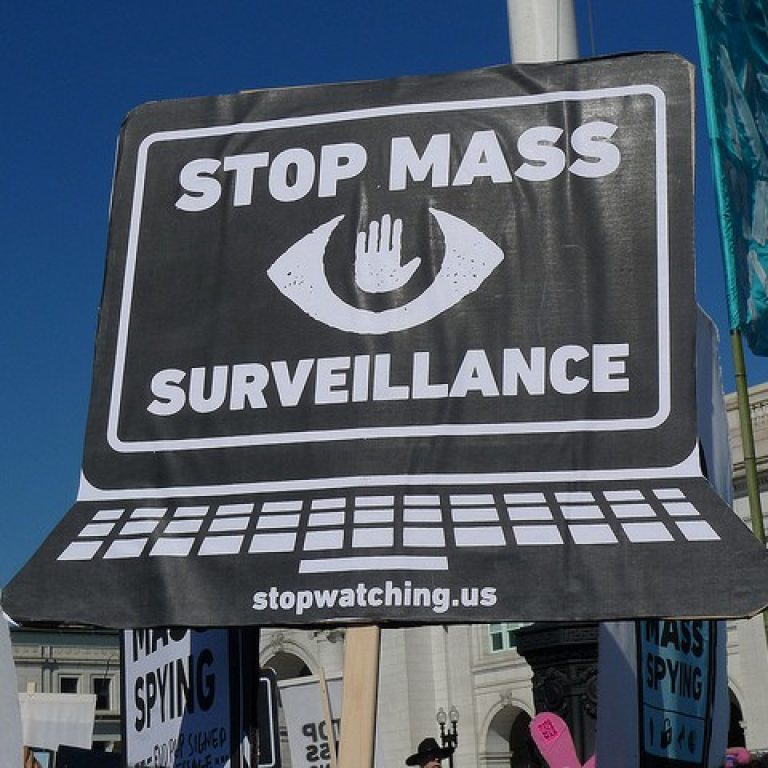
In an important step towards establishing international consensus on the right to privacy in the technological age that we live in, United Nations High Commissioner for Human Rights on Wednesday issued a report calling bulk collection of private data and mass surveillance against the international law.

The report was prepared in response to the UN General Assembly resolution adopted during its 68th session in December 2013. The resolution, introduced by Brazil and Germany, specifically noted that the practices of bulk collection of private data and mass digital surveillance may be in violation of the Article 12 of Universal Declaration of Human Right and the Article 17 of the International Covenant on Civil and Political Rights:

"No one shall be subjected to arbitrary interference with his privacy, family, home or correspondence, nor to attacks upon his honour and reputation. Everyone has the right to the protection of the law against such interference or attacks."

The resolution had called upon all the UN member states "to respect and protect the right to privacy, including in the context of digital communication" and had requested the United Nations High Commissioner for Human Rights to submit a report to be considered by the General Assembly during the next session.

The very existence of a mass surveillance program constitute an interference with privacy, the High Commissioner notes, and asks the governments to make sure such actions are neither arbitrary nor unlawful.

The report employes clear language in condemning collection of private digital data and observes that the "collection and retention of communications data amounts to an interference with privacy" regardless of the excuse that the data might be used later.

It dismisses the idea that the collection of metadata about a communication, in contrast to the communication itself, is not a violation of privacy. The metadata, it says, "may give an insight into an individual’s behaviour, social relationships, private preferences and identity that go beyond even that conveyed by accessing the content of a private communication."

It also cautions that the companies who supply mass surveillance technology to states which are known to use the information in violation to human rights risk "being complicit in or otherwise involved with human rights abuses,"

Considering that Pakistan has been known to have deployed Netsweeper and Narus products, which have reportedly been used by other repressive regimes for censorship and surveillance, on its network, Digital Rights Foundation (DRF) welcomes the report and hopes that the government of Pakistan, as a member UN state, would pay attention to the observations made in the report.

July 13, 2014 - Comments Off on Why exactly is ‘Protection of Pakistan Act’ problematic?

Why exactly is ‘Protection of Pakistan Act’ problematic?

Signed today into law by President Mamnoon Hussain, Protection of Pakistan Act is an extremely repressive law giving unquestionable powers to armed and police forces. Human Rights Watch (HRW) and the civil society of Pakistan has aggressively opposed the bill for curbing fundamental constitutional and human rights.

Several provisions of PPA, 2014 are problematic along with a number of vaguely defined terms that can be misused by Law Enforcement Agencies (LEAs). As the powerful elite of the country has most of the police loyalties with the legal system already in a shambles, PPA gives “green light for abusing suspects”, as put by HRW.

The new law doubles the maximum sentence for terrorism offences to 20 years and permits security forces to shoot suspects on sight. The scheduled offences are not only non-bailable but keep the burden of proof on the detainee who will be considered guilty unless proven otherwise.

The provisions of Protection of Pakistan Act 2014 also give safe-outs to police officers of BPS-15 grade or higher on the basis of good faith which can create huge troubles in the country where police is hardly trusted by the citizens.

Here are the details on why exactly the civil society opposes Protection of Pakistan Act and what are the problematic provisions. Please share the details widely among your circle to better inform your friends and families about this law which will remain in effect for two years and can have huge repercussions for a common citizen, bloggers, and especially dissidents.

protection of pakistan act 2014

ppa 2014

protection of pakistan act 2014

July 8, 2014 - Comments Off on Pakistan responds to the NSA Surveillance of PPP

Pakistan responds to the NSA Surveillance of PPP

United States' National Security Agency (NSA) was granted permission to spy on six political parties, over a dozen global organizations, and all but four world governments, according to a secret Foreign Intelligence Surveillance Court (FISC) certification leaked by the NSA whistleblower Edward Snowden. The organizations NSA was authorized to spy on include United Nations and World Bank as well as Pakistan People's Party (PPP) and Bharatiya Janta Party (BJP).

The top-secret FISC certification, posted by Washington Post on their website on June 30th, 2014, and other related documents that the Post has not yet shared, allow the NSA to intercept not just the communication directly originating to or from the targets mentioned above, but also any communication about them. This, we imagine, can be a very broad spectrum.

In response to DRF Director Nighat Dad's tweet asking if any member of the Pakistan People's Party was willing to speak on the unlawful NSA activity, Sharmila Faruqi, former advisor to the Chief Minister of Sindh, said that the revelation was akin to "intruding our privacy and sovereign rights [and thus] highly condemnable." She added that this "should be agitated at the highest forum."

Speaking on the same matter, former PPP Interior Minister Rehman Malik revealed that during the PPP tenure in 2012, cabinet meetings were being spied on. "The secret recording signals were traced during a random security sweeping before the cabinet meeting and after that the recording signals were broke down before the cabinet meeting," he said. He feared that the cabinet meetings of the present government might also be under surveillance. He was, however, unaware of who might be behind the recording signals. He suggested the Prime Minister Nawaz Sharif take up the matter with the US President Barak Obama through a formal letter.

PPP later issued a statement highly critical of the practice calling it "grave, unwarranted and totally unacceptable interference in the internal affairs of a sovereign country." The statement, issued by the PPP spokesman Senator Farhatullah Babar, demanded an apology from the US for "spying on the political institutions of a sovereign country." It also asked the government to take up this matter at the diplomatic level and demand that such violation of international law doesn't happen again.

Pakistan’s Foreign Office (FO), later on Thursday, formally lodged a protest with the US over the surveillance of PPP, calling the practice a violation of the international law and demanding an end it. "Appropriate measures are being taken to protect our cyber communication from any attack or spying," FO spokesperson Tasneem Aslam said in her statement.

PPP has also lodged a formal protest with the United States through a letter to the Ambessador of United States in Pakistan, Mr. Richard G. Olson. The letter expresses grave disappointment over the matter. "The Party believes that it owes no explanation to any foreign agency," the letter said, "It therefore strongly resents and deplores the overbearing attitude of the NSA in assuming a right to interfere in other countries and their political parties. This attitude of a department of the US government towards a popular Pakistani political party will only increase distrust and suspicion already noticeably present in the people of Pakistan towards the government of the United States."

This post is first part of a series on the unlawful surveillance of Pakistan People's Party (PPP) by the NSA.

July 1, 2014 - Comments Off on Senate Passes the Repressive Anti-Terror Protection of Pakistan Bill against Civil Society Will

Senate Passes the Repressive Anti-Terror Protection of Pakistan Bill against Civil Society Will

In the wake of the ongoing military operation in North Wazristan, Senate has passed the controversial Protection of Pakistan Bill 2014 unanimously with both the government and opposition consensus. This is a reminder for the citizens of the country as it has often been a case that controversial and repressive bills are easily passed when security situation is going out of control. The recent battle on terrorism gives an ample reason to the government to quell any dissenting opinions about the Protection of Pakistan bill and tag such opinions as anti-Pakistan.

Presented by the Minister Zahid Hamid, Protection of Pakistan bill 2014 was earlier passed by the National Assembly in April this year. Considered as one of the most regressive and draconian laws of the country, the bill created quite a commotion in the digital media fora of the country as the law clearly inhibits fundamental rights of freedom of speech and internet privacy of users.

Essentially, Protection of Pakistan Bill 2014 gives an enormous level of power to law enforcement agencies in order to tackle terrorism with judicial oversight to increase conviction. This bill enables the agencies to withhold the information of a detainee except from a High Court or Supreme Court along with reserving the right to appeal a judgement in high courts. This has been termed by the human rights activists as a bill which could potentially be used to palliate the Baluchistan Missing Persons case.

Digital Rights Foundation considers the passage of this bill as a clear deviation from the basic rights of speech and criticism that could be made on governmental policies, et ecetra. Protection of Pakistan bill 2014 could be used to suppress peaceful political opposition and the accused will be assumed to be engaged in waging a war or insurrection against Pakistan, unless established otherwise. Internet based offences that comes under the scheduled offenses of this bill are quite vague and can hurt the Internet security and privacy of a common citizen.

While the civil society understands the need of a rigid policy against terrorism in the country, the people of Pakistan have been suffering from similarly stern bills over the last decade and more. If anything this bill should have created more privacy and security protections for the citizens, let alone impeding provisions to hinder their rights to basic freedom of speech.

Also please read our open letter  to Senate of Pakistan regarding Pakistan Protection Ordinance 2014

Contact: nighat@digitalrightsfoundation.pk

- End -

Digital Rights Foundation is a research based advocacy organisation based in Pakistan focusing on ICTs to support human rights, democratic processes and better digital governance. DRF opposes any and all sorts of online censorship and violations of human rights both on ground and online.  We firmly believe that freedom of speech and open access to online content is critically important for the development of socio-economy of the country. www.digitalrightsfoundation.pk

June 30, 2014 - Comments Off on Release of "The State of Proactive Disclosure of Information in Khyber Pakhtunkhwa and Punjab Public Bodies" Research Report

Release of "The State of Proactive Disclosure of Information in Khyber Pakhtunkhwa and Punjab Public Bodies" Research Report

Punjab and Khyber Pakhtunkhwa public bodies do not comply with provincial Right to Information Laws

Lahore, June 30, 2014:

The research report ‘The State of Proactive Disclosure of Information in Khyber Pakhtunkhwa and Punjab Public Bodies’ shows that public bodies in both provinces are not complying with the respective right to information laws of their provinces. Khyber Pakhtunkhwa and Punjab public bodies are required to proactively disclose categories of information mentioned in Sections 5 and 4 of Khyber Pakhtunkhwa Right to Information Act 2013 and Punjab Transparency and Right to Information Act 2013.

The broader aim of this research report, conducted by Digital Rights Foundation, a member organization of Coalition on Right to Information’, (CRTI) is to measure how public bodies have been using the web and making it easier for citizens in the processes of getting information and filing requests.

The report indicates that while the public bodies have adopted to the latest web standards and have created / maintained a web presence, there is a significant lack of tangible reforms adopted to implement key sections of the respective laws of the provinces. Specifically, the public bodies do not share information pertaining to public employees' remuneration, benefits, and any other privileges in line with the provisions of their provincial right to information laws.

Digital Rights Foundation urges Khyber Pakhtunkhwa Information Commission and Punjab Information Commission to ensure public bodies comply with the right to information laws and make available information specified for proactive disclosure under relevant provisions of provincial right to information laws.

Link to the report: Proactive Disclosure report

Contact: nighat@digitalrightsfoundation.pk

- End -


"Coalition of Right to Information seeks to promote an open information and communications policies at the federal, provincial and district levels across Pakistan. With various initiatives, the coalition of civil society organizations aims to promote citizen awareness and improve dialogue between the citizens and state."

Digital Rights Foundation is a research based advocacy organisation based in Pakistan focusing on ICTs to support human rights, democratic processes and better digital governance. DRF opposes any and all sorts of online censorship and violations of human rights both on ground and online.  We firmly believe that freedom of speech and open access to online content is critically important for the development of socio-economy of the country. www.digitalrightsfoundation.pk

Join the talk on Twitter @digitalrightspk  and like us on Facebook!

April 15, 2014 - Comments Off on An open letter to Senate of Pakistan regarding Pakistan Protection Ordinance 2014 "Pakistan’s new law: no free speech… and you’re a terrorist unless you can prove otherwise"

An open letter to Senate of Pakistan regarding Pakistan Protection Ordinance 2014 "Pakistan’s new law: no free speech… and you’re a terrorist unless you can prove otherwise"

Irfan-Cybercrime1-660x330 Respected Senators,

The recent uproar over the Pakistan Protection Ordinance 2014 has created quite a stir in the country’s digital media platforms, and rightly so. The Government of Pakistan has recently passed, what appears to be, the most draconian and regressive anti-terror law in the National Assembly. The Pakistan Protection Ordinance 2014 has already been signed by the President and will soon be presented - and most likely approved - by the Senate on April 20, 2014.

The proposed law clearly inhibits fundamental rights to freedom of speech, privacy and peaceful assembly on the Internet. In its current form, the law could be used to suppress peaceful political opposition and criticism of government policy online, on social media for instance. In its schedule of offences, the law also lists “crimes against computers including cyber crimes, internet offenses and other offenses related to information technology etc". Also, instances where a person who commits any crime mentioned in the scheduled offenses becomes a cognizable and non bailable offense.

Any person accused within the sphere of scheduled offences will be liable to face a charge on grounds of reasonable evidence against him/her, and will be assumed to be engaged in waging a war or insurrection against Pakistan, unless he/she establishes his/her non-involvement in the offence, which reverses the burden of proof and undermines the right to due process and fair trial. The scheduled offence shall be punishable with imprisonment, which may extend to 10 years, with fine and confiscation of property.

The provision regarding internet crimes is so vague that it can be abused against  journalists, politicians, minorities, students, activists, political dissidents and groups who are using the internet for activities which would not in any way be counted and ascertained as terrorism. From a due process perspective, there doesn’t seem to be a very strong case for introducing cyber crimes in the PPO 2014, when a separate Electronic Cyber Crime bill is already being drafted. So, what is the true intent of introducing an additional or supplementary provisions with regard to “Internet Crimes”?

The state of open access to internet in our country is dismal. In the 2013 Freedom on the Net report, Pakistan’s Internet freedom status in 2012-13 was ‘Not Free.’ The introduction to the report states: Successive military and civilian governments have adopted various measures to control the internet in Pakistan, which they frame as necessary for combating terrorism. In Freedom of Press, Pakistan ranks 159 among 179 countries. In the planned Ordinance, provision related to warrant less raids is in violation of Article 14 of our Constitution.

With the Electronic Cyber Crime bill, Pakistan has the momentous opportunity to set the benchmark in South Asia and the Global South in right to free speech online. This right necessitates freedom from persecution for all citizens who use digital communications platforms to express opinions, dissent, or critique against the state. As Benjamin Franklin said, “Whoever would overthrow the liberty of a nation must begin by subduing the freeness of speech.” 

In an era where individuals, non-governmental organizations and international institutions rely on the multiplier effect of social media and digital news outlets to highlight issues of injustice and human rights violations, it doesn’t augur well for the country’s freedom of speech and human rights index to even consider this Ordinance.

Digital Rights foundation demands and calls on the senators to protect the rights to freedom of speech and privacy in accordance with Pakistan's obligations under international conventions, remove the clause of cyber crimes from Pakistan Protection Ordinance 2014 and revise the law with the consultation of relevant stake holders.

Contact: nighat@digitalrightsfoundation.pk

- End -

Digital Rights Foundation is a research based advocacy organisation based in Pakistan focusing on ICTs to support human rights, democratic processes and better digital governance. DRF opposes any and all sorts of online censorship and violations of human rights both on ground and online.  We firmly believe that freedom of speech and open access to online content is critically important for the development of socio-economy of the country. www.digitalrightsfoundation.pk

March 25, 2014 - Comments Off on Pakistan: The Draft Computer Crimes Law Endangers Freedom of Expression

Pakistan: The Draft Computer Crimes Law Endangers Freedom of Expression

For IMMEDIATE RELEASE:

Lahore, March 25, 2014: ARTICLE 19 and Digital Rights Foundation Pakistan are concerned about the draft Prevention of Electronic Crimes Act of Pakistan 2014 (Draft Law), currently being prepared for presentation in the Pakistan Parliament. Although the Draft Law contains a number of welcome procedural safeguards, several provisions violate international standards on freedom of expression. We call on the Pakistan Government to amend the Draft Law in accordance with our recommendations below before it is submitted for the consideration of the Parliament.

The Draft Law, which has been drafted by the Ministry of Information Technology and Telecommunications, establishes specific computer crimes and procedural rules of investigation, prosecution and trial of the offences. The Draft Law incriminates the illegal access to and interference with program or data or information systems, cyber terrorism, electronic forgery and fraud, the making of devices for use in offences and unauthorized interception.

ARTICLE 19 and Digital Rights Foundation welcome the efforts of the Pakistani Government to provide adequate procedural safeguards in the context of cybercrime investigations. However, we recall that the regulation of computer crimes engages the protection of human rights that must be considered in the respective legislation, in particular:

• Article 19 of the International Covenant on Civil and Political Rights (ICCPR), to which Pakistan acceded in 2010, defines the right to freedom of expressions and sets out the requirements for limitations on the right. States can limit freedom of expression only in the interest of protection of reputation, national security, public order, health and morals. The limitations must be clearly defined in law and be necessary and proportionate to secure one of those aims. States must refrain from exercising this discretion in a discriminatory manner. Article 17 of the ICCPR guarantees the freedom of individuals from arbitrary or unlawful interference with his privacy and correspondence.

• General Comment No.34, which provides authoritative guidance on the interpretation of Article 19 of the ICCPR, states that extreme care must be taken in crafting and applying laws that purport to restrict expression to protect national security. Whether characterised as cyber-crime laws, treason laws, official secrets laws or sedition laws they must conform to the strict requirements of Article 19(3).

• In General Comment 16 of on the Right to Privacy, the UN Human Rights Committee states that interference by states can only take place on the basis of law which itself specify in detail the precise circumstances in which interference may be permitted.

• The 2011 Joint Declaration on the Right to Freedom of Expression and the Internet adopted by the four international special rapporteurs on freedom of expression representing the Americas, Europe, Africa and the United Nations (UN) emphasizes that standards of liability in cases relating to the internet must take into account the overall public interest in protecting both the expression and the forum in which it is made, (i.e. the need to preserver the “public square” aspect of the Internet).

• From a comparative perspective, the Council of Europe Cybercrime Convention (2001) provides basic procedural safeguards and guidance on how to draft cybercrime legislation in accordance with human rights standards.

In the light of these standards, ARTICLE 19 and Digital Rights Foundation remain concerned that the Draft Law violates international standards for several reasons:

• Lack of clear definitions: a number of definitions in the Draft Law are unclear, notably the definition of ‘content data’, which partially reproduces the definition of ‘computer data’ as stipulated in the Council of Europe Convention on Cybercrime (2001). This is confusing as computer data and content data are separate concepts. In other instances, the draft law fails to define important terms such as ‘information systems’ or ‘programme or data’. The lack of clear definitions in the draft law makes it more open to abuse and likely to catch innocuous behaviour, such as accessing a website in breach of its terms of service. By the same token, it endangers the right to freedom of expression. We recommend that ‘content data’ is replaced by ‘computer data’ in the Draft Law and refer to the Cybercrime Convention for a definition of ‘computer systems’.

• Lack of public interest defence for hacking-type of offences: The Draft Law criminalises unauthorised access to information systems, programmes or data. While the Draft Law is presumably aimed at criminalising ‘hacking’, it fails to provide a public interest defence when this type of conduct takes place for legitimate purposes, such investigative journalism or research.

• Overly broad cyber-terrorism offence: Section 7 (a) and (b) fails to make an explicit reference to "violence" as part of the offence of cyber-terrorism. Cyber-terrorism should be more clearly linked to the risk of harm or injury in the real world, and in particular harm against the welfare of individuals. It should not be equated with even moderate disruption of public services or damage to property. It is not clear that sections 7 (1) (b) (i) and (ii) would meet that threshold if read independently from Section 7 (1) (b) (vi).

• Criminalisation of “defamation against women”: Although the attempts to offer special protection to women (e.g. through prohibitions on threatening sexual acts) are laudable, we find the provisions of Section 13 of the Draft Law problematic. Section 13 criminalises “defamation against women” and other vaguely phrased offences, such as “distorting the face of a woman”. We recall that, in its General Comment 34, the UN Human Rights Committee stated that states parties should consider the decriminalization of defamation and, in any case, the application of the criminal law should only be countenanced in the most serious of cases. Also, the provisions of Section 13 fail to meet the three part test, as they are not formulated with sufficient precision to enable individuals to regulate their conduct in accordance with the law. We therefore recommend that Section 13 be revised.

• Lack of procedural safeguards against surveillance activities carried out by intelligence agencies: although efforts have been made to provide effective procedural safeguards against unchecked surveillance by law enforcement agencies (e.g. section 30), the same is not true of intelligence services, which remain subject to the provisions of the Pakistan Telecommunications (Re-Organisation) Act 1996. This is a serious concern as this means that the Pakistani intelligence services effectively have carte blanche to carry out mass surveillance without meaningful oversight (see ARTICLE 19’s analysis of the Pakistan Telecommunications (re-Organisation) Act). In our view, if the Draft Law were to be adopted in its current form, it would be in breach of the right to freedom of expression and privacy under international law.

We call on Pakistani legislators to protect the rights to freedom of expression and privacy in accordance with Pakistan’s obligations under international and review the Draft Law in line with the above recommendations.

Contact: nighat@digitalrightsfoundation.pk

- End -

Digital Rights Foundation is a research based advocacy organisation based in Pakistan focusing on ICTs to support human rights, democratic processes and better digital governance. DRF opposes any and all sorts of online censorship and violations of human rights both on ground and online.  We firmly believe that freedom of speech and open access to online content is critically important for the development of socio-economy of the country. www.digitalrightsfoundation.pk


Join the talk on Twitter @digitalrightspk or like us on Facebook!

January 12, 2014 - Comments Off on Cyber security conference: Film challenges ‘official’ narrative on drones

Cyber security conference: Film challenges ‘official’ narrative on drones

Originally published on Tribune, Pakistan.

ISLAMABAD: 

Rights activists urged journalists to highlight casualties of drone strikes and to challenge the official narrative on drones in Pakistan after the screening of a film Unseen War on Saturday.

One way to do this would be to generate a debate on the impact of drone strikes on innocent civilians living in the targeted areas and overcoming the “invisibility” surrounding this technology through information gathering.

Mainstreaming a counter-narrative and collecting information about drones and their victims is not an easy task. It might even seem impossible, given the secrecy surrounding the US drone campaign and the high level of inaccessibility of areas where these strikes are conducted. Yet, there are some attempts to piece together information about drone strikes from disparate sources and make a case against the negative impact of these strikes.

The film, produced by Tactical Technology Collective, an international non-profit linking activism with technology,  showed interviews with journalists, an academic and a technologist to give a basic understanding of the tribal areas and the drone technology being used by the US to target militants there.

 photo 39_zps6de51f7e.jpg

Through the interviews, the film tries to establish that the covert use of drones for killing militants allows its users “political, military and moral invisibility”. This invisibility coupled with the historical unequal treatment of, and control of information in, the tribal areas leads to self-censorship and indifference in journalistic reporting of the strikes.

But the film puts through the important question of whether drone strikes are legitimising targeted killings. It also sheds light on the way information and communications technology could be used to collect and understand information about the strikes and their impact.

In the subsequent discussion, Shahzad Akbar, a legal fellow for UK-based organisation, Reprieve, said the strikes are killing people “without due process by state, by any state.”

The United Nations has condemned drone strikes. These are against the international law and the Constitution of Pakistan, said Akbar, whose organisation is fighting a case in the Peshawar High Court on behalf of civilians killed in the drone attacks.

The Bureau of Investigative Journalism estimates at least 416 civilians have been killed in US drone strikes in Pakistan between 2004 and 2013, but the bureau also states that only 1.5 per cent of drone casualties can be confirmed as “high-value targets.” The vast majority of drone’s victims — around 76 per cent of the total — fall in the grey area of “alleged combatants.”

During the discussion, Taha Siddiqui, a journalist who also appears in the film, said the narrative is controlled and people are not asking crucial questions about the presence of militants in a given location in the first place.

Another panellist Sadaf Baig, who also appeared in the film, said the Federally Administered Tribal Areas (Fata) were an “information black hole” even before 9/11. The panellists agreed that there was a lack of information in the press regarding drone strikes. Akbar said the Pakistani media’s role is especially problematic.

The film’s producer, Marek Tuszynski, who joined the discussion via Skype, said the film is part of a series called “Exposing the Invisible,” which looks at two things: a new way of investigating hidden information through collaboration and use of technology, and shedding light on the concept of invisibility in situations such as drone strikes where the aggressor usually has access to all information but people outside see nothing.

The event was organised by the Digital Rights Foundation, a Pakistani research and advocacy initiative at the ongoing third annual “Cyber Secure Pakistan Conference”.

January 2, 2014 - Comments Off on Training Workshop: Security for Women in Digital Age

Training Workshop: Security for Women in Digital Age

Security for Women in Digital Age

Venue: Crystal Ball, Marriott hotel, Islamabad

Date: 13:30 - 17:00, January 9, 2014

Trainer: Nighat Dad (Executive Director, Digital Rights Foundation Pakistan)

In this digital age, it has become even easier than before to be stalked, intruded and harassed. During these times of fast digital innovation, it is important for women to assess their risks online, analyse them and browse securely.

"Security for Women in the Digital Age" workshop will focus on why it is important for women to be cautious about their privacy online. The session will look on the cases in Pakistan where women and girls have been harassed and threatened online. It will then move on to a small digital security training empowering the attendees with basic tools to stay secure in the digital spaces.

For more details, please join our Facebook event page or visit the website.

- With support from Tactical Technology Collective