
May 15, 2025 - Comments Off on Indian News Channel Shares False Image of ‘Captured Pakistani Pilot’
Archives for May 2025
May 15, 2025 - Comments Off on India Blocks Chinese and Turkish State Media Accounts on X
India Blocks Chinese and Turkish State Media Accounts on X
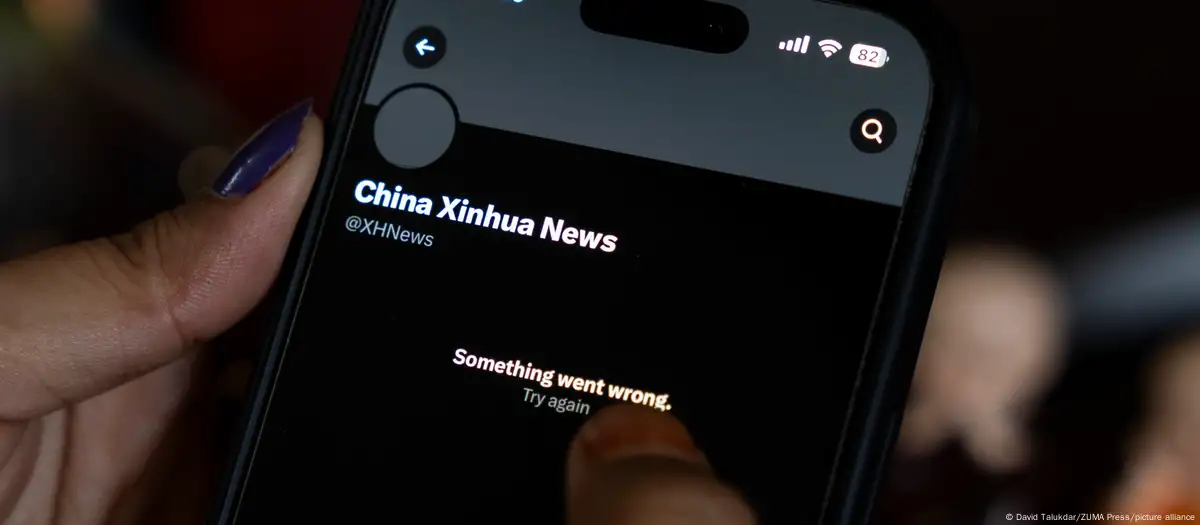
India has blocked the X (formerly Twitter) accounts of Chinese news agency Xinhua, Global Times, and Turkey’s TRT World amid accusations of spreading disinformation during the recent military escalation with Pakistan.
The move follows claims by India that foreign media misreported events, including a disputed story that Pakistan downed Indian fighter jets, information India labeled as false. The Indian Embassy in China called out Global Times for publishing unverified claims attributed to Xinhua.
India has reportedly directed X to block around 8,000 accounts, including some Indian media outlets and journalists, raising press freedom concerns. While China and Turkey have voiced support for Pakistan, India has yet to confirm whether these foreign outlets are part of the blocked list.
Source: https://www.dw.com/en/india-blocks-chinese-turkish-news-agencies-from-x/a-72536227
May 15, 2025 - Comments Off on PTA Moves to Block Prominent YouTubers Amid Anti-State Allegations
PTA Moves to Block Prominent YouTubers Amid Anti-State Allegations
May 15, 2025 - Comments Off on Indian YouTuber Arrested for Alleged Espionage Ties with Pakistan
Indian YouTuber Arrested for Alleged Espionage Ties with Pakistan
May 15, 2025 - Comments Off on Pakistani Songs Removed from Indian Platforms Amid Government Advisory
Pakistani Songs Removed from Indian Platforms Amid Government Advisory
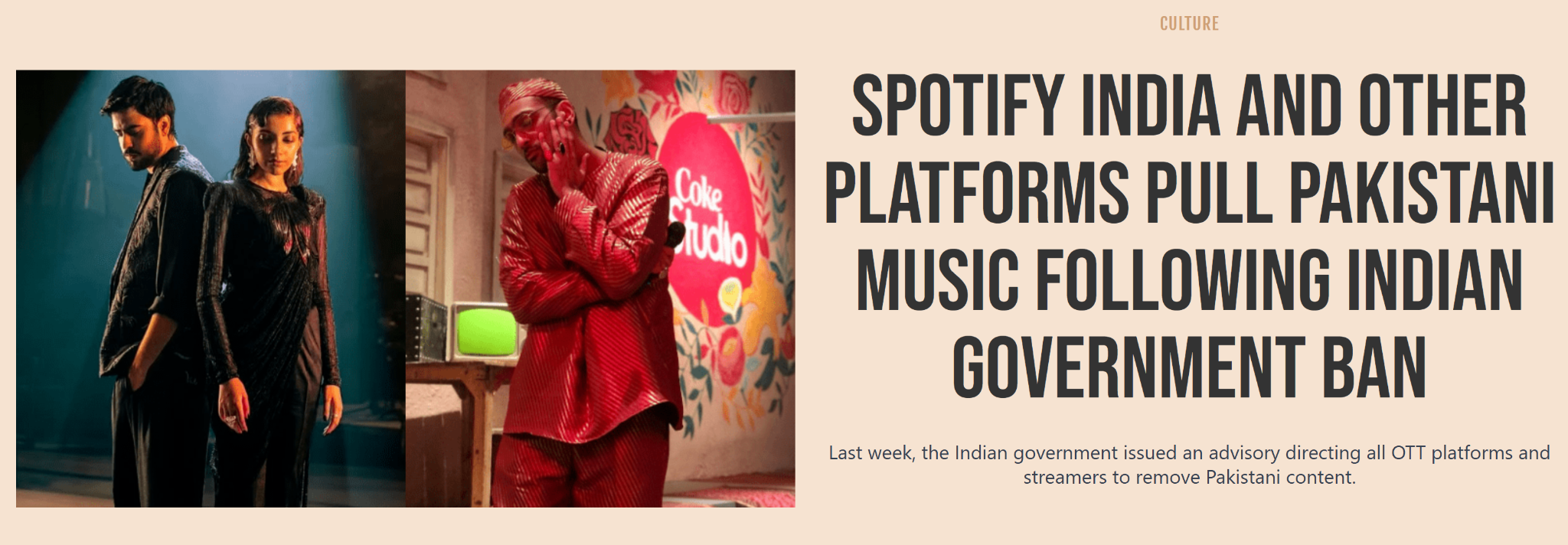
Following a May 8 advisory by the Indian government, major music streaming services like Spotify began removing Pakistani content for Indian users, citing national security concerns under the IT Rules. Popular songs such as Maand, Jhol, and Faasle were delisted, and Pakistani artists like Mawra Hocane and Mahira Khan were digitally erased from promotional materials.
The directive instructed OTT platforms and digital intermediaries to block all Pakistani media, including web series, songs, and podcasts. Industry figures expressed concern, noting they were not consulted.
While the ban targets original content, Bollywood continues to profit from remakes of iconic Pakistani tracks, raising questions of cultural double standards amid censorship.
Source: https://images.dawn.com/news/1193633
May 14, 2025 - Comments Off on SILENCED ALGORITHMS: How Platform Policies Shape Narratives & Suppress Marginalized Voices in Pakistan by Aneela Ashraf
SILENCED ALGORITHMS: How Platform Policies Shape Narratives & Suppress Marginalized Voices in Pakistan by Aneela Ashraf
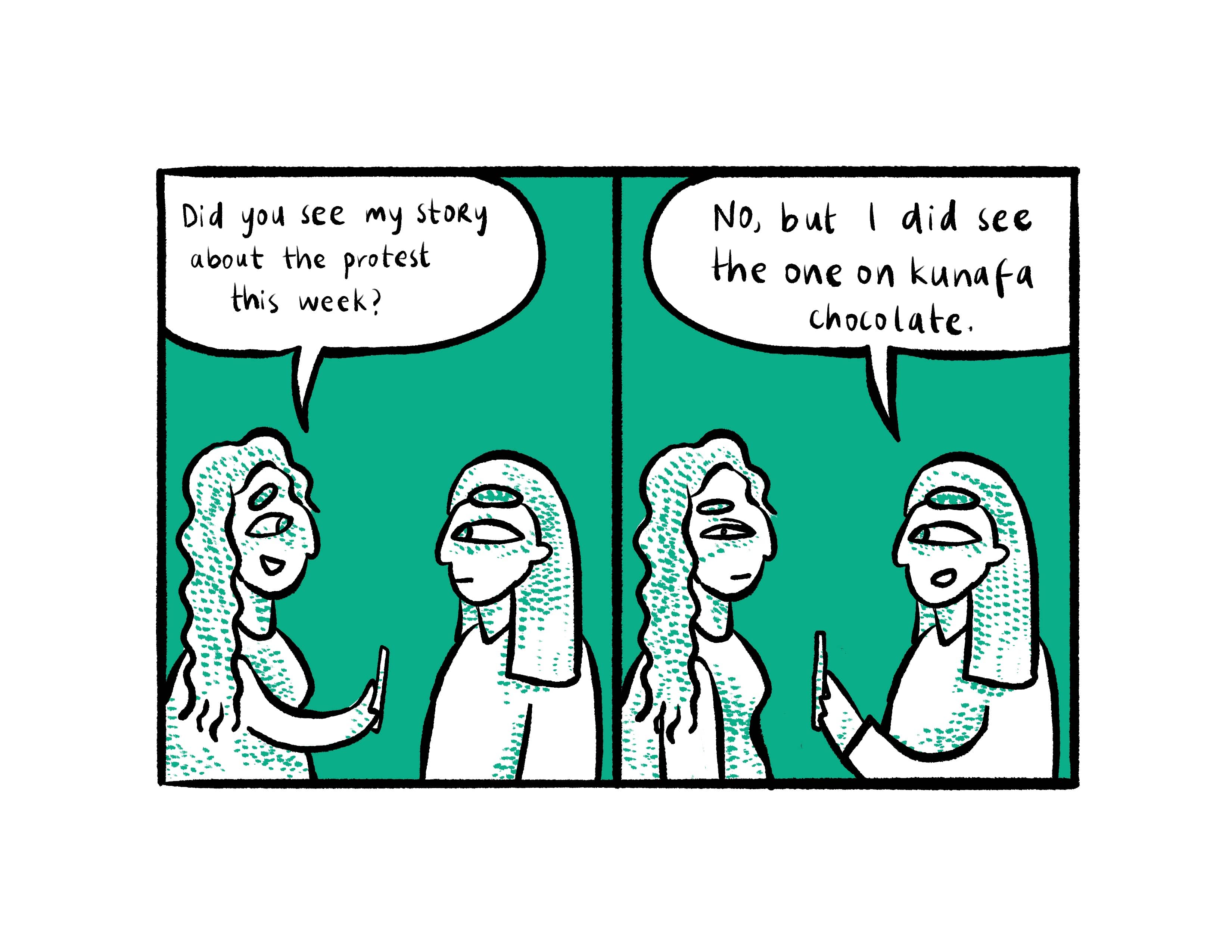 On May 15, 2024, Pakistani journalist Zahid Hussain posted a tweet condemning the government’s internet blackout in Baluchistan, where authorities had severed connectivity for the 12th time that year to quell protests against enforced disappearances. Within hours, his account was suspended by X (formerly Twitter) under its "hate speech “policy, despite no action by Pakistani regulators. Meanwhile, state-aligned media outlets accused Hussain of "anti-national activities," their narratives amplified by platform algorithms.
This incident epitomizes Pakistan’s triplexes of digital repression as platforms enforce opaque policies that disproportionately silence dissent. Laws like the Prevention of Electronics Crimes Act (PECA) criminalize criticism under elastic terms like “defamation" and "anti-state". In addition, AI-driven tools automate the erasure of marginalized voices.
The outcome is a digitally enforced dystopia where journalists, ethnic minorities, and feminists navigate a minefield of algorithmic suppression, legal harassment, and physical violence. This investigation traces how Pakistan’s censorship regime evolved, its mechanisms, and the resistance fighting back.
The legal architecture of silence shows that PECA 2016 was ostensibly drafted to combat cybercrime. In practice, its amendments (notably in 2022 and 2025) transformed it into a legal noose for free expression. Likewise, Section 20 criminalizes “defamation” with up to 5 years imprisonment and non-bailable arrests, a drastic shift from civil defamation. In 2023, journalist Asad Toor was charged under this clause for reporting on state institution corruption.
We’ve also seen that Section 37 of PECA grants the Pakistan Telecommunication Authority (PTA) unchecked power to block content deemed "un-Islamic “or against "national security." Over 1.2 million URLs were censored under this provision in 2023 alone (Digital Rights Foundation). In 2025, amendments allowed warrantless arrests for social media posts and mandated VPN registration, effectively abolishing anonymity in online spaces.
In this regard, judicial complicity and occasional pushback are rare rulings, while courts often rubber-stamp PECA cases. There has been a hint at resistance that the Sindh High Court in 2024 declared the X (Twitter) ban unconstitutional, citing "disproportionate restrictions" on free speech. Also, the Islamabad High Court in 2023 criticized the FIA for misusing PECA to target journalists like Absar Alam.
Yet, such rulings are exceptions. As the Supreme Court Advocate Sh. Muhammad Faheem notes that PECA violates constitutional safeguards for free speech (Articles 19, 19-A) and due process (Article 10-A). Its amendments reflect a deliberate strategy to conflate dissent with treason.
In a lingering curse, PECA synergizes with Section 124-A of the Pakistan Penal Code (sedition), a British colonial relic used to imprison critics. In 2023, 82% of sedition cases targeted journalists and opposition figures, according to the Human Rights Commission of Pakistan (HRCP).
As a case study, Farooqi, a news editor at The Express Tribune, was arrested under PECA and sedition laws for tweets criticizing the state institution. Plain clothes officers dragged him from his Karachi home, and the FIR cited under section 505 (PPC) of “Public mischief” for satirizing state policies. PECA’s section 11 of “Hate speech” was also added to the mix to make Farooqi’s case stronger at trial. Though released on bail, Farooqi faced 3 years of harassment, a common tactic to drain dissenters’ resources.
The Pakistan Telecommunication Authority (PTA) operates as the regime’s enforcer-in-chief that blocks URLs and websites in the country. In 2016, 900,000+ websites were banned, including Wikipedia (2023), for “blasphemous content”. There have also been Deep Packet Inspection (DPI) deployments of Sandvine’s technology to throttle VPNs and filter keywords like “Baluchistan” or “PTM”. Under forced localization 2021/2025, rules compel platforms to store data locally, exposing users to surveillance.
The 2023 crackdown following Imran Khan's arrest saw authorities use geo-fencing, social media monitoring and facial recognition to identify and detain over 4,000 PTI supporters. This demonstrates how AI tools amplify traditional repression methods.
During the 2024 elections, the government suspended mobile services nationwide - a decision likely informed by data analysis of protest patterns and opposition mobilization strategies. In a corporate collusion, tech giants, prioritizing profit over principles, comply with 90% of government takedown requests according to the “Meta Transparency Report 2023”. Likewise, YouTube demonetized creators discussing blasphemy laws (Shahveer Jafry), while pro-state institution vloggers flourish. Meta also permits anti-Ahmadi hate speech (linked to violent attacks in Punjab but censors Pashtun rights pages.
Rashid Khan, (Media Solutions Pakistan) says platforms treat Pakistan as a revenue frontier, not a rights battleground. Their algorithms boost divisive content because it drives engagement. He argues that platforms prioritize profit over principles in Pakistan.
Political instability and security concerns create a situation where platform governance favors commercial interests over ethical responsibilities. Transparency around government requests and content decisions is essential.
In an automated censorship, a leaked PTA document reveals a 1,200-terms were blacklisted and fed into AI filters, including, “Enforced disappearances”, “Pashtun Tahafuz Movement (PTM)” & “Baloch genocide”. Chinese firms like SenseTime supply facial recognition tech to identify protesters, while AI voice clones of Imran Khan (used by PTI in 2024) show the opposition’s adaptive tactics.
As for the economic toll, Pakistan lost $300M in 2023 due to internet shutdowns (Top10VPN). In a freelance exodus: 40% of Pakistan’s $1.2B freelancer economy now relies on VPNs (Karachi Chamber of Commerce).
Yousuf Abid, Editor of Lub Azaad, notes that Pakistan uses AI to automate political repression, not to combat misinformation. The dual nature of AI in Pakistani politics means that while the opposition uses it for survival, the state uses it for control. We need transparent AI governance frameworks with civil society participation and a separation of counterterrorism from political monitoring in algorithmic systems.
In grassroots movements, Digital Rights Foundation (DRF) trains women journalists in encrypted communication & Bolo Bhi litigates against PECA in courts. As a policy, solutions according to experts repealing PECA’s draconian clauses and aligning laws with Article 19 of the constitution are essential for free speech. There is a need to abolish sedition laws and there should be a requirement for judicial approval for content blocks. AI should also be regulated to prevent automated political targeting.
A battle for Pakistan’s digital soul is that Pakistan’s censorship regime, a fusion of legal brutality, corporate cowardice, and AI-driven surveillance, threatens to extinguish digital freedoms. Yet, as feminists encrypt their chats and journalists sue the PTA, resistance persists. The world must choose: Will it watch silently, or stand with those fighting for a free internet?
May 14, 2025 - Comments Off on When Reality is Manufactured: AI Misinformation and the Future of Journalism in Pakistan by Saddia Mazhar
When Reality is Manufactured: AI Misinformation and the Future of Journalism in Pakistan by Saddia Mazhar
In early 2024, a fake, sexually explicit AI-generated video depicting Punjab Information Minister Azma Bukhari circulated widely across Pakistani social media. The deepfake, reportedly disseminated by PTI activist Falak Javed, triggered immediate public outrage. Azma Bukhari promptly filed a formal complaint with Pakistan’s Federal Investigation Agency (FIA) under the cybercrime laws, demanding an inquiry into the creation and spread of the doctored content. The incident was a chilling reminder of how artificial intelligence (AI) is fueling a new era of misinformation in Pakistan, one where the boundaries between truth and falsehood blur rapidly.
Just weeks later, another deepfake targeting Bukhari surfaced, showing her allegedly making derogatory remarks against political opponents. Although fact-checkers, including Soch Fact Check, quickly debunked the video, it had already reached millions, highlighting how synthetic media can hijack public opinion before verification mechanisms can catch up. Such attacks are no longer isolated. High-profile political figures, particularly women, have increasingly become the targets of AI-generated disinformation.
One of the most alarming episodes involved an AI-manipulated video portraying Pakistan Muslim League-Nawaz (PML-N) leader and Chief Minister Punjab Maryam Nawaz meeting UAE President Mohamed bin Zayed Al Nahyan during his official visit to Pakistan. The fabricated footage insinuated secret political dealings, sparking widespread speculation. Despite Soch Fact Check's detailed investigation confirming the video's fraudulent nature, the damage was already done. FIA later arrested several individuals linked to the dissemination of the doctored clip, but experts say that mere reactionary measures are no longer enough.
"Pakistan, a state known for weaponising laws, has used anti-terrorism, anti-narcotics, and cybercrime (PECA) laws to suppress independent journalism and political dissent," said independent journalist Asad Ali Toor in a conversation with Digital 50.50. "I have no doubt that the state will use AI-driven fact-checking and monitoring to target journalists critical of the regime. Even minor errors will be punished harshly and not just to silence the individual, but also create a chilling effect across the entire journalistic community," he added.
While traditional fake news often involved basic manipulation like misquoting leaders or crudely editing images, today’s challenges are far more sophisticated. "The emergence of AI, particularly deepfakes and synthetic media, has added fuel to a fire that was already out of control," said Asad Baig, Executive Director of Media Matters for Democracy (MMfD). “Previously, creating convincing fake content required high technical expertise. Now, with basic access to AI tools, even an amateur can generate hyper-realistic videos, audio clips, and images that can deceive even the most discerning audiences,” he explained. The scale of the problem is staggering.
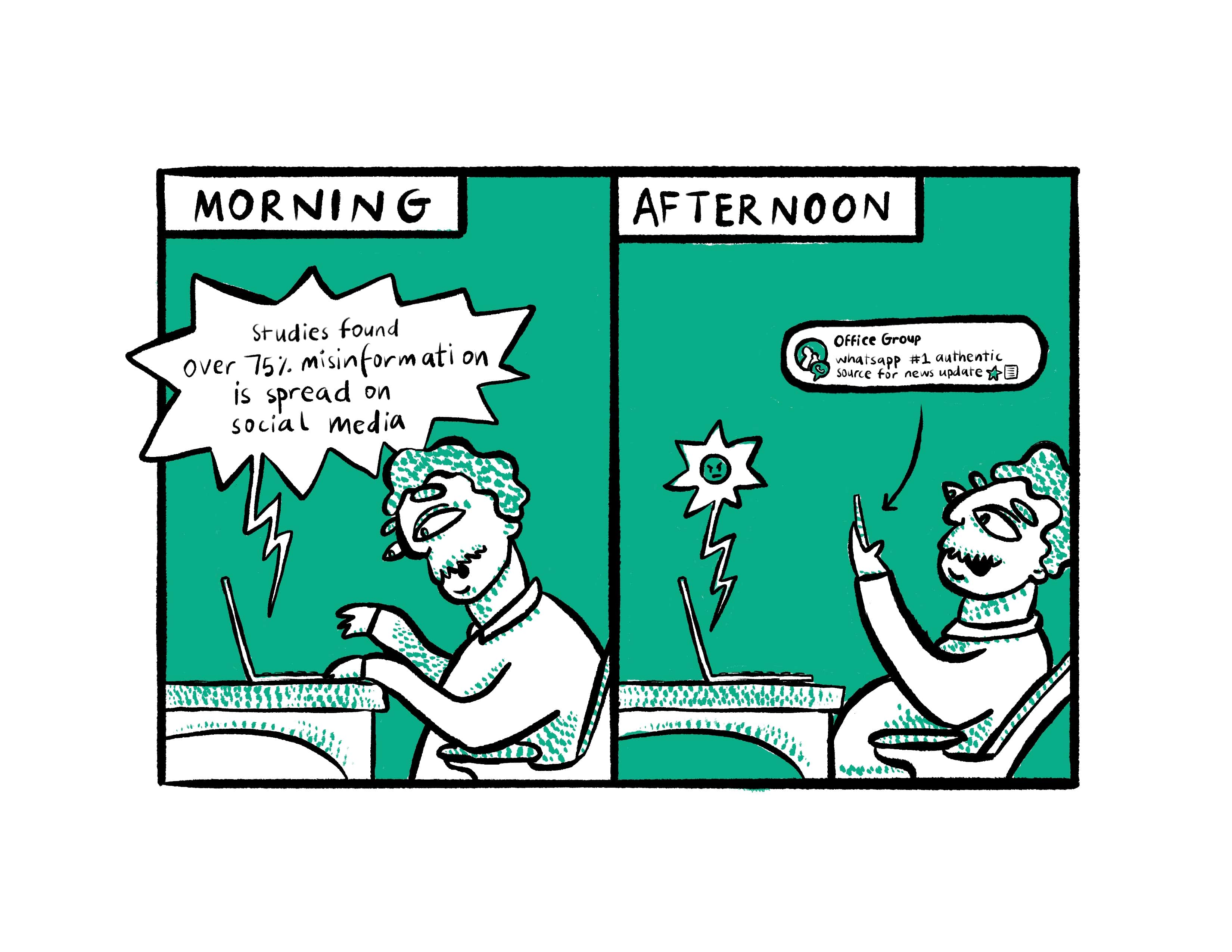
According to a 2023 report, “Fact Checking and Verification: Navigating the Misinformation Landscape in Pakistani Newsrooms and Beyond,” by Media Matters for Democracy, over 75% of viral misinformation in Pakistan originates from social media platforms such as Facebook, WhatsApp, X (formerly Twitter), and TikTok. These platforms are primary news sources for many, yet they often lack mechanisms to ensure the accuracy of disseminated information.
Fact-checkers are struggling to keep pace, even with the help of AI-powered tools like InVID, Deepware Scanner, and reverse image search engines. Yet these tools come with major limitations. "Fact-checking in Urdu and regional languages isn't particularly challenging visually, because we use AI mainly to detect anomalies in images and videos," said Fayyaz Hussain, Senior Sub-Editor at Geo Fact Check. "However, verifying audio-based misinformation is a different beast altogether. You can't look for visual signs in an audio clip. A convincing fake voice recording can spread like wildfire before there's even a chance to verify it and often, original recordings for comparison simply don't exist." Hussain further emphasized that voice-based misinformation, such as fabricated speeches by political leaders, poses a greater verification challenge because few AI tools are capable of analyzing the linguistic nuances and tone subtleties of Urdu and other local languages. This linguistic gap is a critical vulnerability, underscored by academia as well.
"AI-based fact-checking software is still largely ineffective when it comes to Urdu, Punjabi, Pashto, or Balochi," said Dr. Ayesha Ashfaq, Chairperson of the Department of Media and Development Communication at the University of Punjab. "Most of the verification algorithms are optimized for English and fail to catch the nuances, sarcasm, and cultural idioms that characterize communication in Pakistan." As a result, fact-checking organizations like Soch Fact Check, Dawn’s fact-checking desk, and The News’ fact-checking initiative continue to rely heavily on human analysis, a resource-intensive and time-consuming process. Adding another layer of complexity is Pakistan’s low media literacy rate. Dr. Ashfaq pointed out that despite a massive surge in social media usage, critical thinking and fact-checking skills among the general public remain dangerously underdeveloped. "Urban, younger, and educated populations show some level of awareness about misinformation, but in rural areas, awareness is almost nonexistent," she warned. The stakes are even higher because universities, which should be training the next generation of journalists, have been slow to adapt. "While a handful of universities have introduced workshops on deepfakes and media manipulation, there's no uniformity, and certainly no mandatory curriculum integration," Dr. Ashfaq said. "Many journalism students graduate without ever encountering a course on identifying or combating AI-based misinformation, a critical threat to the future of journalism.
" AI's integration into everyday digital life is accelerating. "Whether it's creating memes, editing videos, or transcribing interviews, AI is no longer some futuristic tool; it's embedded in how we communicate and consume content today," said Yasal Munim, Senior Manager, Programs at MMfD. "But greater access to AI tools has also democratized the ability to produce misinformation." Munim cited recent examples where AI-generated voices of incarcerated political leaders were used to address rallies or mobilize voters.
During the tense Pakistan-Iran airstrikes in 2024, deepfake videos flooded social media, sowing panic and confusion at a speed that fact-checkers simply couldn’t match. "The velocity at which misinformation spreads during such sensitive events means that fact-checking becomes a rear-guard action by the time the truth is clarified, the falsehood has already taken root," she explained.
Gendered disinformation is another particularly dangerous frontier. "Women politicians and activists are disproportionately targeted with AI-generated deepfakes that are sexually explicit or aimed at damaging their honor," said Munim. "Such attacks are designed not just to humiliate individuals but to deter women's political participation altogether."
Despite the severity of these threats, Pakistan’s regulatory framework remains woefully outdated. Laws such as the Prevention of Electronic Crimes Act (PECA) were crafted in an era before AI-generated misinformation became a mainstream issue. Instead of evolving to meet these new challenges, critics say, PECA has often been misused to curb dissent and silence journalists.
"PECA was never designed to tackle synthetic media or deepfake threats," said Asad Baig. "Instead of being reformed to address real dangers, it has become a blunt instrument for censorship." Baig stressed the urgent need for new, rights-based AI regulations that protect freedom of expression while simultaneously addressing the complex dangers of AI-driven disinformation. "We need enforceable data protection laws, transparency in algorithmic decision-making, and strong independent oversight bodies to ensure that countermeasures don’t become tools of political oppression," he said.
Yet, amid these challenges, there are seeds of hope. Baig pointed to initiatives like Facter, a collaborative verification tool that aggregates verified content and leverages AI to assist fact-checkers and newsrooms. "If we can empower journalists with the right AI tools to enhance verification, storytelling, and audience engagement, journalism in Pakistan can become faster, deeper, and more resilient," he said. However, experts unanimously agree that foreign AI tools alone are not enough. "Without localized research and AI solutions that understand Pakistan’s unique sociopolitical and linguistic contexts, we will always be fighting an uphill battle," said Dr. Ashfaq.
Munim echoed this, emphasizing that the pathways through which misinformation spreads and the ways audiences interpret and react to it differ significantly between urban and rural environments in Pakistan. "Understanding these social dynamics is crucial if we want to build effective defenses against disinformation," she said.
As Pakistan approaches future elections and becomes increasingly digitized, the consensus among experts is clear: Without urgent action to educate the public, empower journalists, strengthen fact-checkers, and develop localized AI defenses, the credibility of journalism and the health of democracy itself will remain under grave threat. "Disinformation isn't just about lies anymore," warned Asad Baig. "It's about dismantling the very ability of people to trust anything they see or hear."
The deepfake era is here and unless Pakistan rises to the challenge, truth itself may become the first casualty. The MMFD report sheds light on Pakistan’s weak fact-checking infrastructure. Alarmingly, only 1 in 10 journalists reported having access to digital verification tools within their newsrooms. Meanwhile, approximately 46.7% of journalists confessed they had never received any formal training in fact-checking. This gap leaves the media sector vulnerable to manipulation, especially as disinformation tactics become increasingly sophisticated.
A major obstacle in combating misinformation is the language and technology gap. Most AI-based fact-checking tools are designed primarily for English content and struggle to effectively process Urdu, Pashto, Sindhi, and other regional languages. Furthermore, voice-based deepfakes present a particular challenge, as the technological tools required to verify manipulated audio clips are severely limited in Pakistan. Press freedom has also come under increased threat under the guise of combating fake news. Laws such as the Prevention of Electronic Crimes Act (PECA) and new regulations like the Punjab Defamation Act 2024 are being weaponized to silence dissent instead of genuinely addressing the spread of disinformation. Journalists and critics have faced heightened harassment, surveillance, and arrests, creating a chilling effect on freedom of expression.
The rise of AI technologies has brought new risks into the media landscape. These tools enable the rapid creation of hyper-realistic fake content, making it easier to deceive the public. Particularly concerning is the growing trend of gendered misinformation targeting women politicians and activists, often through the creation of sexualized deepfakes intended to intimidate and discredit them.
Adding to these challenges is Pakistan’s digital literacy crisis. Low levels of media literacy have made the general public extremely vulnerable to false narratives. Common hoaxes such as fake government notifications regarding public holidays, petrol prices, or official decisions continue to circulate widely on social media, often without scrutiny.
In response to these worrying trends, MMfD recommended several strategies to strengthen Pakistan’s defense against misinformation. These include investing in AI forensic tools tailored for multilingual analysis, training journalists in digital verification and AI literacy, and promoting community-based collaborative fact-checking initiatives. Crucially, they also emphasize the need for regulations that protect freedom of speech while combating disinformation and call for integrating critical thinking and media literacy education into school and university curricula.
Similar concerns are echoed in the International Media Support (IMS) report, which further explores the role of digital platforms in spreading disinformation. The report highlights that social media has become the main conduit for the dissemination of misleading information, which has endangered public health, political stability, human rights, journalism, and peace in Pakistan. The IMS study notes that Pakistani journalists are at the frontline in the fight against disinformation but face a host of challenges. A lack of conceptual understanding of how disinformation operates, combined with the monetization of sensationalist content, limited financial resources, language barriers, and political pressures, has severely hindered fact-checking efforts.
The environment has become even more toxic as online harassment campaigns and financial instability discourage independent journalism. To counter these challenges, IMS recommends enhancing fact-checking practices, offering regular training for journalists, building coalitions among media outlets, and improving media and information literacy among the public. The report stresses that only a collective, informed, and well-resourced effort can reverse the tide of misinformation and safeguard democratic values.
According to the Digital Rights Foundation (DRF), the 2024 general elections in Pakistan witnessed a significant rise in disinformation, much of which was powered by AI-generated content circulating across major social media platforms. These AI-driven falsehoods not only misled the public but also posed a serious threat to the integrity of the electoral process.
Recognizing these emerging challenges, Pakistan’s Federal Minister for Information and Broadcasting, Atta Ullah Tarar, recently emphasized the urgent need for developing an ethical framework to guide the responsible use of AI technologies. Such a framework is vital to counter the growing risks of AI-driven disinformation while encouraging innovation that supports transparency, accountability, and democratic governance.
Baig believes that AI has the potential to either deepen the crisis journalism is already facing or to become a powerful force for renewal and empowerment. At Media Matters for Democracy, we are focused on the latter i.e. working directly with journalists and newsrooms to infuse AI into journalism processes in ways that strengthen reporting, not replace it.
We believe the real promise of AI lies in how it can be used to automate repetitive tasks, analyse massive datasets, surface hidden patterns, and support investigative work that would otherwise be overwhelming given the resource constraints so many Pakistani newsrooms face. If we empower journalists to use AI as a tool for efficiency, verification, storytelling, and audience engagement, while maintaining standards, it can help journalism become faster, deeper, and more resilient.
But if AI is left unchecked, used purely for clickbait optimisation, or misused to spread synthetic misinformation, it could cause real harm, further undermining trust at a time when journalism urgently needs to rebuild it. Asad Baig stated, “Our efforts at Media Matters for Democracy are aimed at ensuring that AI is seen not as a threat to journalism, but as an empowering tool that, when used thoughtfully and ethically, can help journalism thrive in Pakistan over the next five years.”
May 14, 2025 - Comments Off on How Algorithms Silence Local Voices by Asma Tariq
How Algorithms Silence Local Voices by Asma Tariq
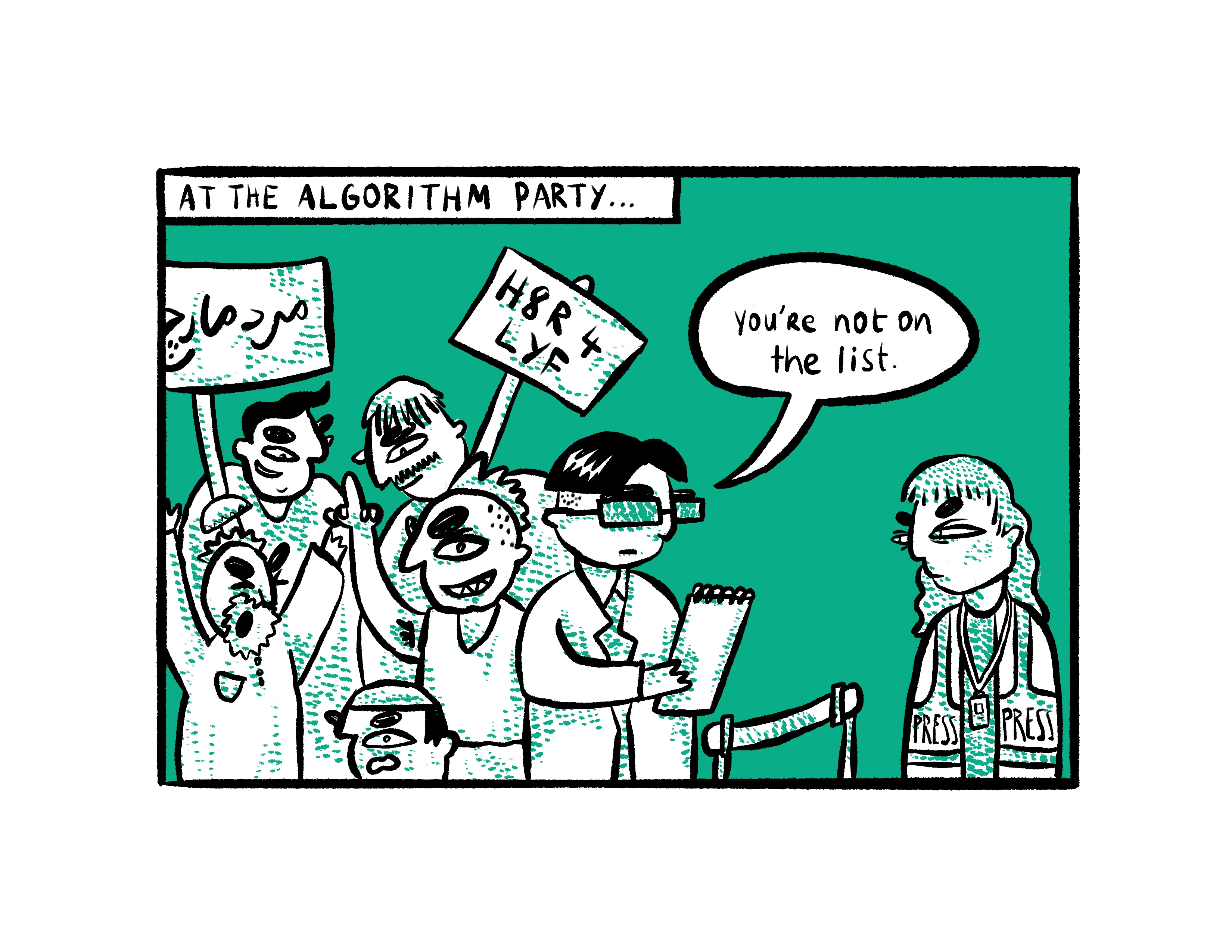
Growing up in Gujrat, I often heard stories about chupaal — the traditional village gathering where community members would sit together, under a tree or in a courtyard, to discuss their collective problems and ideas. It was a space where every voice mattered, where dialogue, not domination, shaped decisions.
That spirit stayed with me.
When I looked around at the civic landscape available to young women like me, I saw a painful gap. Public spaces were shrinking, and digital spaces often felt no safer. So, along with a group of like-minded girls, I envisioned Chupaal — not as a physical place, but also a digital safe space where women could gather, share stories, talk about democracy, civic engagement, gender rights, and social justice.
In the beginning, our dream took flight. We organized webinars, storytelling circles, online civic dialogues — spaces where young women from different parts of Pakistan, many stepping into public discourse for the first time, felt seen and heard. We talked about leadership, climate justice, electoral rights, mental health, and the daily struggles of being a woman trying to participate in civic life.
It wasn’t just about talking. It was about reclaiming.
But slowly, the very platforms that hosted our efforts began to turn against us. Posts that addressed "sensitive" issues like gender rights, democratic participation, war conflicts or environmental activism were quietly pushed down. My Facebook account restricted and reach declined without further explanation. Others disappeared into the vast sea of content no one ever saw.
I felt the weight of it — the silent shrinking of a space we had worked so hard to create.
We were not competing with celebrity gossip, clickbait outrage, or viral dance trends. Our mission was slower, deeper: building civic literacy, amplifying marginalized voices, fostering collective empowerment. But the algorithms didn’t reward that. They punished it even after years of hard work.
It’s a cruel irony. In Pakistan women’s physical presence in public spaces is already contested and often unsafe, even the virtual spaces we carve out for ourselves face erasure — hidden behind the cold, opaque logic of algorithms.
In the rugged terrains of Mianwali, MahaPara — a young journalist and activist — fights a double battle: against deep-seated cultural barriers and the hidden biases of digital algorithms.
As a woman reporting on women's education, tribal land rights, and honor killings, MahaPara constantly challenges social norms.
"When I started posting about girls being pulled out of school at age twelve, I was warned by my own relatives," she said. "They said, 'Tumhara kaam nahi hai bolna' (It’s not your place to speak)."
Cultural restrictions meant she often had to report under pseudonyms, or post through male colleagues' accounts. But even when she found a way to publish her work digitally, MahaPara faced another, invisible barrier: algorithmic suppression.
"Because my stories don't use fancy graphics or English buzzwords, they don’t spread," she explained. "Stories from cities get millions of likes, but real stories from our villages remain unseen."
In a country where journalism has long operated under the shadow of censorship and societal pressures, a quieter yet equally insidious threat has emerged: the digital suppression of marginalized voices. Beyond arrests, intimidation, and broadcast bans, a new frontier of silencing is unfolding—one dominated by invisible algorithms, obscure moderation policies, and hostile online environments.
Today, critical stories exposing gender-based violence, climate injustice, land dispossession, and political corruption often disappear before they even reach audiences. They are flagged, downranked, or buried by social media algorithms unequipped to understand the country's complex realities. This silent battle is redefining press freedom, reshaping who gets to tell Pakistan’s stories—and who is erased.
Through the experiences of grassroots activists, women journalists, and local movements across rural areas of Punjab and Balochistan, this article examines the digital barriers threatening democracy, the survival tactics marginalized groups are forced to adopt, and the urgent reforms needed to reclaim digital spaces for all.
Algorithmic Bias: The New Censor
When Facebook, Instagram, TikTok, and YouTube burst onto the global scene, they promised to democratize information. For many in Pakistan, particularly those marginalized by traditional media, these platforms initially offered hope: a direct, uncensored line to audiences both local and international.
But hope quickly collided with reality.
These platforms, largely designed for Western contexts, use automated moderation systems to regulate content. Machine learning algorithms are tasked with identifying "graphic content," "hate speech," or "misinformation." Yet, they often lack the cultural nuance to differentiate between harmful material and legitimate journalism exposing brutal realities. Algorithms are like secret codes that decide what you see on your social media feed. They are automatic systems designed to show you content you might like.
Digital Barriers in Rural Pakistan:
In regions like South Punjab and Narowal, Balochistan internet access is unstable, slow, and expensive. According to the Pakistan Telecommunication Authority (PTA) Annual Report 2023, as of 2023, only 36% of rural populations have access to mobile broadband compared to 62% in urban areas.
Lack of digital literacy further worsens the problem. Many people in villages are unaware of how social media platforms prioritize content, how algorithms work, or even how to protect their accounts from being flagged or taken down. Without digital education and strong infrastructure, rural voices are left shouting into a void.
And even when community campaigns are launched — like those advocating for climate resilience among farmers or women’s education — they rarely reach the audience they deserve. Algorithms prioritize viral entertainment, not grassroots activism. As a result, these efforts get buried and lost, weakening the momentum needed for real change.
Posts are removed without human review; accounts are suspended; visibility plummets. As a result, critical, life-saving narratives vanish—sometimes permanently.
Balochistan, a region marred by decades of conflict, poor governance, and systemic discrimination, the voices of local activists and researchers are often stifled — not just by state mechanisms but also by digital algorithms. Shazia Batool, an MPhil student in International Relations and a research assistant from Quetta, represents a generation of educated Hazaras striving to tell their community’s story. Yet, despite her efforts, she finds her work marginalized online. The algorithmic focus on virality and engagement sidelines complex stories from marginalized regions like Balochistan, especially when they challenge powerful narratives or expose uncomfortable truths.
Additionally, sensitive topics like enforced disappearances, ethnic violence, or state-led injustices often trigger content moderation systems. Shazia and others sometimes face shadowbanning — their posts are limited in reach without clear notification — simply because they use certain keywords (e.g., "genocide," "disappearances," "Balochistan struggle") flagged by platform moderation systems. This invisible censorship silences dissenting voices without leaving clear evidence.
The Human Cost of Digital Harassment:
Beyond algorithmic bias, another brutal force shrinks digital spaces for marginalized voices: harassment.
According to a Digital Rights Foundation report, around 72% of female journalists in Pakistan have experienced online harassment. For women journalists in Pakistan’s conservative society, online abuse is not random—it's systematic. Honor and shame, deeply rooted cultural constructs, are weaponized against women who dare to speak publicly. Threats, doxxing, revenge porn, and slurs flood their timelines. The message is clear: stay silent, or suffer.
Simal Fatimah, a journalist from Mandi Bahauddin, outlines the coping mechanisms many women have adopted:
"Several aspiring female journalists I know have created accounts under fake names, avoid posting profile pictures, and keep their accounts private just to protect themselves."
Yet privacy comes at a cost. Social media platforms deprioritize content from private or restricted profiles. Posts from such accounts receive fewer interactions, drastically limiting reach. The very act of hiding to stay safe—essential for survival—shrinks a journalist’s audience and influence.
Moreover, the psychological toll is profound. Simal shares how colleagues silently battle anxiety, depression, and isolation. The constant barrage of threats doesn’t just push individuals offline; it reshapes entire digital landscapes, making them more male-dominated, conformist, and hostile to dissent.
Visibility is a double-edged sword. For women journalists, choosing between professional advancement and personal safety often means abandoning dreams altogether.
Eisha, a reporter from Gujrat, embodies this painful calculus. She turned down offers to work as an on-screen anchor—not due to a lack of ambition, but out of fear.
"I wanted to tell human rights stories," she said. "But I have a family to think about. Sometimes, it’s just not worth the risk."
How Harassers Game the System by Weaponizing Algorithms:
When brave journalists do persist in speaking out, they face sophisticated forms of attack. Mass reporting has become a key tactic.
Ramna Saeed, a journalist from Gujranwala, has long focused on reporting the struggles of women and minorities. Her courageous work has drawn waves of online abuse — but also orchestrated attempts to silence her using platform tools.
"It wasn’t just criticism of my journalism," Ramna shared. "They attacked my appearance, my character — just because I was a woman daring to speak."
Beyond direct harassment, Ramna’s harassers organized mass-reporting campaigns, falsely flagging her posts as hate speech or misinformation. These mass flags triggered platform moderation systems, leading to temporary content removals, account restrictions, and shadowbanning.
"There were days I wanted to give up," Ramna admitted. "But I knew if I stayed silent, no one would tell the stories of the women who trusted me with their voices."
Here, harassment weaponizes algorithmic vulnerabilities. Tech platforms, relying heavily on automated enforcement, often act on the volume of reports rather than the accuracy of claims — a flaw that malicious actors exploit with devastating effect.
The Forgotten South with Regional Disparities:
The digital marginalization extends beyond gender. In Pakistan’s rural and underserved regions — like South Punjab, Balochistan, and interior Sindh — journalists face even greater algorithmic disadvantages.
Content produced in Urdu, Punjabi, Saraiki, Sindhi, and Balochi often receives less algorithmic prioritization than content in English. Local activists struggle to reach national audiences, let alone global ones, as platform algorithms favor high-traffic, metropolitan, English-language accounts.
The disconnect between content moderation standards and local realities means that vital stories — about environmental degradation in Kohlu, or forced evictions in Rahim Yar Khan — are treated as "low-priority" or "borderline content" by digital platforms.
By muting these regional narratives, tech platforms unintentionally reproduce the same urban-centric, elite-dominated media ecosystem that activists have long fought to challenge.
How the Algorithms Marginalize Grassroots Movements:
The consequences of digital suppression ripple far beyond individuals. Entire movements, communities, and regions are rendered invisible. Grassroots initiatives fighting for climate resilience, gender rights, and democratic participation find themselves trapped in a digital loop: create meaningful content, only to see it buried by algorithmic indifference.
The Ecoist Campaign in Dera Ghazi Khan, founded by Basham Zen and led by a coalition of local environmentalists, works tirelessly to restore degraded lands, revive indigenous farming techniques in Southern Punjab. Their work is critical, especially as climate change increasingly devastates rural livelihoods and displaces vulnerable communities.
Beyond land restoration, Zen has a deeper mission: to amplify the stories of marginalized groups living along the banks of the Sindhu (Indus) River—communities who face not only environmental injustice but cultural and economic erasure.
Yet despite their tangible on-ground achievements, community-led innovations- the Ecoist’s social media campaigns remain largely unseen.
"We document our work every day," said Basham Zen. "But without money to boost posts or create viral content, and without fitting the algorithm's taste for sensationalism, both our environmental efforts and the voices of Sindhu’s marginalized communities are buried."
In an era where environmental crises and cultural losses demand urgent attention, the silencing of initiatives like Ecoist is a tragedy with far-reaching consequences.
Saba Choudhry, a journalist from Narowal, has long understood what it means to be invisible.
Growing up surrounded by fields, narrow village roads, and vibrant yet overlooked communities, she witnessed a Pakistan that mainstream media rarely bothered to portray — a Pakistan full of resilience, ingenuity, and quiet dreams. Yet when rural life did appear in national narratives, it was often reduced to tired stereotypes: tales of backwardness, poverty, or tragedy.
Determined to challenge these perceptions, Saba founded Rural Lens — a digital platform dedicated to telling authentic stories from the margins. Her vision was simple yet radical: to document the lived realities of rural communities through raw, heartfelt narratives that honored their complexity.
Through Rural Lens, she shared stories of women revolutionizing agriculture, of young entrepreneurs battling economic odds, and of entire communities responding to climate challenges with innovation and grit. Her storytelling was personal, unpolished, and deeply human — precisely the kind of journalism that rarely finds space in sensationalist media landscapes.
However, Saba's work faced an uphill battle. Unlike the glossy, high-budget content designed to go viral, it focuses on nuance and authenticity — while its greatest strength — became its biggest hurdle in a digital world driven by algorithms that prioritize entertainment, outrage, and celebrity news. Posts that took days of labor to create were often buried under an avalanche of trending memes and political controversies.
Rural Lens remained confined to niche audiences, its reach limited despite the universal importance of its stories.
Local Narratives Trapped in Digital Silos:
The experiences of Ecoist, Chupaal, and Rural Lens reveal a systemic failure. Social media promised to democratize storytelling. Instead, it created vast echo chambers where only commercially profitable, politically convenient, or entertainment-driven narratives thrive.
Grassroots campaigns lack the resources to "boost" posts, pay for ad placements, or manipulate engagement algorithms. Consequently, their stories remain siloed, speaking only to the already-converted, unable to influence national or international conversations where real change could be sparked.
Meanwhile, the national discourse continues to be dominated by urban, elite-centric perspectives—leaving out the very communities most affected by environmental degradation, political oppression, and gender inequality.
When local narratives are buried, the consequences are dire:
- Environmental crises continue unchecked because frontline communities cannot amplify their realities.
- Women’s political participation remains stunted because platforms like Chupaal cannot achieve critical mass.
- Rural innovation and entrepreneurship remain disconnected from support networks because platforms like Rural Lens cannot gain visibility.
- Silencing these voices through algorithmic gatekeeping doesn’t just harm individuals. It reinforces structural inequalities, ensuring that the rich grow richer, the powerful more powerful, and the marginalized more invisible.
Reclaiming Digital Spaces:
It would be simplistic to condemn social media platforms entirely. For countless marginalized individuals in Pakistan—rural women, grassroots activists, young citizen journalists—they remain the only megaphone available. Yet realizing their transformative potential demands targeted, systemic changes to ensure these spaces genuinely serve those who rely on them.
Rather than relying on generic global initiatives, social media companies must establish south asia-specific funds and partnerships with local journalism networks, women’s organizations, and rural storytellers. Recognizing their influence on public discourse, platforms must form advisory boards from Pakistan. Content moderation decisions should not be made remotely, detached from the socio-political context of the country. Ethical platform governance demands meaningful civil society oversight.
Algorithms cannot grasp the nuances of satire, activism, or dissent rooted in diverse cultures. Companies must invest in hiring and training local moderators fluent in multiple languages. Partnerships with human rights organizations can help ensure critical journalism and advocacy are protected, not wrongly flagged or erased.
At the national level, Pakistan must urgently reform digital safety laws to better protect journalists and marginalized groups from online harassment. Laws like the Prevention of Electronic Crimes Act (PECA) must be reshaped to safeguard free expression rather than suppress it. Swift reporting mechanisms and specialized, gender-sensitive cybercrime units are essential. Establishing legal aid centers for digital rights at the district level would further ensure rural journalists and activists have access to justice.
Community organizations should conduct digital literacy workshops, particularly for women and rural youth, equipping them to navigate online spaces safely. Independent media outlets can amplify underrepresented voices, challenging dominant narratives. By supporting grassroots digital initiatives, advocating for stronger protections, and standing against censorship and harassment, locals can help transform social media into a more equitable and empowering tool for all.
Conclusion:
The battle for free expression in Pakistan is no longer fought only against state censorship or cultural taboos. It is now also waged against invisible algorithms, biased content moderation, and weaponized digital harassment.
For grassroots activists, women journalists, and rural storytellers, the stakes could not be higher. Their erasure from online spaces silences critical voices necessary for Pakistan’s democratic, environmental, and social progress.
When our Chupaal gatherings were shadowbanned, we adapted. We shifted to WhatsApp and Signal encrypted groups. When webinars lost visibility, we organized offline study circles in village schools, colleges and women’s centers. We created storytelling campaigns that used community radio, poetry pamphlets, and art instead of depending solely on traditional social media posts. We built micro-communities—small circles of trust—especially among women in rural areas.
I remind myself often: we are not asking for favors. We are demanding the basic right to participate, to organize, and to imagine a future where our voices are not algorithmically erased but amplified.
The question facing Pakistan—and indeed the world—is urgent:
Whose voices are we willing to hear?
And whose are we willing to let vanish into digital oblivion?
May 14, 2025 - Comments Off on Newsfluencers by Anmol Irfan
Newsfluencers by Anmol Irfan
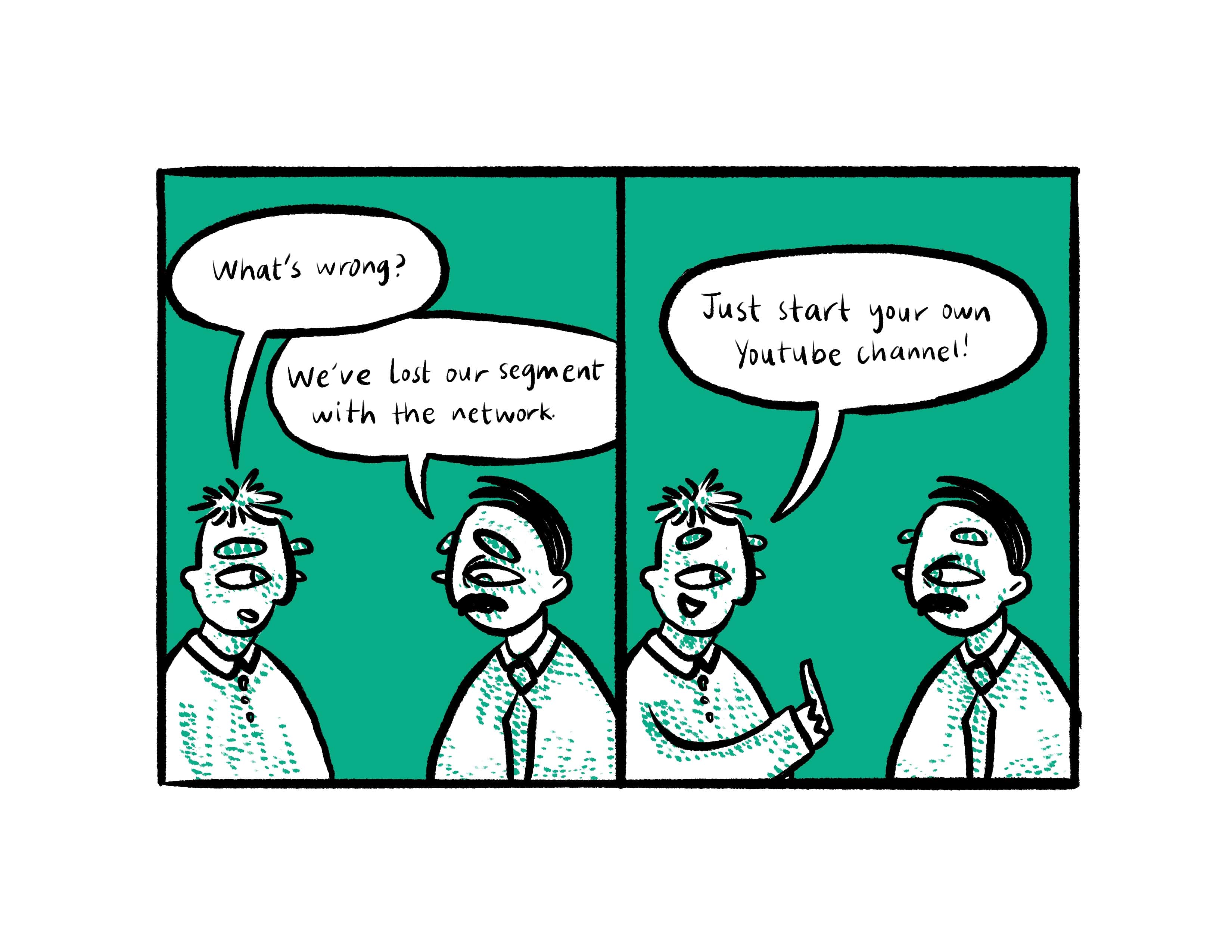
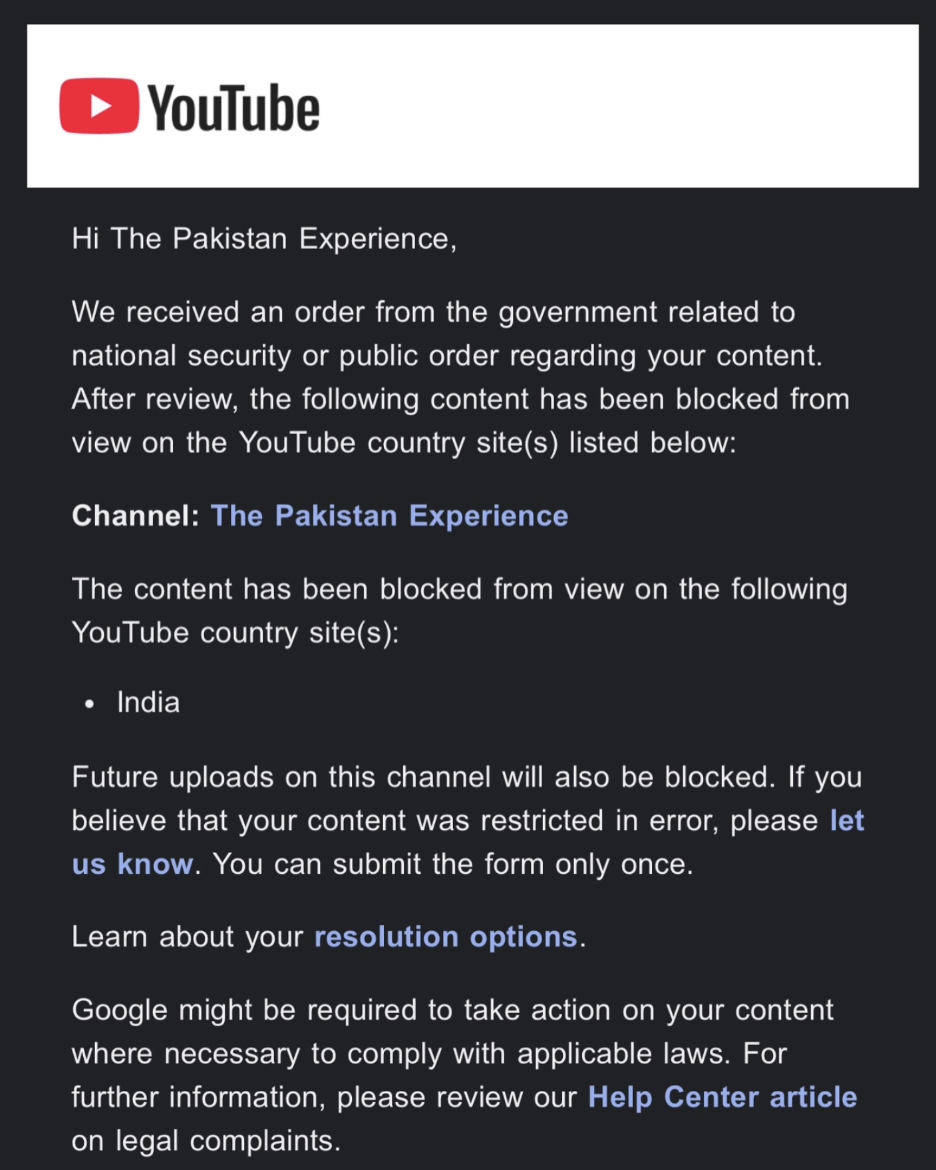
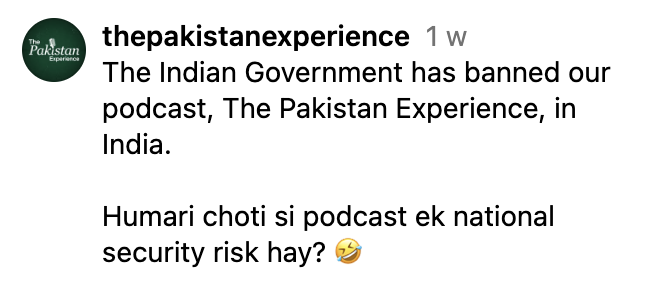
On 28th April, The Pakistan Experience (TPE) - one of Pakistan’s most popular podcasts, hosted by comedian and content creator Shehzad Ghias Shaikh, took to Instagram to share that the podcast’s Youtube channel, where Shaikh hosts the full podcast was banned in India. The ban came following “an order from the government on national security or public order,” which means that TPE episodes can no longer be seen in India on Youtube. TPE’s account made light of the issue, questioning how a small individual podcast could pose a threat to an entire country, but despite being a joke, the question holds weight. After all, how does one podcast - or one podcast host - seem to pose a threat to the security of an entire country?
https://www.instagram.com/p/DI-ZUNMTK7B/
The answer here lies not in TPE or Shaikh alone, but in the changing culture that they are a part of where news and information is now being consumed beyond mainstream media channels. Even as mainstream news organisations have moved towards establishing their own digital presence, mistrust in the media in South Asia continues to increase as press freedom very obviously declines.
Over the last couple of years countries like India, Pakistan and Bangladesh have seen crackdowns on journalists, a push for state narratives, and internet controls in an effort to control dissenting voices. This has become particularly obvious in light of the Pahalgam attack, which is what led India to block TPE’s Youtube channel along with 15 other Pakistani news related channels. The fact that TPE was considered to have the same impact as BOL or ARY news - both of which have been blocked - is a testament to the power of social media content and information - or “news-fluencers,” a term that many content creators now go by.
Dr. Erum Hafeez, Associate Professor and Head of the Media Studies Department at Iqra University shares that the role of these news-fluencers is becoming increasingly obvious in light of the Pahalgam attack. As Indian media continues to churn out state-sponsored narratives and dominate much of the global mainstream narratives around Kashmir, it is these news-influencers that citizens are turning to for an alternative viewpoint. “In today's news cycle, stories don’t unfold — they collide," Hafeez says. "One crisis barely finishes echoing before another demands our attention. Influencers, with their immediacy and intimacy, have learned to ride this relentless wave — and often, to steer it."
This also comes at a time when media controls in South Asia have increased significantly. 255 cases of hate speech against minorities were recently documented in India and Pakistan ranked 152 out of 180 countries in the 2024 World Press Freedom Index. Earlier this year, after changes to PECA led to growing press suppression, journalists across Pakistan protested the controls. A PFUJ statement called the new changes “a policy of ‘carrot and stick’ is used to control the media, which has brought a few independent media houses to the brink of collapse.”
Amidst all of these changes, the rise of individual content creators and news-influencers who are providing alternative narratives to an audience that has for too long had access to heavily controlled media provides a sudden new reality - one that comes with its own benefits but also its challenges.
The “Influence” of Influencers
Sarosh Ibrahim, a digital creator and journalist with Maati TV, believes “this trend came about because of heavy censorship in media and journalism. A lot of platforms are now out of reach - so that led to an increase not just in influencers but also newer platforms.”
Speaking of the recent Kashmir incident specifically and the censorship we saw around it, a post by journalist Sahar Habib Ghazi went viral. Ghazi, outside the world of journalism is known for her instagram handle 2030mama, where she blends a mix of her nuanced news takes with her experiences and opinions on parenting, life and even women’s health - like raising awareness around and sharing her own experiences on endometriosis. Following the Pahalgam attack, Ghazi took to her instagram to challenge some of the misinformation and myths she was commonly seeing in the media. As a journalist of 20 years she’s established a certain credibility with her followers, but even outside of the media jobs she’s held, her own content has built trust with her followers and she’s maintained her stance when it comes to social justice, allowing her viewers to know where she’s coming from.
She also directed her followers to follow Stand With Kashmir, a non-profit organisation that stands with Kashmiri rights, further building on the network that social media has allowed her viewers to curate for themselves outside of the mainstream media narrative.
Sajeer Shaikh, a journalist and content creator shares similar observations regarding the Gaza crisis.
“Over the past few months, we have seen in real time how major news channels have succumbed to Zionist pressure, leading to some of the worst coverage of the war in Gaza perpetuated by Israel and the U.S. From the ashes of this disaster, many Gen Z influencers took to TikTok to share the other side of the story. In that case, yes, it is a fight against censorship and fascism,” she says, adding, “we have seen people break through the noise to tell us what's happening. I would say it's one of the finest examples of fighting censorship in modern times.”
And the content doesn’t always have to be serious or political, as Buraq Shabbir showcases with her culture and lifestyle stories. Speaking about the ways in which individuals generating content or running their own platforms impacts the way we consume journalism Shabbir says, “If I’m very honest I think it plays a very key role in how we consume media and generate content. Where publications have restrictions and limitations, this adds layers to the whole idea of those limitations.”
Hafeez also agrees, talking about the “influence” that these influencers have - changing the way many of us consume content and how we understand it.
"Without the guardrails of training or accountability, many influencers trade complexity for virality," she warns. "In societies with fragile media literacy, it’s easy for the loudest voice to drown out the wisest one."
Will Misinformation Become a Problem?
It’s scary because “When there is such development which is not regulated properly, it might cause more danger than giving benefit. When we talk about Pakistan, without any training, media literacy, without any background, or checks and balances, yes they are simply creating more noise,” Hafeez says. She’s careful to not paint everyone with the same brush, but does say that social media news can cause issues if people don’t know how to filter through it.
“Even if you click something by mistake once you’ll be bombarded by the same kind of news and it's difficult to check it, or control it and then that content becomes your reality,” she says.
Aleezeh Fatimah, a journalist who’s worked for different news organisations - both offline and online - also points out that not every content creator is a journalist. “I don't think journalists should be influencers. This is a very wrong trend that we have started because we do not really value journalistic integrity anymore, we just want views,” she says. Fatimah also adds,”very recently I resigned from a media organisation and came back to my old organisation, because the place that I went to was strictly confined to numbers, they were not paying attention to integrity or anything like that.”
For Fatimah, who calls herself “old-school”, and still prefers newspapers and news organizations, journalism needs to be about reporting the facts, not about “influencing people.” However, she admits that many people around her turn to social media for their news. “I think yes it can be more accessible but more democratic? I doubt that because there's a culture of cult-following in our country,” she says.
Fatimah also believes that the trends she’s seeing in general can make social media more unsafe. “I don't think we can fight censorship like this, instead I feel our social apps will keep getting restricted,” she says, adding, “This can put more people at risk because a lot of people from vulnerable areas and communities use social media.”
Shabbir doesn’t feel it’s as black and white as that. “Content creators don’t really fact check, don't do the same kind of research, which is why misinformation is rising because a layman cannot decide whether this post is fact checked or its misinformation. You decide whether to be a credible person and what you want your audience to take, so I feel it varies from individual to individual,” adding that as a journalist she takes her own training and ethics seriously in the content and news that she puts out.
Making Information Accessible
When Ibrahim first started making content, she just did so because she wanted to make an impact, and then soon found her niche, focusing on body positivity, women’s issues and eventually going on to launch her own podcast called Dear Body. She shares that she did all of this because she couldn’t find anyone talking about these issues online at that time.
“I spoke about Pakistani women’s experiences, because online we had white women talking about white women’s experiences,” Ibrahim says, adding, “I thought if I can sit in front of the camera and give a one or two minute breakdown on what something actually means, not just reporting it but actually breaking down what it means.”
In her experience, creating both her own content and working for an organization, she finds creating for herself has a lot more freedom, as platforms often have to shy away from taboo or sensitive topics, being careful about the way they approach certain issues. “I feel when you’re creating for yourself you’re basically the CEO, you make all of the decisions, you’ve occupied all of the posts,” Ibrahim says while also adding that you can decide what kind of comments or backlash are ok for you to deal with and how much you want to push with your content.
Shabbir, who’s beat is culture and lifestyle reporting, says that where publications are limited in terms of the reviews they can share, she isn’t - and so she can often offer an alternate perspective to her audiences, which isn’t bound by PR or affiliations. She shares that she does a lot of reviews in her personal work because she finds that those are missing in more mainstream publications.
“I work with two online international publications and I’ve noticed that they focus on reporting not reviewing” Shabbir says, adding that one publication told her they can’t do reviews because as a publication they couldn’t show support for specific platforms or channels. However as an individual, she’s free to share her personal opinions over content she likes and dislikes, allowing her audience a view into whether or not that content may be for them, and understand it from a different perspective.
At the end of the day, whether we like it or not, the lines of content and journalism are blurring. “There is a bit of tension, I suppose, in being labeled an influencer when the word "journalist" carries more weight. I think that a journalist's written word is them exerting influence, but the world has changed,” Shaikh says, also pointing out the content of prominent creators like Mysta Paki and Shehzad Ghias Shaikh. “Bilal and Shehzad do this at a much bigger scale. Bilal uses the power of visuals and storytelling to highlight pertinent issues and poses thought-provoking questions. Shehzad takes the bull by its horns through the power of conversation. Neither of the two are reporting, and that just goes to show how lines can be blurred as content evolves,” she says.
With social media giving everyone a voice, and both journalists and audiences increasingly disillusioned with mainstream media, it’s very clear that news-influencers are a reality that are here to stay. Who we as audiences decide to give that power to by considering them influencers may just be what decides how successful this new reality for journalism will be. For Hafeez, true influence is earned, not claimed. “It belongs to those who research with care, speak with responsibility, and carry the humility to admit when they are wrong," she says, pointing out that she’s very careful with who she follows in this regard.
May 14, 2025 - Comments Off on Right to a digital identity: Why are so many Pakistani women journalists forced to work anonymously? By Kinza Shakeel
Right to a digital identity: Why are so many Pakistani women journalists forced to work anonymously? By Kinza Shakeel
 Trigger Warning: Following contains mentions of violence against women.
Note: All the names used are pseudonyms to protect the privacy of the female journalists.
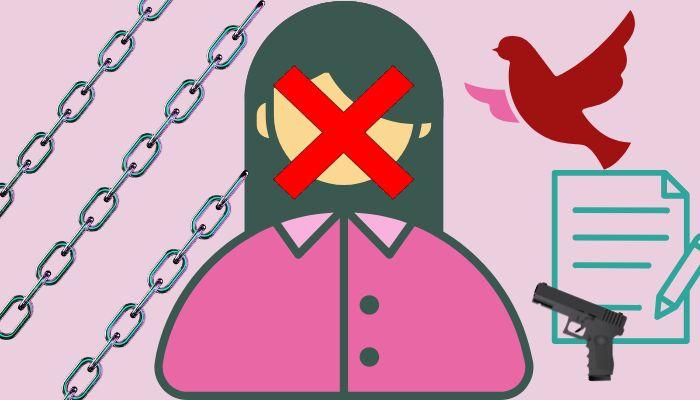
Caption: A representational illustration depicting the situation of freedom of expression and speech for Pakistani women journalists. Source: Made by writer.
It was 3am midnight when a myriad of phone calls started ringing while Zeba remained immersed in a sound sleep without a worry about her life and safety.
She could still remember the relief she felt a day before when she went for a little ice cream date with her friend after a long day in the newsroom.
As she picked up the call, a deep male voice called her randi (whore) and threatened to rape her on gunpoint if she didn’t delete her social media posts in support of a minor girl, who became a victim of sexual violence in a local hospital.
Zeba has been a vocal supporter of Pakistani women, especially those belonging to the minority Hazara and Afghan communities. She had been amplifying their causes on her X, formerly Twitter, account for years. With time, she became a popular voice for these women.
This wasn't an isolated event; Zeba often posted for women's rights as a journalist and has continuously faced backlash for her posts not only from the right wing but also from the journalist community as well.
The case of the minor girl became a turning point in Zeba’s life as a female journalist in Pakistan. She had to let go of her public identity and profile because of the danger to her life. "My crime was that I dared to criticize the violence that Pakistani women have to face on a daily basis," said Zeba, an accomplished journalist based in Karachi.
As she was recalling what happened to her, it wasn't easy for her to describe her experience with those phone calls. She was shivering not only out of fear but considering it was traumatic to hear a man call you a “whore” in the middle of night and threatening you with rape, Zeba faced more than just an ordeal.
"I was backing that little girl’s case; she had no family, no external support and her abuser was a powerful man. Someone had to stand up for her," she said.
The phone calls she received were from male friends of the abuser and though she didn't want to take down her social media posts in support of the girl, she had to as soon as she was doxxed.
Notably, doxxing is the act of publicly spreading personally identifiable information about an individual or organization, usually through the internet and without their consent.
"That incident forced me to go anonymous online because speaking for justice gets you killed in Pakistan. I continued supporting that girl by raising funds for her treatment and education but she deserved more, just like thousands of other Pakistani girls and women," Zeba added.
Going anonymous after years of being a prominent female journalist who amplifies women's rights wasn't easy for Zeba. However, Zeba’s story is one of many women journalists in Pakistan, who have been deprived of their right to a digital identity just because of their work, opinions and, most importantly, their gender.
Why choose anonymity?
Women journalists aren't working anonymously because they don't have the guts to show their real identity. Instead, they are forced and coerced into hiding due to an unsafe digital environment that doesn't make any space for their voices.
"As a journalist and social activist, I’ve had to make the difficult choice to remain anonymous—not because I lack courage, but because the cost of visibility for women like me in this society can be devastating. The risk is not just digital backlash and endless bullying, it's also real-world consequences: isolation, character assassination, threats, and even violence," said Zehra Afsana, an anonymous female journalist based in Sindh.
Though with the rise of social media, the critical issues surrounding women's rights and violence against religious and ethnic minorities, have achieved a space of their own that they couldn't get in mainstream television and radio before, still journalists, especially women, who speak up for such issues can't do it freely because of online mobs, biased policies and general non-safety.
Highlighting this dilemma, Sehar, another anonymous female journalist said: "I am not afraid of showing my face but there’s a reason why I have to hide my identity. I have spoken a lot against religious persecution of women in this country and in one instance, when I posted about this issue on X, I got a text message from PTA (Pakistan Telecommunication Authority) accusing me of blasphemy and warning me to not post such content on social media otherwise there’d be consequences."
Alia, who has been raising her voice for gender-based violence in Pakistan, also raised the same concerns related to her anonymity.
She said: “I choose anonymity as a refuge in order to protect myself and my family. It’s dangerous to be visible in this country for daring to dig a little bit out of the box. I don’t want to stop speaking up — I can’t do it under my full name anymore because that’s not a practical solution but I’m going to continue to speak out for those who can’t.”
Another prominent reason for these women journalists choosing anonymity are the social norms and patriarchal expectations put on them by both their families and society. Zehra spoke about this aspect as a Sindhi woman: Coming from a “place where patriarchy isn’t just a social norm but an inherited legacy,” voicing an opinion as a woman is often seen as a threat, even a dishonour. Although she has moved to a bigger city, the weight of izzat (honour) tied to her family name and community still follows her.
“Every word I speak, every post I write, every cause I support is scrutinized through the lens of respectability politics,” she added.
Lack of Safety in the Digital-verse
Just like society defines the larger fabric of our real lives and what should or shouldn’t be considered normal, the digital space also ends up following the same pattern, mirroring our physical world. People amplifying and backing problematic ideologies in real lives also exist in the digital-verse and as technology advances with each passing day, we see the same framework replicated in the digital world.
According to a report by the International Journalists’ Network, women journalists are frequent targets of harassment particularly on social media. The abuse is not limited to digital media; many journalists are also threatened with physical assault as well as offline violence, the report mentioned.
Benazir Shah, a prominent journalist affiliated with Geo News Network, encountered online trolls for her Covid-19 reporting, when she questioned the reliability of the government’s data.
Another well-known journalist, Shiffa Yousafzai, who has worked as a news anchor and a columnist, faced personal attacks on social media after she made some political comments on her morning show.
These incidents amongst many more are a testament to the fact that women journalists in Pakistan are discriminated against and particularly targeted for their speech online.
Women journalists turn towards anonymizing themselves in online spaces for their safety and security. Upon interviewing 5 women journalists for this piece, some common patterns have been identified as to why women anonymize themselves in online spaces.
Normalized Sexism
Pakistani women journalists are subjected to misogynist slurs, threats, harassment and bullying on a daily basis.
“Online platforms tend to be sexist, with women being harassed and their content censored,” said Alia.
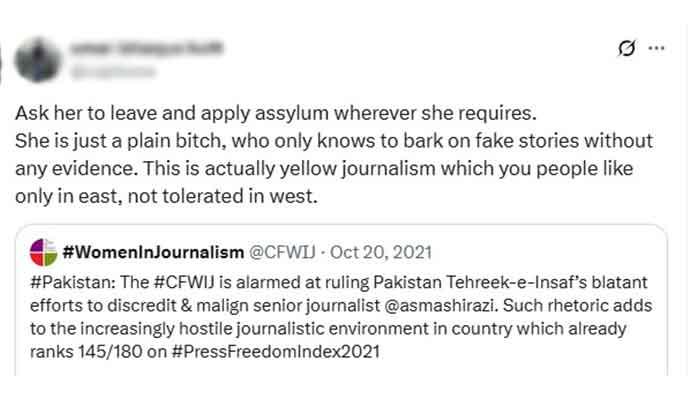
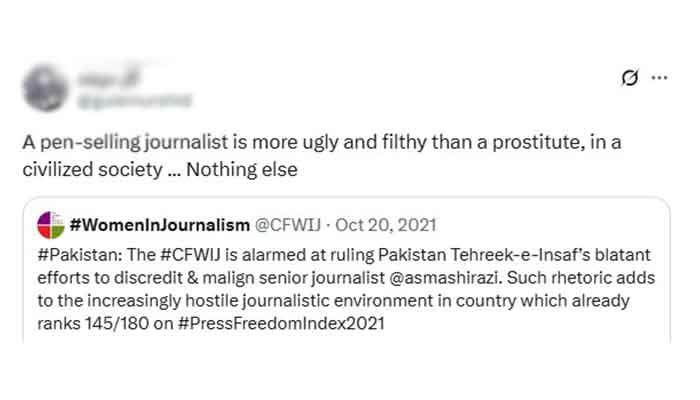
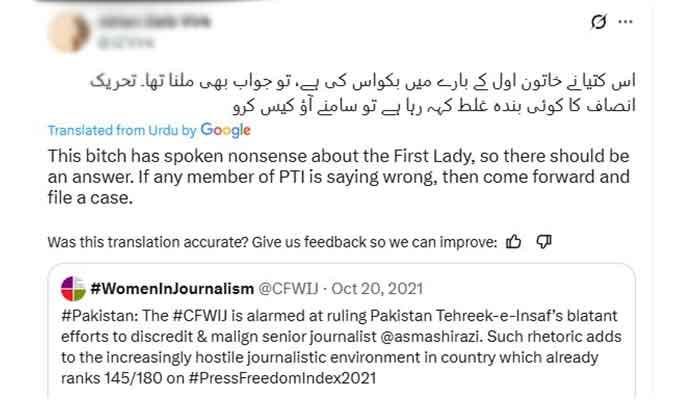
The screenshots above are examples of how misogynist slurs like “bitch” and “prostitute” are normally used to attack female journalists. In this particular incident, right-wing political party supporters bashed anchorperson Asma Shirazi, in response to a post on X by the Coalition for Women in Journalism (CWFIJ) in support of her and opinions. Slurs like this have become all too common, making it easier for people come after women journalists on digital media platforms.

Caption: A video thumbnail spreading misinformation and using abusive language against women attending Aurat March. Source: YouTube.
Misinformation against women journalists is also a common practice to malign and target them. Misleading and false thumbnails like the one attached above still remain on social media platforms despite being a clear attack on Aurat March organizers and marchers.
Witch Hunts and Online Mobs
There has also been a rise of online mobs who plot witch hunts against Pakistani women journalists from time to time by publicly maligning and degrading them with impunity.
Popular anchorpersons Gharida Farooqi and Asma Shirazi have been at the forefront of facing these attacks for years. Women Press Freedom, a support organization, has documented a dozen troll campaigns against Gharida Farooqi since at least as far back as 2020. More recently, in 2024 television personality Dr Omer Adil spewed derogatory remarks against Farooqi during an online vlog. Following the journalist’s complaint, he apologized to her.
In the video apology uploaded to YouTube, Adil said: “This is an apology from my side. Dr Omer Adil to the host and anchor person Gharidah Farooqi.”
He added: “This is completely an unconditional, whole hearted and sincere apology. I understand she was hurt and distressed by a podcast which was edited and completely manipulated by the host of the podcast. I have no grudges... It is a sincere and unconditional apology. Thank you so much.”
Asma Shirazi has also been the target of consistent online attacks against her by supporters of political parties. She endorsed a counter-petition led by the Digital Rights Foundation (DRF) to call out the normalized harassment against female journalists. Network of Women Journalists for Digital Rights (NWJDR) termed the attacks against her as a gendered disinformation campaign.
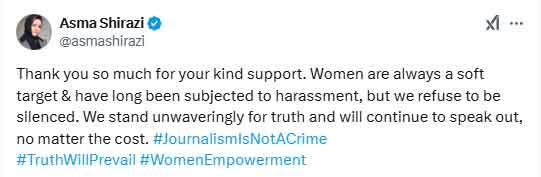
Caption: A post of journalist Asma Shirazi after she was targeted by online mobs. Source: X @asmashirazi
There have also been incidents when women journalists reporting issues pertaining to religious and gender minorities are subjected to religious persecution, and in extreme cases blasphemy accusations.
Allegations like these make women journalists vulnerable to physical incidents of violence which have been all too common in the country in the past.
“Verbal harrasment, acid attacks, rape threats and death are the most common responses by men. In a country like Pakistan, where mobs gather and lynch people on fake allegations of blasphemy and where women's rights are considered a threat to religion, we as women can't even imagine what a mob of angry men would do to our bodies, if we ever get falsely accused of blasphemy for merely defending women's rights,” said Chandni, another young journalist, disclosing the harsh reality of witch hunts that women journalists have to face online.
Deepfakes and Censorship
Artificial intelligence has further exacerbated the situation of freedom of expression in the country, especially for women journalists. Deepfakes, superimposing someone’s picture onto a video or digitally altering images to create fake scenarios, have become a common tactic to shut off and silence women journalists through psychological abuse. Perpetrators create fake images of women journalists and spread them in order to smear their reputation.
This negative use of technology has targeted common women as well as influential politicians like Maryam Nawaz and Azma Bukhari. For women journalists, deepfakes have been defined as an online war.
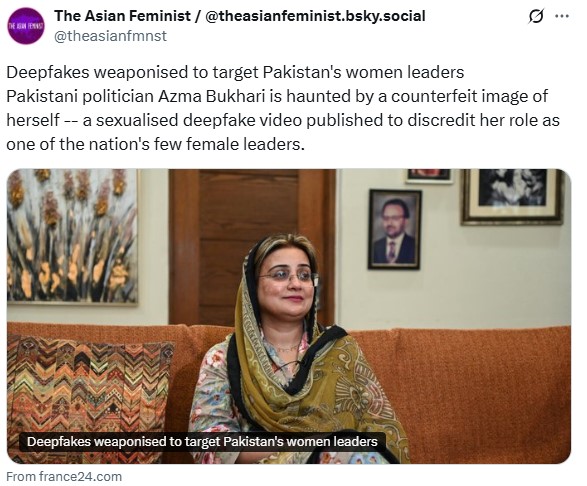
Caption: A post informing about deepfakes used to target politician Azma Bukhari. Source: X@theasianfmnst
On the other hand, many women journalists and activists also face censorship.
“Feminist content continuously gets restricted, flagged or shadow banned because it offends misogynists,” said Chandni, adding that in contrast sexist and hateful content exists freely, even after people report it.
Community guidelines on the digital platforms are very vague. Most of the time, a post can be calling out violence against women but the platforms find it offensive on the basis of its engagement outcome.
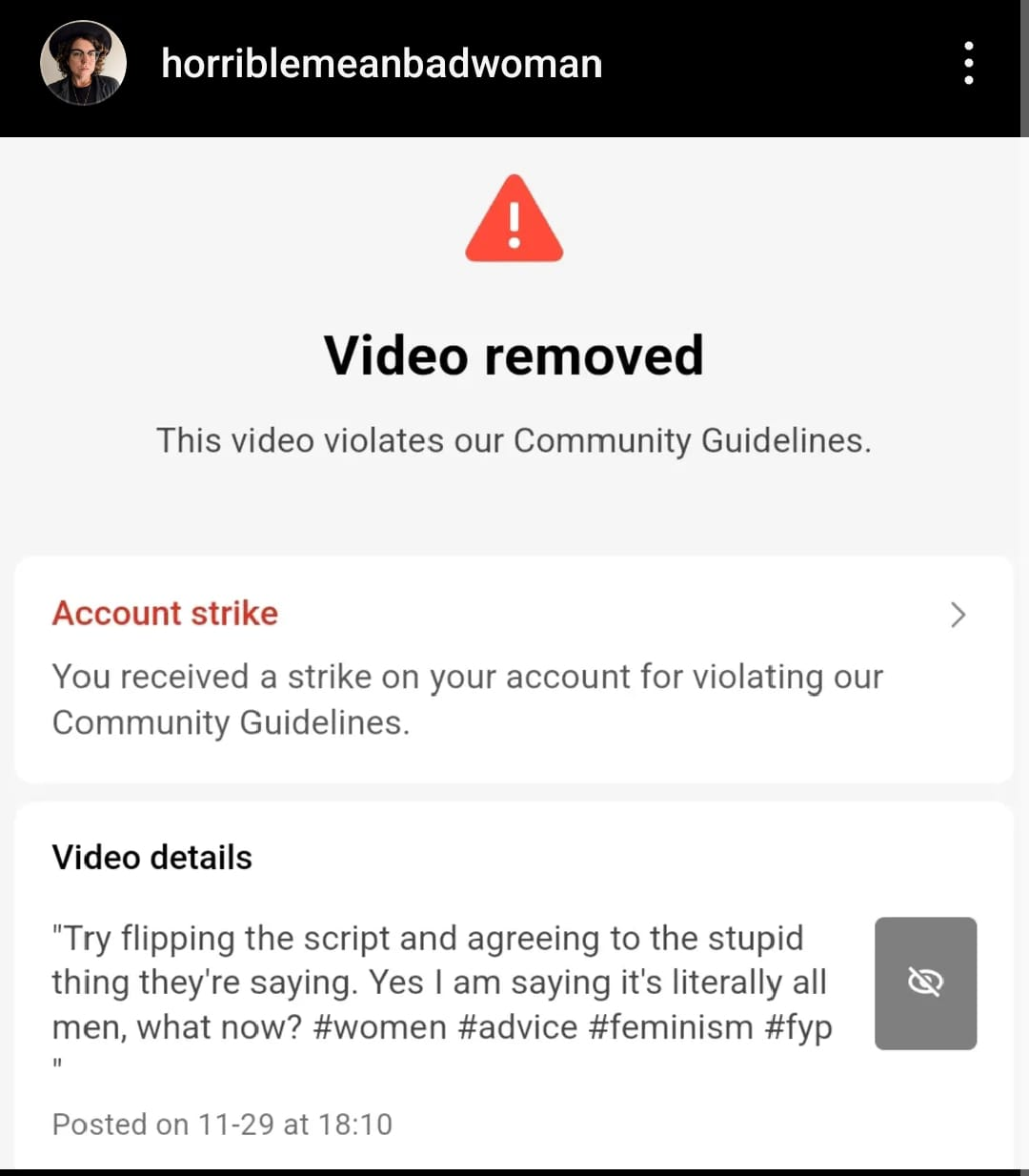
Caption: Screenshot from Instagram.
The screen attached above shows the same bias. Content posted by feminist activist @horriblemeanbadwoman on Instagram saying “all men” was removed, even though it was an effort to call out misogyny online. Many women are subjected to the same discrimination as platforms deem their posts to be violating community guidelines.
Moreover, in many cases, authorities remove women’s content, where they are expressing themselves freely, on the allegations of promoting “immorality” or “vulgarity”.
Tech accountability
Algorithm bias
In addition to community guidelines and censorship, algorithm bias is evident across digital media platforms. Women journalists interviewed for this piece have noted that content that targets the sentiments of women and minorities receives more engagement, with algorithms pushing it further.
“Social media algorithms often amplify misogynistic content made by men, rewarding controversy and engagement. Such posts gain more reach, likes, and visibility, while feminist voices, especially from women are frequently suppressed, reported, and/or shadow-banned, reinforcing harmful gender biases online,” said Alia.
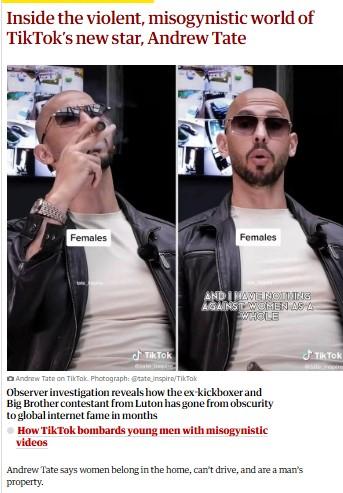
Caption: A screenshot of an article on social media influencer Andrew Tate, whose abusive posts receive a lot of engagement and are favoured by the algorithm. Source: The Guardian.
Alia’s concerns were also echoed by Zehra. She said: “There was a time when my feed was flooded with sexist memes—like the most viral was two men sipping tea saying “women” over a joke about bad driving. When a woman makes a mistake, it’s blamed on her gender; when a man does, it’s just a human error.”
Zehra also added that podcasters, usually men, openly use derogatory language for women and easily rack up millions of views. The algorithm rewards content like this with reach and engagement. Yet, if a woman responds with a comment as simple as “men are trash” under a post showing blatant abuse or sexism, she immediately gets banned.
This double standard makes it clear that platforms often enable misogyny while punishing women for reacting to it, she said.
In 2017, Facebook banned women users for writing “men are scum” and “men are trash” comments, deeming them as “hate speech”. Women, who wrote these comments, asserted that they did so to call out misogynist violence online, while content by self-proclaimed “misogynist” influencers like Andrew Tate face no hindrances with platforms amplifying violence against women.
No specific way to identify harmful content
Social media platforms have played a vital role in amplifying the voices of rights movements but they also take content and accounts down on the basis of the algorithm and mass approval. This is also the reason why so many female journalists’ accounts have been taken down, mainly because their work and opinions did not sit right with the algorithm favouring the majority.
Across the globe it has been noted that women journalists and activists accounts have been taken down or shadow-banned when their content was misinterpreted as offensive. Conversely, rape jokes, misogynist memes, violent videos, and genocidal ideas to name a few continue to exist on these platforms.
It is worth noting that male journalists also face backlash on online platforms. However, it is not as drastic as it is for female journalists, as they encounter heighted gendered abuse in digital spaces as compared to their male counterparts.
The importance of a face
The right to a digital identity is important but many women journalists don’t have this right, rather it has been taken away from them due to the hostile and biased environment online. To be able to express your opinion with your face and real name is a liberty, a privilege that unfortunately several Pakistani women journalists don’t have.
According to many of them, if the digital environment was safer, they would not stay anonymous.
“I'm protecting myself from extremists who'd accuse me of blasphemy and who could potentially restrict my freedom to leave the country because of my feminist views. But once I'm in a safer environment, I'll ditch the anonymity and speak my mind freely, even if it means dealing with online trolls. I'm not intimidated by misogynists trying to silence me. Women get cyber bullied and attacked for their opinions, expression, and choices all the time, and it'll keep happening if we don't do something about it,” said Sehar.
She also put forward the idea that women journalists in comparatively safer countries, specifically in the West, who are privileged enough to be safe should take a stand for women journalists in the global south and give them support.
As people don't engage with fake accounts or anonymous pages the same way they do with real individuals, we need women who can be visible, heard, and relatable. It won't be easy - we might get attacked or vilified - but someone has to take that first step. If we do, it'll give other women the confidence to express themselves, and that's how we can start changing the digital landscape and making it safer for all of us, she added.
Probable solutions and safer platform
Not engaging with misogynists, trolls and haters online, blocking and reporting them or even changing your gender online are some of the solutions used by women journalists in order to protect their online presence from harassment and censorship. Although these are not long term solutions, they do provide women with some semblance of safety in online spaces.
Certain platforms are necessary to raise issues. For instance, if someone wants higher government officials to take action on gender-based violence, then they have to raise the issue on X, even though it also has a history of not holding misogynist trolls accountable.
No social media platform is completely safe and people have different preferences as per their needs and use.
According to the women journalists interviewed for this piece, they use different platforms as per their own priority for safety. Some find Instagram more safer than TikTok, Facebook and X, while some consider Facebook and WhatsApp more secure. Some even said that Pinterest is the safest social media platform as it is used by women more. Others also mentioned that they use Tumblr for their work.
“I have one question for these tech platforms: How do you allow blatant misogyny and violent stereotypes to thrive, yet act instantly when a woman responds out of frustration or pain? This double standard speaks volumes. It’s not just negligence, it’s complicity,” said Zehra emphasizing that sometimes, at best, a comment might be removed but the threats don’t end there, they continue in direct messages, and reported accounts are often ignored.
Pakistani women journalists are entitled to freedom of speech and expression in the digital realm. Social media platforms need to ensure that they make a safer environment for vulnerable and marginalized genders and professions to ensure it is a safe space for all.