

By Halima Azhar The allegations appeared online in February, 2026. An established digital content creator, Mahnoor Rahim, talked about the inappropriate behavior of a producer (keeping his name anonymous at first) in her DMs (direct messages) when she had just started her career. People were quick to identify the pattern she described in her reel …

 By Halima Azhar
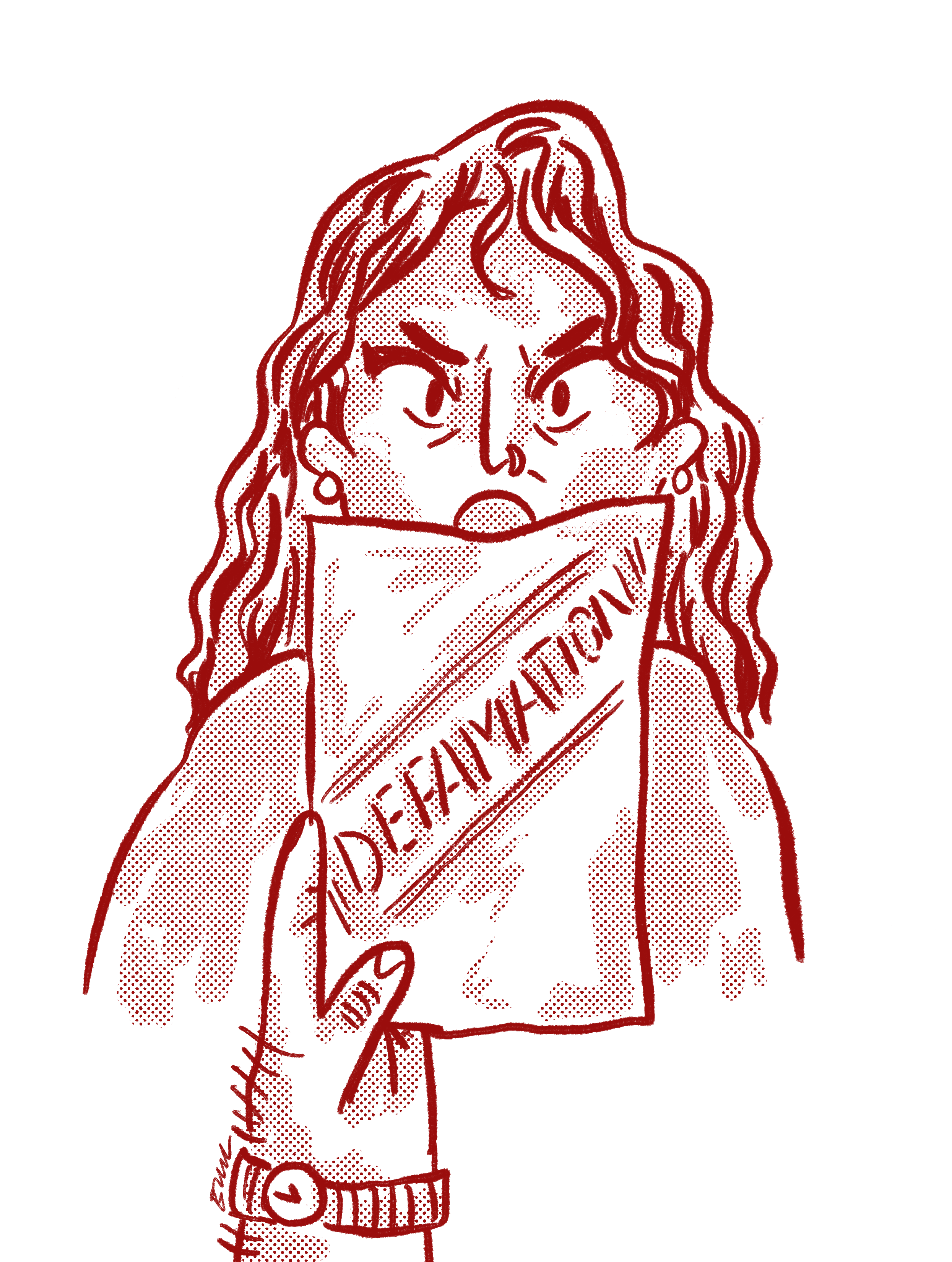
The allegations appeared online in February, 2026. An established digital content creator, Mahnoor Rahim, talked about the inappropriate behavior of a producer (keeping his name anonymous at first) in her DMs (direct messages) when she had just started her career. People were quick to identify the pattern she described in her reel and guess the name. After receiving DMs from other girls, especially young ones, Mahnoor Rahim verified the name; it was Umer Mukhtar. Her comment section was filled with messages of support, and she was no longer just one woman speaking against another man; she became a representative voice of women against the alleged exploiter, Umer Mukhtar. There was a moment of hope that visibility might lead to accountability, but it was only brief. Soon, hope was followed by sheer disappointment when defamation law came to the rescue of Umer Mukhtar before any legal or social (cancelling or boycotting) action could be taken against him. He was quick to send Rahim a defamation notice under Section 3 of the Ordinance of Pakistan and Sections 20 and 21 of the Prevention of Electronics Crimes Act (PECA) 2016.
This isn’t a new pattern; it is the same turn of events we witnessed in the famous #MeToo case between Meesha Shafi and Ali Zafar in 2018. Allegations of harassment made by women are often met with legal notices under defamation laws, instead of holding the alleged harassers accountable. In 2018, Shafi took to X, formerly Twitter, and through a series of posts, alleged that Ali Zafar had sexually harassed her on multiple occasions. Just like in the case of Mahnoor Rahim, many women came forward and claimed to have similar experiences with Ali Zafar, including activist and artist Leena Ghani. In response, Ali Zafar denied all allegations on social media and filed a one-billion-rupee defamation suit against Shafi. This was not the only case Ali Zafar filed against Meesha Shafi. Under PECA, a First Information Report (FIR) was registered by the Federal Investigation Agency (FIA) in September 2020 against Shafi and eight others, following a cybercrime complaint filed by Zafar in November 2018 alleging a coordinated smear campaign against him on social media.
Shafi responded to this; took the matter to court and filed a complaint before the Punjab Ombudsperson for Protection Against Harassment of Women at the Workplace in 2018. The complaint, however, was dismissed on technical grounds, with the office ruling that no employer-employee relationship existed between her and Zafar. She subsequently challenged the decision and took the appeal to the Supreme Court. While the decision of the Supreme Court remains pending in Shafi’s harassment case, a court in Lahore has already given a decision on Zafar’s defamation case against Shafi on 31 March 2026. The court ordered Shafi to pay Zafar five million rupees ($17,900) in damages, showing that preservation of reputation carries higher weight in Pakistan’s legal system over allegations of harassment and misconduct.
Two cases, eight years apart, and yet no difference in outcomes. In both cases, female public figures allege a male colleague of harassment or abuse of power; it makes waves, and soon collective testimonies from women against the alleged perpetrator start surfacing on social media, raising hope for an investigation to begin, a boycott within the industry, and people distancing themselves from the perpetrator. But soon, this thread of hope breaks as the victim receives the first legal notice under PECA and a defamation suit is filed against them. Just like that, attention shifts from the actual allegations of harassment to the risks of speaking out. The nature of these allegations is not two isolated events happening in Pakistan, or some industry drama; this way of demanding accountability and providing visibility to someone’s problematic behavior, particularly someone in power, is part of the global #MeToo movement that started in 2017. When actress Ashley Judd went public with her allegations against Harvey Weinstein, it initiated a journalistic investigation that led to the release of a detailed report in October 2017. This was followed by natural consequences for Harvey Weinstein: he was sacked by the board of his own company, the organization behind the Oscars voted to expel Weinstein, collective testimonies from women started appearing on social media with #MeToo, and institutional investigations led to punishment in different cases. He lost his place in an industry where he had created massive hits and blockbusters. The natural outcome of his actions was not legal notices for the accusers; instead, the media and the state came together to hold the alleged abuser accountable for his actions.
A pattern of such events that we witnessed globally, is yet to be seen in Pakistan, primarily because of the legal structure that governs digital spaces in Pakistan. One such law that governs digital spaces is the PECA 2016 – introduced to protect against cybercrimes and develop accountability structures. Through provisions such as identity theft, cyber harassment, child pornography, cyberbullying, and defamation, the purpose of the law was to protect individuals against online threats. Later, the implementation of the law deviated from its original purpose and instead was used as a tool to control dissenting voices on social media. Soon, civil society started calling it a “draconian law” for its infringement on the right to freedom of expression guaranteed under Article 19. Criticism spanning almost a decade, instead of leading to the dismantling of the law, or at least an improvement based on international human rights standards, saw amendments introduced in 2025 that further curtailed the right to freedom of expression and speech. Under the PECA Amendment Act 2025, Section 26-A was introduced, which criminalizes undefined “fake news.” According to this section, “Whoever intentionally disseminates, publicly exhibits, or transmits any information through any information system that he knows or has reason to believe to be false or fake and likely to cause or create a sense of fear, panic, disorder, or unrest in the general public or society…” Here, “fake” as well as “likely to cause fear…” remains largely broad, leaving room for both the state and individuals to use it against opposing parties voicing their opinions or criticisms. The vague language of the original PECA Act and now the PECA Amendment has always been a problem, but the intensity of punishments such as imprisonment of two to three years and a fine of up to three million rupees, or both, makes it even more problematic. Laws that are essentially supposed to protect people against cybercrimes seem to be doing otherwise – protecting the already powerful and their reputation so that no one can speak up against the abuse they experience from them.
It is worth noting that the legal infrastructure often turns against survivors or those who speak for survivors, irrespective of gender. The case involving filmmaker and activist Jami illustrates this reversal. After he publicly read an anonymous survivor’s letter at Lahooti Melo and later shared on his Facebook handle too, describing sexual assault by a powerful figure in the entertainment industry without naming the alleged perpetrator, legal action did not focus on investigating the alleged abuse itself. Instead, a defamation case was pursued by the alleged, who argued that public speculation linked him to the allegation. Jami was subsequently convicted under Section 500 (Punishment for defamation) of the Pakistan Penal Code and sentenced to imprisonment and a fine. The case demonstrates how legal processes can shift attention away from allegations of sexual violence toward penalising speech surrounding them, creating a chilling effect not only for survivors but also for those who attempt to amplify their voices. Rather than enabling accountability, the law, in such instances, reinforces silence by signaling that speaking about abuse—even indirectly—may invite legal punishment.
The PECA Amendment or Civil defamation laws are not the only laws dictating and shrinking free speech in both virtual and physical spaces through their vague language and unfair institutional structures; the Punjab Defamation Act 2024, now contested by the civil society in Lahore High Court as it demands recordings of assembly debate; held prior to passing the ACT. has also raised concerns among civil society and rights-based activists. The Punjab Defamation Act 2024, aimed at curbing the spread of disinformation on digital, mainstream, and social media platforms, is an addition to already existing draconian laws, not only because of the nature of the law but also because of the severe punishments that can be abused. Under this Act, defamation is treated as a civil wrong, allowing individuals to initiate legal action even without proving actual damage or financial loss. Under the legal framework, special tribunals, composed of government-selected members from a shortlist prepared by the Lahore High Court Chief Justice, are required to decide cases within six months of registration. In matters involving individuals holding constitutional offices, jurisdiction would shift directly to the High Court. The law also proposes significant penalties. Fines may reach up to PKR 3,000,000 (approximately USD 10,750), with the possibility of punitive damages extending to ten times that amount. Beyond financial penalties, these tribunals would have the authority to compel public apologies and order the suspension or blocking of social media accounts or other platforms through which the contested content was shared.
These laws disproportionately affect those who are trying to speak up against established power structures and powerful individuals. Mahnoor Rahim, while speaking about defamation laws, said that, “Defamation laws are too often weaponized against women who dare to speak up. Instead of protecting reputations, they are used to silence, intimidate, and retaliate. And in a system that is already flawed and biased, women seeking justice are not only disbelieved; they are humiliated, interrogated, and degraded in the process.” Legal notices to those trying to speak up often come much earlier, and in cases like Meesha Shafi’s, years before any justice or relief arrives. An accuser who gathers the courage to speak up is suddenly made to rethink that decision. In a country like Pakistan, where conviction rates in crimes against women—whether in cyberspace or the physical world—remain strikingly low, speaking up on social media platforms often seems to be the only hope and a place to gather support. Yet laws regulating these spaces appear counterproductive; instead of creating an environment that allows people to talk about these issues, they often come to the rescue of those who exploit, harass, or abuse their power. Shmyla Khan, a digital rights expert, while speaking about the impact of defamation laws said; “So, the entire point of the #MeToo movement, as I see it, is that women were taking to social media and public forums to talk about the harassment and violence they face because existing institutions, including the legal system, were failing them. What defamation laws essentially do is force women to return to these same institutions, such as the courts. They place the onus on women not only to prove the harassment and violence they face but also to prove that they are not lying when they allege harassment or speak out against it. This adds to the existing barriers women face in speaking up and reinforces the silence surrounding these issues. It also imposes higher costs, both in terms of civil and criminal defamation. Many of the cases that inspired women across the world, including in Pakistan, to speak out, do not end in meaningful justice. When survivors are instead penalized through fines or criminal sentences, the message sent to women, survivors, and victims is that they should not speak out, as the cost is not just social or reputational but also legal penalization”. The impact of such notices goes beyond individuals.
Women in relatively stronger positions, such as Mahnoor Rahim and Meesha Shafi, who have support systems and collective testimonies reinforcing their claims, still end up receiving legal notices and become caught up in proving their innocence while the public watches it unfold. This does not encourage speaking up against abusers publicly; rather, it pushes women further toward silence as they anticipate trials over social media, traditional media, on top of it all, prolonged court proceedings. On the other hand, an abuser may feel encouraged to continue problematic behavior, knowing that a law exists to protect their reputation within six months of filing a case, even without proof of actual loss. Such legal architecture becomes as patriarchal as the society we live in, the technology we use, and the systems we must navigate. The burden shifts to the person who gathered the courage to speak up—the burden to prove that what they claim actually happened and the burden to prove that speaking up was not an act of defamation but an attempt to seek accountability.
Asiya*, who works at a reputable organization in Pakistan, said: “A few years ago, when I received inappropriate messages from my boss, which were later deleted by him, I considered my options, and staying silent, changing organizations, and leaving it behind seemed the most rational financial and emotional choice. I saw what happened to Meesha Shafi, and I couldn’t go through media trials, legal notices that alleged abusers send, and different court proceedings just to prove that I was wronged, while the abuser sits comfortably and lets his legal team derail me and tire me down through the process. I am not proud of it, but I do not have trust in the system.” This is the chilling effect that these defamation laws have on victims and survivors of abuse, especially within unequal power structures. Asiya is not one woman; she represents countless individuals who experience harassment and abuse but choose to stay quiet in an anti-women social and legal environment. High-profile cases, instead of encouraging survivors to pursue justice, silence them because they see that, just like society, the legal system asks the same question: “What proof do you have against this person?” If evidence cannot be produced, the implication becomes that the woman is merely attempting to malign the reputation of an “honorable man”—and must then bear the consequences.
In one incident, a woman’s testimony triggered a journalistic investigation, and the release of the report led to collective testimonies from women, the alleged perpetrator’s own company distancing itself from him, and the beginning of court trials. Survivors’ statements moved the system, and within days, the man was stripped of the very power he had been abusing. This had a global impact – the #MeToo movement was popularized and crossed borders. One of the countries it reached was Pakistan, but the hope that this movement brought was soon crushed as Meesha Shafi’s case was brought to light. We witnessed collective testimonies, but what happened next? Even after eight years, the harassment case remains pending in the Supreme Court, while the alleged perpetrator has already won a defamation case against the victim and survivor. The same pattern appears in the Mahnoor Rahim and Umer Mukhtar case as well — a woman speaks up, and instead of accountability, she is met with legal retaliation. A similar pattern was witnessed in the case of Jami, the filmmaker. Laws are supposed to protect people from abuse, not protect an abuser’s reputation. These colonial legal structures, embedded within patriarchal power systems, continue to disproportionately affect the vulnerable, creating a chilling effect that forces survivors into self-censorship. Such laws must be revisited and fundamentally reformed.