
Ayesha Mirza 65-year-old Shehnaz* found herself terrified when her 70-year-old husband threatened to show her intimate photographs and videos to their male helper. Shehnaz agreed to marry him because they were both in old age and needed someone to look after them. Within weeks of the marriage, her partner, who had initially been kind, began …

Ayesha Mirza
65-year-old Shehnaz* found herself terrified when her 70-year-old husband threatened to show her intimate photographs and videos to their male helper. Shehnaz agreed to marry him because they were both in old age and needed someone to look after them. Within weeks of the marriage, her partner, who had initially been kind, began abusing and threatening her.
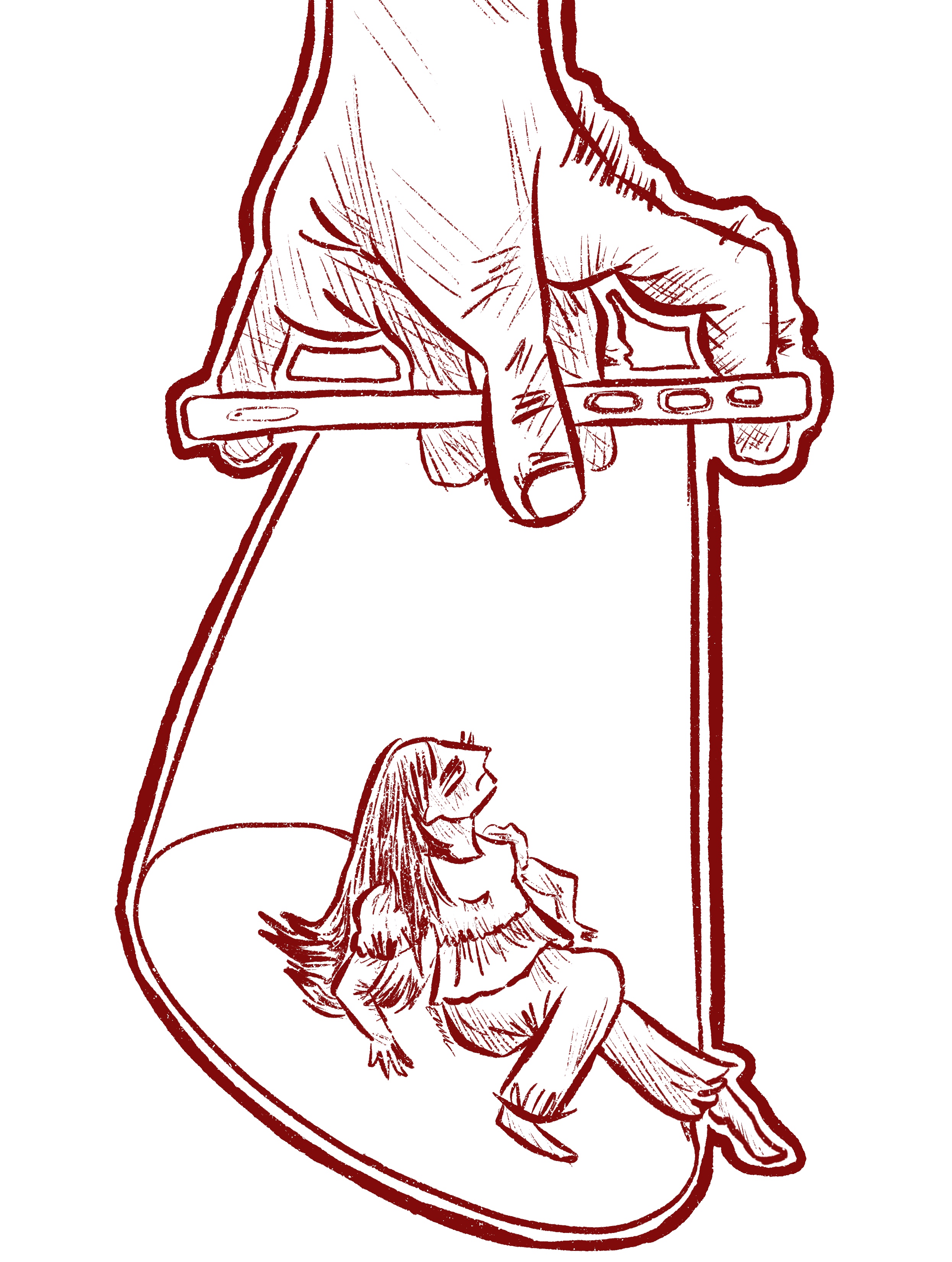
Across the country, thousands of women face similar threats daily from current or former intimate partners. In a patriarchal society like Pakistan, the circulation of intimate content is often treated either as a moral scandal or addressed narrowly through a cybercrime lens, rather than recognised as a grave violation of an individual’s privacy and bodily autonomy. When intimate partners weaponise this data, their aim is to blackmail, harass, coerce, intimidate, and control women who are, or once were, their partners.
When Shehnaz’s husband warned that he would share the videos, she tried to pacify him. She told him that if the content became public, it would bring shame upon him and his children as she was his wife. Her efforts proved futile. Coming from a modest background with little family support, Shehnaz was vulnerable, and her financially well-off husband used this imbalance to intimidate and threaten her. Sensing the growing tension in the household, the househelp, who was married, began making inappropriate advances. The situation quickly escalated when he suggested one day that he and Shehnaz should engage sexually once her husband went to sleep.
The proposition infuriated Shehnaz prompting her to seek legal counsel and take charge of the situation. She deleted the photographs and videos from her husband’s devices, separated from him, and eventually moved to an old-age home.
While Shehnaz was courageous enough to act swiftly and leave, many women across the country are unable to do so. More often than not, their intimate photographs or videos are either online, or they are being incessantly blackmailed, controlled, and coerced by current or former partners.
Gender and digital rights researcher Shmyla Khan, who previously handled the Digital Rights Foundation’s cyber harassment helpline, says, “The mere threat [of having intimate images shared] would have a deleterious impact on people’s lives. Many times people would be forced to give into the blackmail and keep speaking to blackmailers. In other cases, it would severely impact their mental health knowing that their images could be shared with their family, friends, and the entire world at any moment.”
What does the law say?
The situation becomes rather complex as most survivors are already under significant pressure due to rigid gender norms and patriarchal notions that ask and force women to not report such cases. Lawyer Romasa Jami says “it is rare to find formal complaints in such cases, as families often attempt to resolve matters privately or discourage women from reporting.” She notes that she is personally aware of many women who remain trapped in abusive relationships due to blackmail involving intimate content. “Even within marriage, this is not something women feel they can openly discuss with their families,” she adds.
At the same time, other young girls and women are often unaware of the laws regarding cyber harassment and digital abuse, particularly when it comes to threats.
In 2016, the Prevention of Electronic Crimes Act (PECA) was enacted to address cybercrime and gendered digital abuse in Pakistan. It provides a legal framework to combat online exploitation and harassment. In particular, Section 21 criminalises the intentional sharing, transmission, display, or publication of sexually explicit images or videos of an individual without their consent. Such conduct is punishable by imprisonment, a fine, or both.
PECA also addresses situations where explicit images or videos are used as tools of intimidation, harassment, blackmail, or to damage a person’s reputation. In such cases, the law prescribes penalties of up to five years’ imprisonment and/or a fine of up to Rs 5 million. Additionally, the Act criminalises cyberstalking, persistent online harassment, and digital threats, including threats to disseminate intimate images. Through these provisions, PECA seeks to provide legal recourse and protection to victims of technology-facilitated abuse and exploitation.
However, according to Khan, “Most law enforcement agencies have interpreted PECA to cover blackmail, even when images are not shared.” She further adds, “We’ve observed some cases where a very literal interpretation of Section 21 was taken, where law enforcement agencies turned complainants away, saying that the law only protected them once the images were shared. Ambiguities in the law can often lead to such situations.”
Moralising and criminalising intimate content
Viewing intimate content primarily through a moral and criminal lens complicates matters. Women’s hands remain tied while men continue using such content as a threat to intimidate women, retain control, or coerce them for various reasons.
Advocate and founder of The Jugnu Project, Zohra Ahmed, notes that in many khula and maintenance cases, husbands threaten wives by saying they will share intimate content online if they don’t withdraw their cases. Feminist theorists like Kate Manne and Catharine MacKinnon argue that women who exercise sexual autonomy, by sending private images or engaging in consensual intimacy, even with husbands, are seen as violating the ideal of the “good woman.” Intimate media becomes a ready-made disciplinary weapon because female sexuality is already heavily policed and stigmatised. The power of blackmail or cyber abuse does not lie in the images themselves, but in the social shame attached to them. Public circulation, then, becomes a means of humiliation and the reassertion of male control over women’s bodies.
Women pursuing khula or maintenance are often forced to back down to protect their honour and dignity. Ahmed explains that social stigma around women’s sexuality also influences how such cases are viewed in court. Women frequently withdraw cases particularly where intimate content is involved saying, “I cannot be humiliated in front of my children. I cannot face anyone. I cannot bear this level of disgrace – you can keep everything, I don’t want anything.”
Additionally, younger girls especially hesitate to approach the Federal Investigation Agency (FIA) or the more recently launched National Cyber Crime Investigation Agency (NCCIA). There is a widespread perception among survivors that officers will not take their complaints seriously, that cases will remain pending for years, or worse, that they will be subjected to moral policing, victim-blaming, and shaming as has often been reported in the media. Jami claims that this is a structural problem. She explains that patriarchy is not just embodied by men; it is a mindset that internalises itself among women and runs rampant through the principles and regulations of institutions. It is so deeply ingrained that it surfaces at every stage: while reporting a case, seeking legal counsel, and/or navigating the justice system.
Human rights lawyer Moniza Kakar, however, says that law enforcement agencies such as the NCCIA understand how sensitive these cases are when intimate photographs or videos of women are involved. In her experience, they often act swiftly and assist with immediate content removal adding that social media platforms, too, have at times been cooperative.
Yet the scale of the problem cannot be ignored. Over the last decade, access to digital devices, cellular connections, and the internet has skyrocketed in Pakistan. Mobile phones and internet connectivity, once considered luxuries, are now widely accessible even in rural and remote areas. As of late 2025, nearly 194 million cellular mobile connections were active in the country – equivalent to 75.9% of the total population, according to DataReportal. Internet users stood at 117 million with an online penetration rate of 45.6%. In October 2025, Pakistan had 79.9 million social media user identities, representing 31.2% of the population. Women accounted for only 28.8% of these identities, while men comprised 71.2%.
With the rapid expansion of digital access in Pakistan over the last decade, women now navigate an environment where personal images can travel faster and farther than ever before. This shift has intensified technology-facilitated gender-based violence leaving women vulnerable not only to the non-consensual sharing of intimate images but also to the constant threat of it. For many young women, those threats often materialise into real, physical harms.
Last year, 27-year-old Simran’s* phone began buzzing relentlessly. Gripped by fear, she knew what was happening.
“Since my social media accounts were public, the perpetrator created a fan page and began sharing my intimate photographs and videos in bulk,” she said. “Some of this content included AI-generated deepfakes as well.” He followed everyone she was following including her friends. She describes it as the toughest day of her life.
Despite being a lawyer, Simran felt paralysed. She feared that approaching law enforcement would require surrendering her devices for forensic examination. “I knew they would moral police me,” she said. She was also concerned that, given the nature of her profession, she might have to interact with these institutions professionally in the future – “I did not want them to have access to my data.”
Her case was further complicated by the fact that the perpetrator was based outside Pakistan. Involving local authorities would potentially require cross-border coordination through embassies or foreign agencies. It remains unclear what course of action is available, or whether Pakistani authorities could meaningfully pursue a case like that at all. Many women face similar barriers when perpetrators relocate abroad effectively placing themselves beyond immediate legal reach.
Simran eventually approached a local digital rights organisation. While they assisted with reporting the content to Meta, she describes the process as painfully slow and, at times, demoralising rather than supportive.
After days of delay, Simran decided to gather the perpetrator’s details herself. She discovered that the country he resided in had strict cybercrime and women’s safety laws. She contacted him and warned that she would report him to authorities there. As an immigrant, he panicked. Only then did he remove the content.
“But there is always a fear in my heart. If he does something like this again, what will I do?”
Simran bore severe mental distress throughout the ordeal. Isolated and cut off by her family, she attempted to take her own life. The psychological consequences of such abuse are largely overlooked.
A public spectacle
When intimate content is taken out of context and circulated without consent, it becomes a public spectacle. Online circulation means what was once private is now open to public commentary. Andrea Dworkin, in her 1981 book Pornography: Men Possessing Women, argued that when intimate media is weaponised against women, it undergoes a similar transformation: stripped from its private, consensual context and recast as spectacle. What was once an act of intimacy becomes an instrument of humiliation. Cyber abuse involving intimate images thus operates as a form of involuntary pornography converting private subjects into public sexual objects.
In Pakistan, women’s sexuality is closely tied to family honour. Therefore, the transformation of private intimacy into a public spectacle carries far-reaching consequences. The threat of circulation is not limited to reputational damage online; it can also lead to social punishment and abandonment offline. In some cases, women face the risk of honour-based violence and forced marriage. Under such circumstances, even approaching legal counsel or law enforcement feels like a risk. If the response is blame rather than support, the distress and trauma intensifies.
These social consequences are also reflected in how the law conceptualises such harm. Khan points out that Section 21 of PECA, which deals with “offences against modesty of a natural person,” reflects this framing. “A feminist reading of the section would reveal that the law frames it as a moral issue,” she says. “Furthermore, given that Section 20, dealing with criminal defamation, is still on the books, it shows that PECA overall continues to see these crimes from a reputational lens.”
Legal and policy loopholes
While misinterpretation of the law is one issue, there are also clear structural loopholes. Ahmed explains that these gaps are particularly evident in cases where women have consensually shared intimate images with partners. “If someone possesses your intimate photos or videos but has neither shared them nor explicitly threatened to do so, you have little legal recourse,” says Ahmed. “If you ask them to delete the content and they refuse, you cannot necessarily file a case against them under PECA. Since they are not actively defaming you, threatening you, or disseminating the material, the situation may fall outside the law’s scope,” she explains. This leaves women trapped in a state of persistent fear with no legal mechanism to compel the deletion of their private content.
Ahmed further notes that even when intimate content is shared online, authorities can do little more than request takedowns from social media platforms. If a company refuses to remove the material, particularly if it does not consider the content to violate its global policies, there is limited leverage available to Pakistani institutions.
Khan explains that one of the biggest obstacles lies in culturally varying definitions of intimacy. For platforms largely headquartered in the Global North, “intimate” often means explicitly sexual. In Pakistan, however, content does not have to be overtly explicit to cause severe harm. A photograph considered benign elsewhere can trigger devastating social consequences here, Khan adds. Simran and Ahmed reiterated similar concerns about the lens with which global platforms design policies around intimate content and violations. For instance, if a woman shares a fully clothed photo of herself online, something widely accepted in many contexts, may still be frowned upon in conservative households where women are discouraged from sharing any kind of image publicly. Even seemingly mild displays of intimacy, such as a couple holding hands or hugging, can become grounds for stigma or coercion if such images circulate.
“Additionally, social media companies often can’t account for different languages or are inadequately geared towards different ways in which intimate images can be abused without consent. For instance, [if] someone’s images have been disseminated at a mass level, reporting is a very cumbersome process if one has to report each and every instance,” Khan adds. If content circulates through private messages, it is nearly impossible to contain. Moreover, moderation decisions are increasingly automated and non-transparent making it difficult to challenge removals or refusals, explains Khan.
Meta, TikTok, and X all formally prohibit the sharing of non-consensual intimate imagery including AI-generated content. Meta states that it removes such material when reported and uses detection tools to prevent re-uploads. TikTok’s Community Guidelines similarly ban non-consensual intimate images and say the platform relies on automated systems and partnerships to identify and remove violations. X prohibits posting intimate media without consent and may remove the content or suspend accounts that share it.
However, platforms generally only act when content is reported. There is no proactive identification of such content. Enforcement is opaque and reporting mechanisms may require identity verification, which can discourage survivors. Jami also adds that “these processes are often very technical” and not user-friendly. Crucially, there is little guarantee that reported content will be removed globally unless it clearly violates the platform’s terms or relevant law.
Moving towards accountability and reform
Simran pointed out that there should be mechanisms that exist locally. “Law enforcement agencies often view these cases through a morality or obscenity model,” says Simran. Shame becomes attached to the woman. “PECA was introduced to deal with cybercrime, and numerous laws have been passed, yet there is no dedicated domestic law that categorises the sharing of intimate content non-consensually as a form of gender-based violence.”
Jami echoed Simran’s concern adding that the issue is often viewed as a moral violation rather than a human rights violation. When cases are assessed through a moral lens, survivors themselves are judged, especially if they had initially shared images consensually. What is needed instead is protection of bodily autonomy and safeguards against the non-consensual use of intimate content. A morality-based approach creates loopholes, she explains.
Simran added that “while the NCCIA has been established to address cybercrime, questions remain about the criteria used to appoint officials to handle such sensitive cases. Are they trained to engage with survivors in a trauma-informed manner? Do they understand how to deal with victims without reinforcing stigma?”
Khan says that, “Unfortunately, we tend to look at safeguards merely from a criminal law lens, which has meant that anyone looking to guard themselves from such abuse has to file a criminal complaint and go through the criminal justice system, which as many women and gender minorities report, is quite hostile towards them. We must advocate for holistic approaches to addressing the issue, victims and survivors must have access to psycho-social support, including safe and adequate shelter homes, mental health support, peer support communities and tools to control their images that are grounded in a survivor-centric approach and which center their consent, privacy and dignity.”
“Revenge porn is the easiest way to silence women,” says Simran. In a society steeped in patriarchy and misogyny, and in a landscape where digital media usage continues to expand, threats to release women’s intimate content do not remain confined to the online sphere. They shape women’s lives offline subjecting them to psychological distress, harassment, blackmail, intimidation, and coercion.
Khan notes that when PECA was enacted, “activists advocated for drafting in collaboration with civil society and taking a human rights and survivor-centric approach.” It is not too late to revisit that demand. Pakistani authorities must acknowledge the gaps in the law as well as the limitations in holding global social media platforms accountable and work to bridge them to ensure women’s safety, dignity, and autonomy. Above all, the threat or dissemination of intimate content must not be treated merely as a moral or criminal issue, but as a violation of bodily autonomy and fundamental human rights.
Names have been changed to protect the source’s identity due to safety concerns.