
Rija Ahmad In the northern region of Gilgit, on a rainy afternoon, 15- and 16-year old sisters Noor Sheza and Basra were caught briefly in a moment of joyous indiscretion- as children often are. For whenever the monsoon pattered over the better part of the country, the image of naked boys splashing into city canals …

 Rija Ahmad
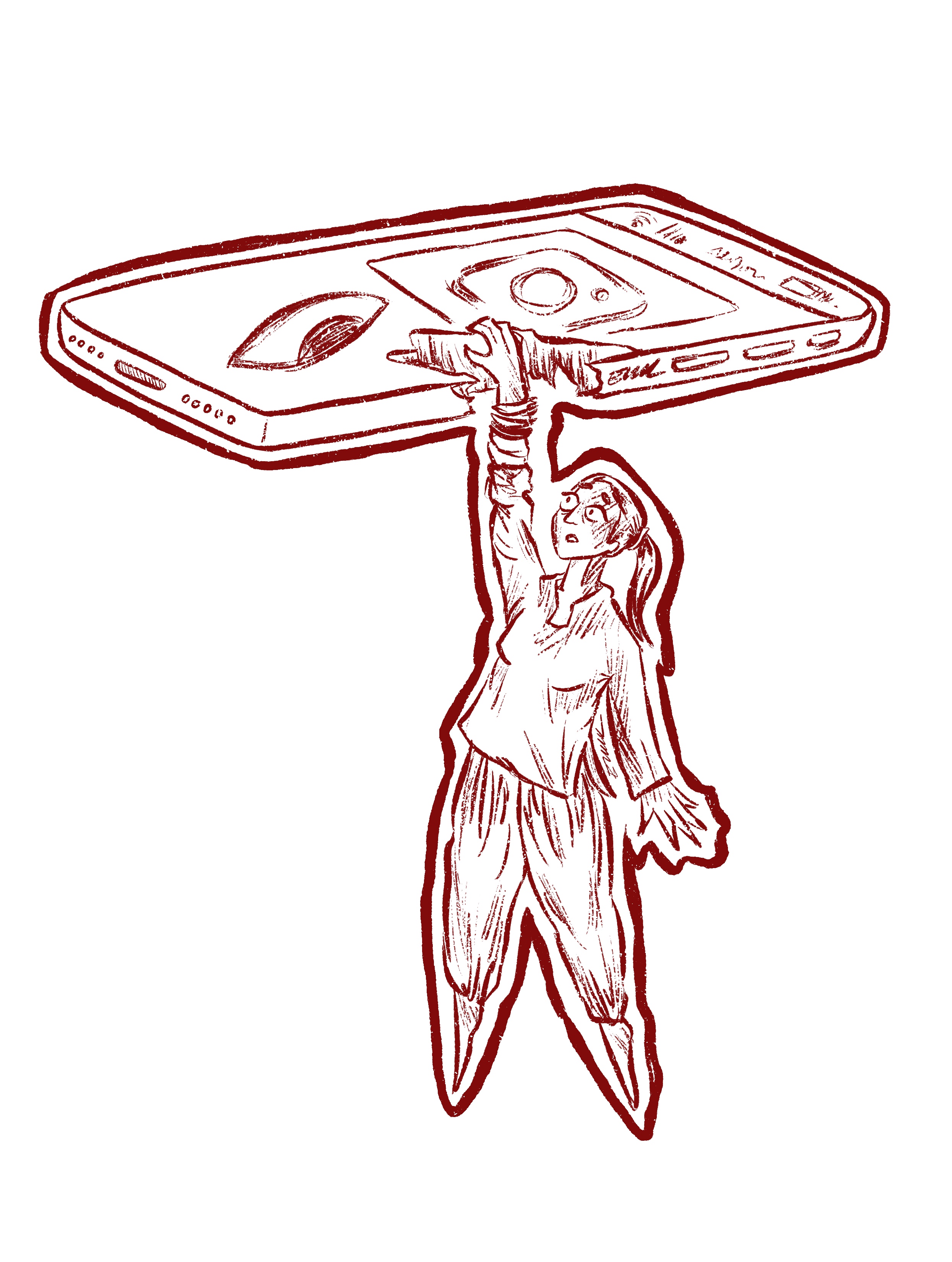
In the northern region of Gilgit, on a rainy afternoon, 15- and 16-year old sisters Noor Sheza and Basra were caught briefly in a moment of joyous indiscretion- as children often are. For whenever the monsoon pattered over the better part of the country, the image of naked boys splashing into city canals brimming with murky rainwater was a regular fixture of the season’s greetings. While no less tender or earnest, the image of the two sisters found itself propelled out of the privacy of their own home and at the receiving end of harsh, unforgiving eyes on social media. The ‘indecency’ of the public affair cost them their lives.
Stories like these are surprising not because they confirm what we already know- society’s unrelenting epidemic of violence against women- rather, they serve as reminders of the reality many women still face under the puritanical scrutiny of conservative society, wherein the most quotidian of events are still bearing the heavy burden of measuring a woman’s shame and honor. Human rights defenders estimate that over a 1000 women are killed in honor-related killings each year, with offences varying from marrying of their own choice to being seen with a member of the opposite sex.
To understand why such benign actions can prove dangerous for women in South Asia, one must first understand the structure of honor-shame cultures and how it duplicates itself in online spaces. Academics like Abu-Lughod have written extensively on how concepts of collective family honor function as social infrastructure: they regulate belonging, marriage prospects, economic relationships, and physical safety. In these frameworks, a woman’s conduct is never entirely her own; it is communal property, subject to surveillance and adjudication by family, neighbors, and community alike. Once these cultures map themselves onto the digital world, they apply what anthropologist Mirca Madianou describes as ‘polymedia pressure,’ wherein the communication platform intensifies these existing power asymmetries. In patriarchal societies, the consequence is a near-total collapse of the private sphere for women. Moments that were private can now be instantly extracted from its context and circulated as evidence of moral failure. One needs only to peruse local headlines to see this take place in real time; take for example, two girls who were killed for a leaked mobile video in Waziristan for being seen with a man, or in another instance, for clapping during a wedding dance.
It should go without saying, but the circulation of online material on digital platforms has tangible physical consequences to user’s well-being and safety. In the case of women in South Asia, these harms can be posed by material that need not be sexually or violently explicit, as we have witnessed, it need only violate the patriarchal codes of honour. This shifts our attention away from the spaces where this culture is created, but the digital spaces where it’s allowed to persist: digital platforms.
Social media platforms are responsible for governing vast amounts of data and online material from all over the globe, compromising various cultures, norms and languages. The main mechanism to regulate these online spaces is the content moderation policies of each platform, a set of terms consisting of a legal framework and community guidelines that act as guiding principles for the appropriateness of online content; governing what can or cannot remain online. These guidelines are then braced with the difficult task of being effective in identifying posed harms from content varied in language, context, and social norms- a task which they consistently perform through biased decision-making and structural inequalities.
Research and empirical evidence has come to shed light on how social media platforms’ guidelines for content moderation are based on euro-centric frameworks and are ill-equipped to make accurate judgements applicable to other contexts. Certain platforms, such as Meta, apply a ‘universal code’ of ethics onto every community that interacts with its platform. This lack of contextualisation undoubtedly underpins politics and biases into the careful task of creating safe online spaces. By enabling discrimination in how moderation is conducted, there are disproportionate outcomes for different user groups who are on the receiving end of opaque and unilateral moderation guidelines. A study conducted by researchers at Cornell University, based on in-depth interviews with Bangladeshi social media users, found that Facebook’s enforcement of community standards reflected a distinctly Western understanding of ethics which disregarded local social norms, and allowed for abusive or harmful content to slip through the cracks. Several users claimed they felt ‘harassed’ by Facebook’s inequitable policies, going so far as to say it was an exploitative consolidation of power in who gets to decide what is appropriate online conduct and what isn’t.
This claim is echoed by several academics and digital activists who criticise Western social media platforms as a contemporary exercise in colonial power. Platforms benefit and profit immensely from collecting and harvesting data on millions of users from the Global South, yet fail to mitigate online harms for those same communities, often without explanation or useful channels to contest their decisions. Moderation decisions are often opaque and arbitrary, with no meaningful channels for appeal, compounded by phenomena like shadow banning, where users experience sudden drops in engagement or content disappearing from searches with no explanation or recourse, ultimately creating a digital bubble where social media platforms control the reins. As reported by the Center of Democracy and Technology, social media platforms are responsible for further entrenching colonial power structures through an unequal division of labor; one which reserves the power and agency to decide what remains online in the hands of private Western enterprise, and relies on communities from the majority world to produce the content.
These structural inequalities and biases however, should not be assumed to be taken as consequences of a flawed design. Rather, evidence has proven that platforms are aware of the biases in their systems and have chosen not to dedicate more resources to improve them, despite the severity of the consequences. Leaked internal documents revealed by whistleblower Frances Haugen in 2021 revealed that the platform spent 87 percent of its misinformation budget on English-language content, despite only 9 percent of users posting in English at the time, and was aware it had not hired enough workers who had the language skills and knowledge needed to identify objectionable posts from users in developing countries. Companies have consistently underfunded annotation efforts for languages spoken in what internal employees themselves describe as ‘less profitable regions’- a phrase that makes the logic explicit. When platforms do attempt to extend moderation to non-English content, the content is often machine-translated into English before review, with moderators not informed of the original language, thereby stripping words of the very social and cultural meaning that would make the harm legible in the first place. Another report identified how tech platforms actively hindered attempts made by independent researchers to develop inclusive automated content moderation systems for low-resource languages by refusing to share valuable data or by charging exorbitant fees to gain data access. The decision to continue to under-utilize resources for indigenous and non-English languages is a calculated and decisive one; one that exists to maintain a Western hegemony on digital moderation systems and AI training datasets, excluding the Global South, its communities needs and interests.
This has considerable consequences for vulnerable communities online, particularly women. Without considerable resources, inclusive moderated systems, and trained staff, harassment expressed through non-English languages, culturally specific threats, and nuanced slang often go undetected. This signals to perpetrators that the likelihood of consequences is low, reinforcing cycles of harassment and impunity. A report by Aljazeera illustrated this phenomenon taking place by detailing how Facebook failed to act when a page hosted on its site was repeatedly being used to target young women and girls at a university in Peshawar through means of sharing nonconsensual photos and blackmailing them. The content was in Pashto, yet Facebook lacked anyone in their team with Pashto language skills. Activist Nighat Dad commented on Facebook’s inability to remove the page, “They simply didn’t understand the language or the cultural context in which this was happening”. Similarly, DG Amna Baig, lead of the Gender Protection Unit in Islamabad, cited different cases where leaked photos of women in ‘half-sleeves’ or in public spaces were not flagged as explicitly sexual or harmful by content moderators, “our contextual realities are not being captured by the community guidelines of these social media platforms,” she asserted. Meanwhile Facebook, Instagram, and Messenger have been identified by researchers groups in Bangladesh and India as a frequent vehicle for the distribution of morphed or non-consensual images, with their reporting mechanisms slow and often unresponsive to content submitted in Bengali, Urdu, or Hindi. Across all these platforms, the pattern is the same: harm passes invisibly through automated systems calibrated for another context entirely.
When viewed together, these failures culminate to form a system: a system in which the cultural context that makes harm legible is stripped away, in which the communities most targeted have the least recourse, and in which the platforms that profit most from their presence invest least in their protection. To continue treating these outcomes as technical shortcomings or resource constraints is to obscure what they actually represent: a denial of minorities and vulnerable communities’ right to exist safely in digital spaces. Of these vulnerable communities, women in conservative and patriarchal societies are the most impacted by Big Tech’s failure to prioritise a culturally-sensitive and multi-lingual system to regulate content online.
The question, then, is not whether these platforms can do better- the evidence makes clear they already know how- it is whether there exists sufficient political will, from both governments and civil society, to compel them to. Rather than relying solely on platform self-reporting or imported regulatory templates, governments can formalise advisory councils or review bodies that include women’s rights groups, journalists, linguists, and technology policy experts. Platforms should be legally obligated to publish regular reports detailing content moderation response times, takedown rates, and appeal outcomes by language and country. Without such disaggregation, Global South users remain statistically invisible, and regulators lack the evidence needed to identify systemic under-enforcement or discriminatory prioritisation.
Until platforms reckon honestly with the Eurocentric architecture of their own guidelines, and invest meaningfully in the communities they have for too long treated as secondary users, the digital sphere will continue to function as an instrument that threatens the safety of women.