

By Sabah Bano Malik I am no stranger to hate on the internet. I am a culture critic - one who criticizes patriarchal and regressive culture - not to be confused with one who critiques art or pop culture - which I also love to do especially from a lens of how the patriarchy …

 By Sabah Bano Malik
I am no stranger to hate on the internet. I am a culture critic – one who criticizes patriarchal and regressive culture – not to be confused with one who critiques art or pop culture – which I also love to do especially from a lens of how the patriarchy has clawed its way into the media we are consuming. I am very on brand.
From when I first started posting content in 2018 to now, an enjoyable and at times terrifying (for me and those who follow me in good faith) aspect of my content is where I highlight the abuse I get from men on the internet.
There is always the unoriginal “fat and ugly” and of course “bitter feminist” and the devoid of critical thinking insult of “fatherless” – but there is also the, and trust me when I say equally unoriginal and equal in volume sexualized insults about bodies, morals and reputation, bilingual rape threats, and of course, the threats of finding you and killing you.
There is also the sharing of hopes that you are honor killed or at least in my case, meet the same fate of the femicide cases I often cover in my work, and sometimes, just sometimes but pretty routinely, there are the gentle suggestions to simply “kill yourself.”
There is no genre of content made by women on the internet that does not stir up bad feelings in emotional male watchers and in turn serve as catalysts for them to crack their knuckles and type their hate. Fashion, lifestyle, pop culture, food, music, marriage and relationships, motherhood or what I do, which is tell women that they are worthy – each and every thing is a trigger for the boys with mobile networks because women are the voices, faces, and successes behind these accounts.
That is literally all it takes. Women being seen, being heard, and having opinions, and being attractive, or not being attractive, going viral, being happy, really anything as long as “woman” is attached.
And I have seen some pretty creative insults in my day, as a fat woman on the internet who routinely tells men to shove it – it’s par the course. I remember the ones that caught me off guard because they were so rare, I had to take note. Like when someone instead of calling me fat said, “I’ve been following you for years and it’s crazy what weight can do to a face.” Another time someone said, “how do you maintain your physique?” The first one hurt, the second one made me burst out laughing. Hey, credit where it is due.
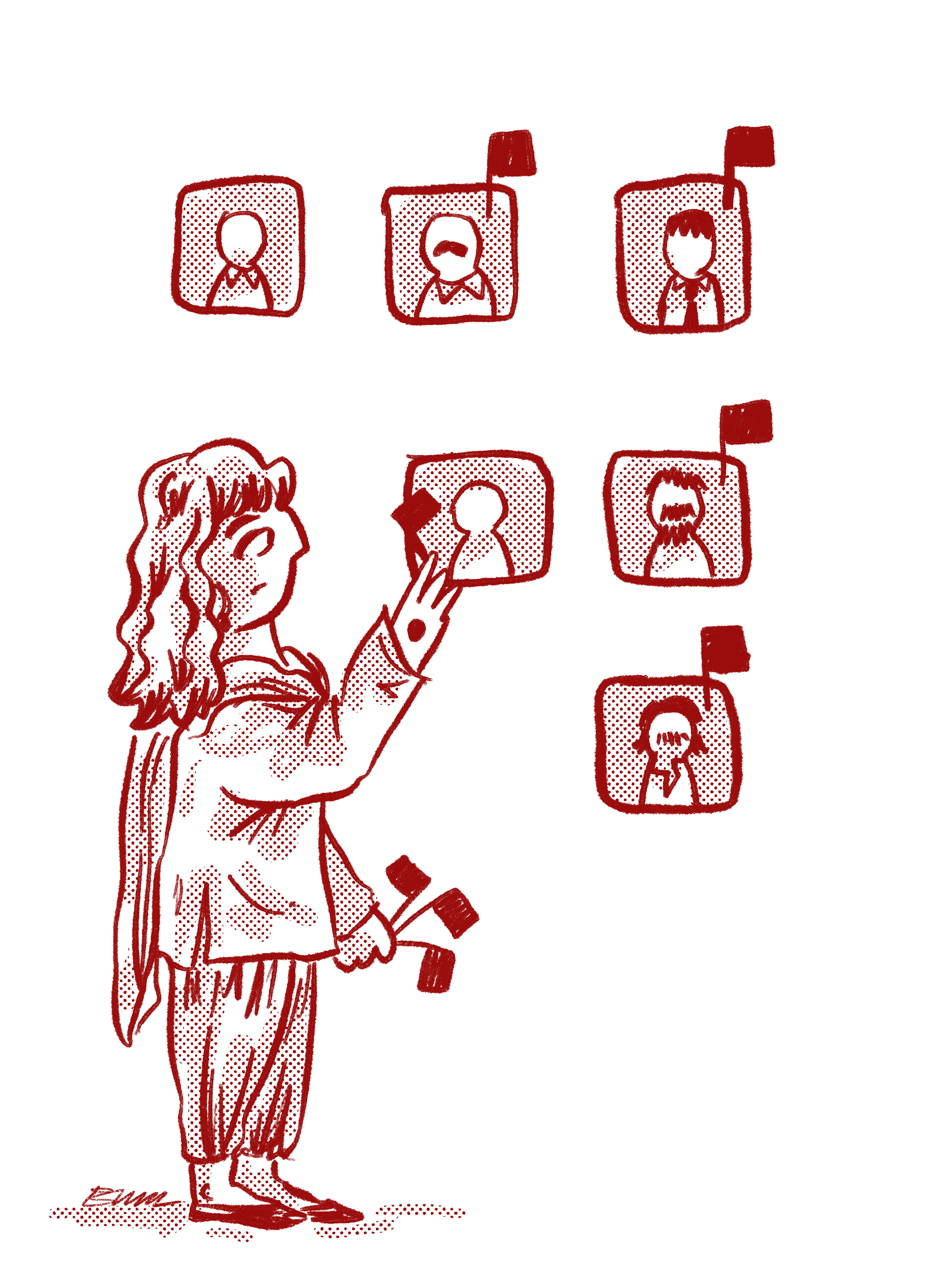
However, a few weeks ago I got a comment that stopped me in my scrolls: digital tawaif.
Digital tawaif?
Digital tawaif!
I can say confidently I had never, ever heard this one before. And though I had not heard this term before lobbed at me or even at someone else on the internet, it turns out it has become a widely recognized and even signature vernacular of Pakistani social media.
Good job Pakistan?
Tawaif is the Urdu word for courtesan, once respected and highly regarded artisans often seen through a rosy hazy hue of nostalgic light and Sanjay Leela Bhansali aesthetics, but what it really means is prostitute, and what those throwing this insult at creators online are truly saying from their unregulated festering emotions, guts and keyboards is: you whore!
This contemporary twist of a classic accusation got me thinking about being a woman online, reputation, culture, and the brutal attitudes men carry for women who are stepping out of line (sluts and hoes by their measure) even if that happens on the internet (Wi-Fi streetwalkers if you will).
The term is thrown at people making content on the internet. Point blank period, that is the one and only qualifier. To be fair, in my searches for this piece, I found it was not JUST women who get this modern spit on the ground thrown their way (hey, not all women!), but family vloggers and male content creators too. The common denominator is that those watching think those creating are making media that they do not approve of. Media that pushes against our values and our vigilantly policed conformity.
When it comes to visibility for women, very little is approved of. One could argue, and many do, that women posting online in any capacity is against our values, antithetical to our conformist ways and even morally reprehensible.
The comment was left on a video I had made simply showing an outfit I had on. It wasn’t even really a video, just slides of photos. How dare I?!
It’s not a secret to women on the internet, no matter the content, no matter the levels of privacy, no matter if they even show their face or not, that accusations of being purchasable or representing ourselves as such happens with regularity.
If I was to give you a scroll through my TikTok DMs, you would see thousands, yes thousand, no I am not exaggerating, literally thousands of messages from men asking to meet, asking for private time, asking me for what I charge and can they send me money.
“Hello dear Sabah g I want to meet you,”
“Hey beby come with me to WhatsApp call, I will pay you,” and
“Hello, Dear Bano, aap paid real meet up karti ho (do you meet up in real life for payment)? Just for spending quality time and relaxing time? If yes, share WhatsApp details and account. Thanks.”
These are just three I pulled right off the top of my inbox filtered folder (edited for grammar).
The belief that a visible woman is one you can buy is nothing new. Women have always been purchasable commodities.
And I do not just mean purchasable in the case of sex work or slavery. And certainly not just in an exchange of money for good (in this case, a woman) – but as awards to be won, debts to be settled and particularly in the case of marriage, a coveted rise in status.
Even as brides. It was not uncommon back in the day (and even now) for a bride to wed a man who has never seen her and she never seen him, the value was in her not being visible to anyone but her family and now husband.
The visibility and erasure of women from public spaces or life has been a pull and tug, sometimes we are out here, sometimes we are quite literally closed behind four walls – and the ability for a man to see us is tied into our value. It’s misogynistic and degrading, and yet a cornerstone of our societal structure.
Think about it in terms of social class and hierarchy. The women at the top of the social food chain, regardless of culture and society, were often not seen, protected, “valued” – and the women who had to work (because women have always had to work, no matter what trad wives and red-pilled men spew on the internet) were seen. And what do people like to say all the time, “prostitution is the oldest job in the world.”
And the woman’s body is maligned and revered equally. It is meant to be beautiful and untouched, pure not just from sex but also from eyes, ears and yes, work.
The idea that visible women are for consumption exists offline too of course. Just be a Pakistani woman doing her job and see how brethren react to you out in the office, driving on the road, or as I have experienced personally, a journalist on the ground trying to do her job. Catcalling, aggression and physical intimidation, sexual harassment and propositions – all things the visible woman faces here in Pakistan.
Because a woman outside is a woman for the taking. I wish it was not so regressive but my time as a woman alive in the world who studies the behavior of men – the anecdotal and lived experiences add up to evidence.
Like many things patriarchal and misogynistic, it’s gotten a modern-day platform. The obsession with tying all women to sex work seems to be a foundational layer of the Manosphere.
Did I just hear your eyes roll back to your head and did you let out a groan reverberating around the suns because the Manosphere has been talked and dissected about to absolute horse is already dead stop beating it levels?
Sure.
But we are going to do it again.
In case you have managed to not be introduced, the Manosphere, is a term coined in 2009 to describe the rise of male internet culture and communities that marketed itself as pro-men and even “male wellness and self-improvement.”
The population of these blog writers, YouTubers and early day content creators and influencers were made up of pick-up artists whose bread and butter was teaching men to manipulate women into sex and service. They also taught men that the way women think and wish to build love and relationships was solely based around chasing money and “high value men” (important for later).
Another heavy part of the percentage of the population were Incels (Ah!) or Involuntary Celibates (those who were not having sexual relations against their will, hence the involuntary) who were incredibly angry at women for not desiring them, at least the women (high value – oop there’s that word again!) that they felt they deserved so therefore spewed even more hatred at them. There is also a portion of this grouping which believes they can’t be high value men, they have laundry lists of injustices they face due to the structures of capitalism and the patriarchy, so naturally they blame those on women not wanting to sleep with them, clothe them, feed them, house them, and pay their bills.
Hahaha. Ah.
Today the Mansosphere has a number of noticeable names that I regret to say are so massive that they are quite literally household names in too many households. One of these stand-up criminals is a decent and highly regarded fellow named Andrew Tate – a hateful misogynist who’s been charged with multiple counts of trafficking of women, forcing them to work for him as YOU GUESSED IT sex workers.
There’s also the Jake and Logan Paul, Sneako, Fresh and Fit Podcast, and though it’s a touchy subject there are many and I mean many, I mean oh so many ties between the talking points of the Manosphere and those of Dawah bros, a genre of content where mainly young Muslim men debate topics like should girls wear backpacks, the correct ways for them to wear hijab, if they should be allowed to read or if their husbands should be required to handle their medical expenses.
What a time.
What all of these people have in common is an obsession, I do not say that lightly AT ALL, an obsession with saying all women are sex workers and OnlyFan models in the making.
OnlyFans is a platform where people can sell photos, video content directly to their subscribers on pay scales and even allows creators to sell customized content for fans with no caps on what they can charge. It has been revolutionary for the sex work industry and especially lucrative (at least if you take the Manosphere at their word) for women.
It’s not uncommon to see articles of women in their 20s raking in tens of thousands if not hundreds of thousands of dollars a month, millions a year, retiring early, and living incredibly luxurious lives off of “the selling of their bodies,” and “reducing their values (ironic),” as the Manosphere gremlins put it.
I am not writing a thesis defending Only Fans or porn, but I do think it’s interesting they rage against the women, and rarely acknowledge the men who are making the women millions.
They reduce women’s accomplishments, such as say an influencer sharing a new car she bought or images from vacation, to being paid for by her making porn, being a prostitute, or being kept by a man (who she presumably, even if in a relationship with pays back his generosity with her body.)
This genre of content highly emphasizes that men must earn money in order to secure high value women (usually untouched white European standard women who are significantly younger and subservient to them). And as I stated earlier, even when in relationships with these women, the accepted idea is that she pays for the financial support with her body and service.
Like a tawaif.
The Manosphere and those that genuinely are concerned about the male loneliness epidemic, and people genuinely are concerned we have governments talking about it and a think piece every other God damn week – which by the way not even a fraction of concern and mobility have taken place on I don’t know say femicide and rising violence against women online and off – are struggling to contend with a world where a woman’s value is not solely her body and whether or not she can secure a man’s finances through it.
Women are buying more property, going to higher education in higher numbers, dominating the internet, building brands and identities of their own outside of marriage and patriarchal constructs that reduce them to property of men – and the men are losing their minds over it.
And when men get angry that women are outdoing them (which is day by day more and more becoming the absolute norm) they want to strip their rights (as we are seeing in the US), police their dissent (as we are seeing here in Pakistan with the disruptions and pointless arrests of Aurat March protestors in 2026) and they want to reduce them to their parts – accusations of prostitution, digital tawaifs.