

By Syeda Noor Fatima Two years ago, Inaya remembers it was a Friday when she was getting ready to leave for university and the doorbell rang. One of her cousins had come to meet her father. He showed him a video in which a boy was dancing in the university corridor. In the background, she …

By Syeda Noor Fatima
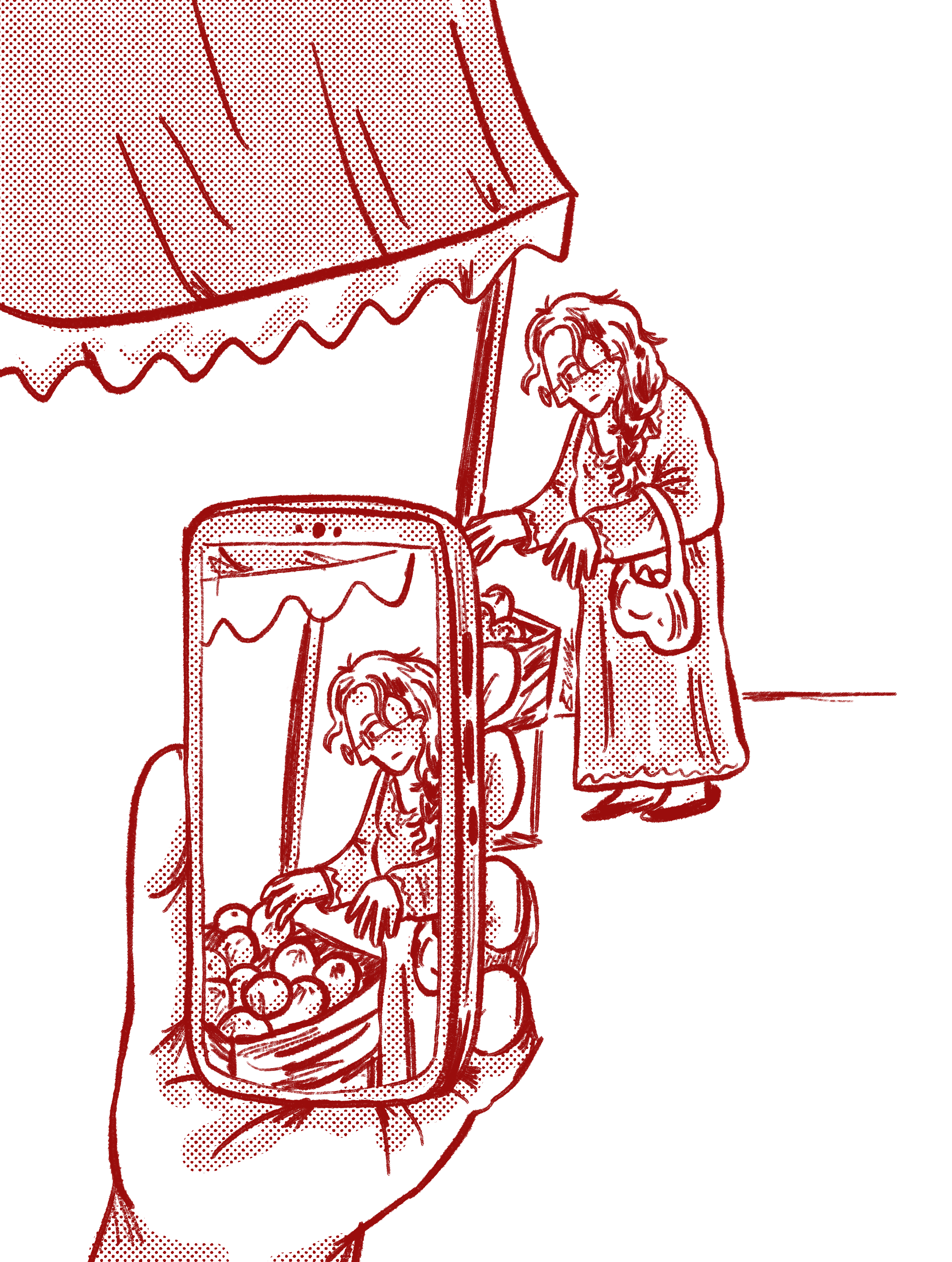
Two years ago, Inaya remembers it was a Friday when she was getting ready to leave for university and the doorbell rang. One of her cousins had come to meet her father. He showed him a video in which a boy was dancing in the university corridor. In the background, she was sitting with her male classmate, completely unaware that she had been captured on camera. She tried to explain to her father that she had done nothing wrong.
However, he responded that if she wanted to continue going to university, she would have to start covering her face so that no one could point her out in such videos again. This was not her mistake, nor was it truly her father’s.
She believes he was trying to protect her, shaped by a society where blame is often placed on girls rather than on those who record and share videos without understanding or respecting the concept of consent, even for those who appear in the background.
In Pakistan, digital literacy and access remain limited for women, with around 45% using mobile internet (Dawn, based on GSMA data). According to Geo, also based on the GSMA Mobile Gender Gap Report, about 52% of women own a mobile phone, compared to 81% of men.
The digital gender gap is wider in rural areas, where cultural norms and infrastructure limitations further restrict women’s access to technology. This further increases their vulnerability to online exploitation and non-consensual sharing of images and videos.
What Consent Really Means in the Digital Age
Consent means obtaining permission before recording or sharing someone’s image or videos online, including cases where people are unknowingly filmed and later appear in content.
As a lot of people do not know what consent is and how it affects women, in the form of harassment, misuse of images, and online exploitation, and their effects on their physical life as well, the issue of consent largely relates to real images and videos. It has become so normalized in our society to post such data on social media that we start accepting it as it is, without raising questions about it and without knowing that there are people who are affected by this.
When Virality Overrides Consent
As people increasingly rely on video and image sharing platforms such as TikTok and Instagram, this issue has evolved into a serious digital security concern. Yasal Munim, a digital rights advocate, highlights that the widespread sharing of online content is increasing risks to individuals’ privacy and safety.
The stringent requirements for virality, engagement, and monetisation often lead to users recording and uploading their content quickly without thinking about not only ethical considerations but also the safety of other people in their videos.
From Online Exposure to Real-World Harm
In Pakistan, videos taken without consent have real-life consequences for women. In 2023, a woman was killed in Kohistan after her doctored videos were circulated. This is particularly concerning because the concept of a family’s “honour” continues to be attached to women in many parts of society.
Quite recently, public figures such as actor Ramsha Khan, who had to publicly call for respect for her privacy after her wedding images circulated online, illustrate how even women with visibility and influence continue to remain vulnerable. Munim mentioned how these kinds of cases highlight how society has normalized capturing, altering, and circulating women’s images or videos without their explicit consent.
Moreover, last year, Meta Platforms faced criticism after reports that images of schoolgirls, originally shared by parents in school-related contexts, were used in targeted advertisements on Instagram. According to a report by The Guardian, many parents expressed outrage, as these images were posted on private accounts but later appeared in ads aimed at male users. In response, Meta stated that its advertising system can use publicly shared or accessible content under its data and advertising policies, which allow user-generated content to be processed and distributed for commercial purposes. The company maintained that such use was consistent with its terms, highlighting how users often share images without fully understanding how they may be reused or amplified by the platform.
This raises concerns around informed consent, as individuals may agree to share content without realising the extent of its potential use. In such cases, misused or non-consensual content becomes not only a privacy issue but one that intersects with harassment, online violence, and emerging risks such as AI manipulation. According to Yasal Munim, this underscores the need for stronger digital literacy and greater respect for consent in both physical and digital spaces.
A Normalised Violation
At the office, where most of her colleagues are men, 28-year-old Afiya, an HR assistant in a corporate firm who spoke about her experience of workplace privacy violations, described how often she is recorded without consent.
They make videos and send them as Snapchat streaks and upload them as Instagram reels. Many times, I’m in those videos too. But no one asks me.”
“I never agreed to be recorded,” she said. “I didn’t even know when the video was being made.
“After it kept happening, I decided to speak up.
“I asked him, why do you keep sending these videos with girls in them? Did you ask us? Did you take our permission?”
Afiya is confident and aware, but what bothered her was how easily her privacy was ignored at work.
But instead of understanding her concern, her coworker dismissed it.
“He said I have ‘conservative thinking,’” she said. “Like I was overreacting.”
But for her, the issue was simple.
“Just because I work with you doesn’t mean you can record me,” she said. “Just because I’m standing there doesn’t mean you can share my video.”
She said what bothered her most was how normal this has become.
“People don’t even think of it as wrong,” she said. “They think it’s just for fun. But it’s still my face, my video. I should have a say in it.”
In a time where everything is quickly recorded and shared, her question remains basic, but often ignored:
“Why is it so hard to ask before filming someone?”
Academic research published in the Oxford Journal of Legal Studies on image-based abuse argues that the non-consensual recording or sharing of a person’s images or videos is not only a breach of privacy but also a violation of personal autonomy and dignity, reinforcing the principle that individuals should have control over how their likeness is captured and used.
Why Victims Struggle to Seek Justice
There are several technical, legal, and social barriers that survivors face when trying to get such content removed. In many cases, videos do not clearly violate platform rules, especially when women appear only in the background, or when the content is not explicitly abusive, Munim said.
Platforms such as TikTok, Facebook, and Instagram are better at identifying extreme violations than contextual harm, often requiring survivors to explain why the content is harmful even when consent is absent.
Even when reported, responses can be slow, automated, and lack transparency, making it difficult for users to understand decisions or appeal them. Meanwhile, content spreads rapidly and is frequently downloaded or reshared, meaning removal from one account does not stop its circulation.
Survivors also face social challenges, including harassment, moral policing, and a lack of support from family or workplaces. Fear of retaliation or further exposure often discourages them from reporting, leaving many women to withdraw from online spaces rather than seek redress.
According to Marva Khan, a Gender and Law professor from LUMS, Pakistan, lacks a strong concept of digital privacy, particularly in public spaces. She explained that while legal protections remain limited, the issue is also deeply social, particularly when it comes to vulnerable groups such as women and minors.
“People often forget that others have dignity and may not want to appear online,” she said, adding that in some countries, stricter norms exist around monetized content, where individuals appearing in the background of videos may have grounds to object, especially when their image is used without consent for profit.
Khan also links this issue to broader patterns of gender-based violence in Pakistan, where women often face disproportionate consequences, including reputational harm and, in extreme cases, violence in the name of “honour.”
She further added that, for individuals who appear in the background of videos, seeking legal recourse can be difficult, as content spreads rapidly across platforms, making it hard to control or trace. In such a context, she suggests that basic practices, such as blurring faces or using filters, should become a social norm to protect people’s privacy.
When Even Protection Becomes Exposure
A few days ago, a video went viral on social media showing two boys from Lahore rescuing a minor girl from an attempted assault. Their bravery is undeniable and likely prevented serious harm. However, the video also exposes a gap in digital awareness. The child’s face was clearly visible, raising concerns about her privacy and safety. Even in urgent situations, minors must be protected from public exposure. The boys, themselves under 18, may not have understood the consequences, but this reflects a wider lack of digital rights education. Sensitive content should be shared responsibly, protecting the victim’s identity while ensuring that accountability remains focused on the perpetrators.
This incident also reflects broader concerns highlighted in a study of the National University of Modern Languages (NUML), Islamabad, on Pakistani Gen Z’s social media use and cybercrime awareness, which found that despite high levels of online activity, many young users have a limited understanding of digital rights, privacy, and the consequences of sharing sensitive content. Such gaps in awareness increase the risk of unintentionally exposing vulnerable individuals, especially minors, in digital spaces. This lack of understanding reinforces the need for stronger education around digital rights, consent, and responsible content sharing.
Misleading Frames, Real Consequences
A Lahore High Court lawyer, Muhammad Azam, highlights that on social media, videos are often framed with misleading thumbnails or captions such as “What is happening in Pakistan today?” or “What are women doing in public spaces?”. In reality, the videos typically show women simply walking on the street or sitting on a bus, but the framing of the footage makes it appear suggestive or misleading. These kinds of portrayals raise serious concerns about consent and privacy in public spaces. In such cases, affected individuals may have grounds to pursue defamation claims. However, the process remains difficult, as victims often face significant practical barriers when seeking justice.
These cases reflect a broader global pattern of digital surveillance, with incidents of non-consensual recording, misleading framing, and online harassment documented in different parts of the world, pointing to a digital environment in which consent is frequently overlooked.
The BBC published an article on 24 January 2026 titled: Women Filmed Secretly for Social Media Content – and Then Harassed Online, in which a woman, Dilara from London, expressed how she was secretly filmed, and the perpetrator posted the video on TikTok and got millions of views. The perpetrator also has more videos on TikTok, which are filmed without the girls’ consent, giving men tips on how to approach a woman. Eight other women in the UK, US, and Australia told the BBC that they had been filmed without consent. Kim, one of the women interviewed, told the BBC: “Nobody has the right to film other people, exploit them, sexualise them, or make money from them without their permission.”
Recent cases in India, including the Bengaluru metro voyeurism incident reported by The Times of India and The News Minute, show how women are being secretly filmed in public spaces and misrepresented online. In several instances, such as arrests reported by The South First, these videos were uploaded without consent, often leading to harassment and public outrage.
Gaps in Law and Enforcement
Azam also explained how access to legal remedies in Pakistan is another challenge. Many cybercrime offices are located in major cities, requiring individuals, particularly women from smaller towns, to travel long distances to file complaints. This process demands time, resources, and often the disclosure of personal identity, which can discourage victims from coming forward. Complaint mechanisms should therefore be made more accessible, including through online systems, to reduce these barriers, he suggested.
Another key issue is platform accountability. Social media platforms such as Facebook and others operate outside Pakistan, making it difficult to enforce local laws or ensure the timely removal of harmful content. While some countries have stricter regulations regarding public filming and privacy, standards vary widely across regions. In many cases, if the content is not clearly malicious, legal action becomes harder to pursue.
Women remain the primary targets in such content, reflecting broader gender biases in society, Azam mentioned. Although laws like the Prevention of Electronics Crimes Act (PECA) exist to address these issues, their effectiveness depends heavily on implementation. At present, the process of filing complaints is often complex and burdensome, allowing many cases to go unreported.
When asked about this issue, Munim added, “Other gaps include a lack of awareness of the crime and relevant laws.” Many women may not recognize such incidents as punishable offences, while others may choose not to pursue legal action due to family and societal pressure. The process itself can also be difficult to navigate, given delayed timelines, high costs, and the requirement of repeated court appearances.
Beyond Law: Towards a Culture of Digital Consent
Ultimately, the issue goes beyond isolated incidents and legal frameworks, pointing to a broader digital culture in which consent is increasingly ignored in everyday online behaviour. Across workplaces, social media platforms, and public spaces, women’s images are frequently captured and circulated without their control, normalising practices that blur the boundaries between visibility and violation. This reflects a deeper structural problem in how digital spaces are used and understood. Moving forward, addressing this challenge will require not only greater awareness of consent as a basic digital principle, but also a cultural shift where asking before filming, sharing, or publishing someone’s image becomes a routine and expected norm of online interaction.