

By Aleezeh Fatima When the 2022 floods submerged entire districts in Pakistan, women queued for hours outside temporary registration desks set up under tarpaulin sheets. Many had lost their homes, livestock, and physical documents. At some relief centres, displaced families pressed tightly around registration offices, trying to submit their identity cards and be recorded for …

 By Aleezeh Fatima
When the 2022 floods submerged entire districts in Pakistan, women queued for hours outside temporary registration desks set up under tarpaulin sheets. Many had lost their homes, livestock, and physical documents. At some relief centres, displaced families pressed tightly around registration offices, trying to submit their identity cards and be recorded for aid distribution. One report described how desperate flood victims “pressed against the door” of a registration room where officials were recording families for shelter and assistance.
To receive emergency cash assistance, many were required to provide fingerprints, national identity numbers, and mobile phone verification codes. For some women, it was the first time they had engaged directly with a biometric system.
In that moment, survival required surrender. Access to relief was tied to participation in digital systems that collected fingerprints, identity records, and phone numbers, often without clear explanations of how this data would be stored, shared, or protected. For women who had already lost homes and documentation to the floodwaters, the ability to refuse was virtually nonexistent. Aid depended on compliance, turning personal data into another currency of survival.
Climate disasters have always exposed inequality. They reveal who lives in floodplains, who works informal jobs, and who lacks insurance. Increasingly, they also reveal something less visible but equally consequential: who is absorbed into digital systems without privacy protections.
Across South Asia, humanitarian response has become deeply digitised. Biometric identification, mobile money transfers, SMS registration platforms, and national identity databases now form the backbone of disaster relief. These systems promise transparency and efficiency. Yet for women, especially those with limited digital autonomy, they introduce new and long lasting vulnerabilities.
When the waters recede, the databases remain.
A Region Under Escalating Climate Stress
South Asia is among the most climate exposed regions globally. According to the World Bank, nearly 90 percent of the region’s population is projected to face intense heat exposure by 2030, while more than one in five people will experience severe flood risk.
Flood events are already devastating in scale. The 2020 South Asian floods resulted in at least 6,511 deaths and caused estimated economic losses of 105 billion US dollars. Bangladesh alone has nearly 60 percent of its population living in areas vulnerable to cyclones and flooding.
UNICEF’s Children’s Climate Risk Index places Afghanistan, Pakistan, India, and Bangladesh among countries where children face extremely high climate risk, reflecting broader systemic exposure to climate shocks.
As disasters intensify, displacement becomes cyclical rather than exceptional. And displacement increasingly triggers digital registration.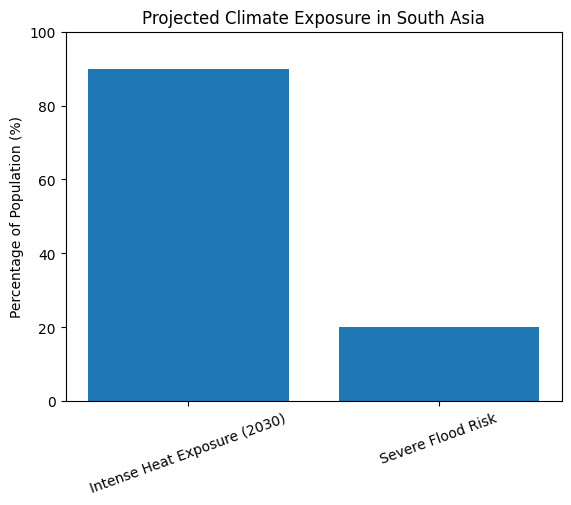
The Digitisation of Survival
Over the past decade, humanitarian actors have adopted digital tools to streamline aid distribution and reduce corruption. These include biometric verification systems, national ID linked databases, geotagged beneficiary lists, and mobile money transfers.
A 2017 report by Privacy International documents the use of biometric data in cash transfer programmes across at least fifteen countries, including Pakistan, Afghanistan, and India. Biometrics are often framed as fraud prevention tools. Yet they also expand the collection of highly sensitive personal data in crisis settings.
In Bangladesh, research on biometric big data has warned that weak legal protections and insufficient oversight create risks of data misuse and unauthorised sharing. In contexts where comprehensive data protection frameworks are absent or weakly enforced, emergency data collection can quietly become permanent infrastructure.
The logic is administrative efficiency. The reality is expanding data capture at moments when consent is structurally compromised.
Gendered Digital Inequality
Digital systems do not operate in gender neutral environments. South Asia faces one of the widest gender gaps in digital access globally.
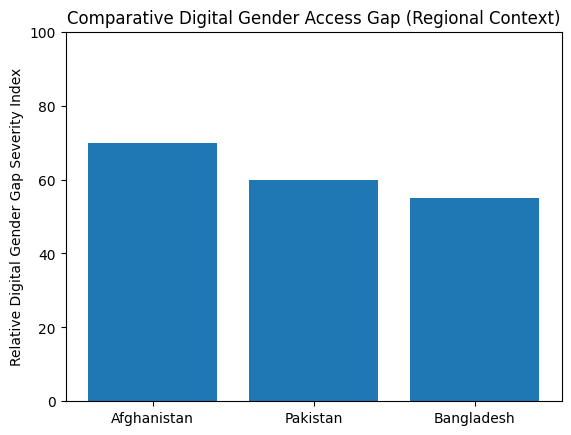
UN Women’s Asia Pacific research identifies Afghanistan, Pakistan, and Bangladesh among countries with significant disparities in women’s access to digital technologies. In many rural communities:
- Women are less likely to own personal mobile phones
• SIM cards are registered in male relatives’ names
• Devices are shared within households
• Digital literacy gaps persist
When disaster relief requires one time passwords sent via SMS, biometric authentication, or online form submissions, women may depend on male intermediaries to complete registration. That dependence undermines both financial autonomy and data control.
Consent in emergencies is rarely meaningful. A woman who must choose between food assistance and data surrender is not exercising free choice.
Bangladesh: Environmental and Digital Exposure
Bangladesh’s climate vulnerability is increasingly intersecting with digital governance systems. The country experiences frequent cyclones and floods that displace millions and trigger large-scale humanitarian responses. When Cyclone Amphan struck in 2020, an estimated 10 million people were affected and about 500,000 families lost homes or shelters. Relief efforts involved large beneficiary lists and emergency cash assistance programmes targeting thousands of households.
In several relief initiatives, beneficiaries were required to provide phone numbers linked to mobile financial service accounts so that cash transfers could be processed. This growing reliance on digital registration systems means that climate disasters often lead to rapid and large-scale collection of personal data.
For women, exposure of personal phone numbers or identity details can lead to harassment, social stigma, or exploitation. In patriarchal settings, privacy is not only an individual concern but a communal one.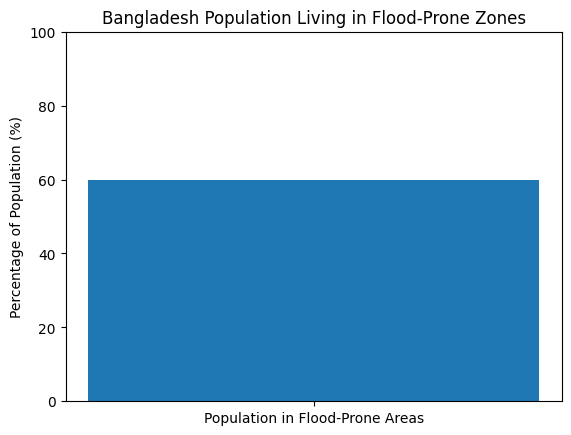
India: Aadhaar and Biometric Governance at Scale
India’s Aadhaar programme is the world’s largest biometric identity system, covering more than 1.3 billion residents.⁹ The system is widely integrated into government welfare programmes and Direct Benefit Transfer schemes used to deliver financial assistance to citizens.
During climate disasters, Aadhaar frequently becomes part of the relief infrastructure. In flood-affected states such as Andhra Pradesh, authorities have used Aadhaar data to identify beneficiaries and verify bank accounts before distributing compensation. In one flood relief programme, enumeration teams collected Aadhaar details to validate beneficiary identities before transferring compensation funds to affected households.
Aadhaar systems have also been mobilised in disaster recovery efforts when people lose identity documents. After the devastating 2018 Kerala floods, government agencies were instructed to provide free digital copies of Aadhaar to flood victims in relief camps using biometric authentication so they could regain access to services and assistance.
These examples illustrate how biometric identity systems become embedded in disaster response. When identity verification is required to receive compensation or replace lost documents, biometric authentication can effectively become a gateway to recovery. At the same time, the scale of Aadhaar introduces systemic risks. When such vast identity infrastructures underpin emergency aid systems, even minor vulnerabilities or data leaks can affect millions of people.
Afghanistan: Data in Fragile Governance Contexts
Afghanistan presents a different but equally concerning scenario. Researchers and human rights organisations have warned that digital identity and biometric systems deployed in fragile governance contexts may expose sensitive data to authorities or armed actors without adequate oversight.
These concerns intensified after the Taliban takeover in 2021. Over the previous two decades, international forces and Afghan authorities had collected biometric data from millions of Afghans through systems such as the Afghan Automated Biometric Identification System and the US military’s biometric database used for security and identity verification. According to reporting by MIT Technology Review, these databases included fingerprints, iris scans, and biographical information collected during military operations and administrative processes.
When governments change or institutions collapse, such datasets do not automatically disappear. Humanitarian and security databases may persist on servers, devices, or shared platforms long after the programmes that created them have ended. Experts warned that biometric records collected during the war could potentially be accessed or repurposed by new authorities, placing individuals whose identities were recorded at risk.
For women who are displaced, widowed, or undocumented, the risks can be particularly acute. Many may have limited understanding of how their biometric or identity data is stored or shared once it is collected during registration processes. In fragile political environments, digital records can outlast the institutions that created them, raising long-term questions about control, access, and accountability.
The Humanitarian Privacy Gap
Humanitarian organisations increasingly recognise the need for data responsibility, yet implementation remains uneven. The Humanitarian Practice Network has highlighted growing concerns about safeguarding digital data in humanitarian initiatives, including blockchain based systems.
Even anonymised datasets can sometimes be re-identified when combined with other information, a phenomenon known as the mosaic effect.¹³ In data rich environments, aggregation does not guarantee anonymity.
Emergency data collection often prioritises speed and coverage over privacy impact assessments. Gender sensitive safeguards are rarely embedded at the design stage.
Digital Aid and Structural Inequality
Digital cash transfers are often presented as empowering for women by providing direct access to funds. Evidence shows that digital financial inclusion can enhance autonomy under the right conditions. However, outcomes depend on control.
If a woman does not control the phone linked to her account, she does not control the funds. If biometric records are stored without clear deletion timelines, she cannot control future access. If informal volunteer spreadsheets circulate her phone number, she may face harassment.
Climate disasters amplify dependence. Digital infrastructures can either reduce inequality or reproduce it.
Climate Justice as Digital Justice
Climate governance is becoming inseparable from digital governance. Early warning systems rely on mobile networks. Compensation depends on identity databases. Adaptation planning uses satellite and AI driven mapping.
This digital layer is not neutral. It reflects existing power hierarchies.
A rights based climate resilience framework must therefore include:
- Enforceable data protection legislation
• Independent oversight bodies with gender expertise
• Data minimisation principles in emergency settings
• Clear deletion and retention timelines for biometric data
• Transparent vendor contracts in humanitarian tech procurement
• Offline access pathways for women without secure digital control
Climate justice cannot be achieved if adaptation mechanisms expose women to long term surveillance or exploitation.
A Policy Imperative for the Climate Era
The climate crisis is accelerating the datafication of survival. As disasters become more frequent, digital registration systems will expand. Without robust safeguards, emergency infrastructures risk normalising intrusive data practices.
Governments in South Asia are simultaneously expanding digital ID systems, experimenting with AI driven governance tools, and strengthening disaster response platforms. These trajectories are converging.
Policymakers must recognise that privacy is not a secondary technical issue. It is foundational to dignity, autonomy, and security. In contexts where women already face structural discrimination, digital exposure can translate into economic coercion, social control, or targeted harassment.
Climate resilience planning must integrate privacy impact assessments into disaster preparedness frameworks. Gender audits of digital aid systems should be mandatory. International climate finance should allocate resources specifically for data protection capacity building in vulnerable states.
Resilience is not only about rebuilding infrastructure. It is about ensuring that systems designed to save lives do not quietly compromise rights.
When the floodwaters recede, homes can be reconstructed. Fields can be replanted. Roads can be rebuilt.
But once biometric data is captured, once identity systems are linked, once personal details circulate beyond control, recovery is far more complex.
In a warming world, the true test of resilience will not only be how well societies withstand the next storm. It will be whether they can protect the rights of those most vulnerable while doing so.