
Regional Engagements & Domestic Initiatives Digital Safety: #ForAllWomenAndGirls At the 70th Session on the Commission of Status of Women, DRF Founder Nighat Dad highlighted the growing risk the misuse of artificial intelligence poses to the safety of women and children online. To counteract these harms, she added, it is necessary to ensure legal frameworks and …
Regional Engagements & Domestic Initiatives
Digital Safety: #ForAllWomenAndGirls
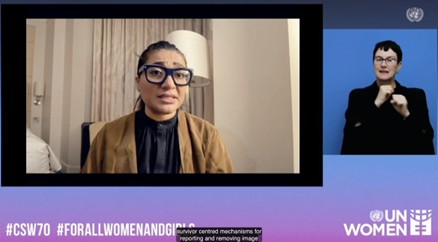 At the 70th Session on the Commission of Status of Women, DRF Founder Nighat Dad highlighted the growing risk the misuse of artificial intelligence poses to the safety of women and children online. To counteract these harms, she added, it is necessary to ensure legal frameworks and actions of recourse are survivor centered. Watch her address at the High-Level Meeting on Violence Against Women and Girls here.
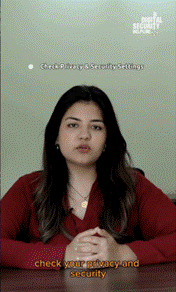 “Ab Kya?” – a Spotlight on Our Digital Security Helpline Team
This month, we launched “Ab Kya?” (“What Now?”), a short video where our dedicated Incident Response Analysts offer advice on how to best approach survivors of digital violence with support. Covering themes such as how to sensitively speak about abuse; keeping minors safe online; and explaining differences between social media platforms and their risks, the series presents guidance on how to navigate complex situations both online and offline. Watch more here.
Our Latest Research & Advocacy
Disinformation in Warfare in the Age of AI and Synthetic Media
 Recent escalations between the United States (US), Israel, and Iran have brought the world to a standstill, accompanied by an overwhelming surge of information across online platforms – much of which may not be occurring in real time or may lack verification altogether. This short investigative piece by DRF examines how the evolving nature of modern warfare grows to show that conflicts are no longer fought solely on physical battlefields but also across digital information ecosystems with consequences that extend far beyond online spaces.
Digital 50:50 – Our Data, Our Rights: Reclaiming Privacy in the Digital Age
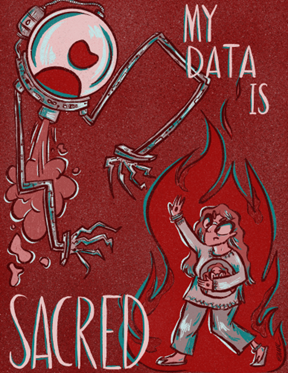 At a time when data is increasingly used as a tool of power, surveillance and even warfare, DRF’s first Digital 50:50 edition of 2026 brings us back to the basics: who controls our data, how it is used, and who is most at risk. From AI and biometric systems to everyday apps, our digital lives are shaping real-world consequences, especially for women and marginalized communities. This edition is a call to reflect, question and reclaim our rights in an increasingly data-driven world.
Press Coverage
Society: Between Visibility and Violence
Dawn quotes DRF Founder Nighat Dad on the underreporting of complaints from vulnerable communities, pointing towards a greater structural problem in how abuse is addressed online. Read more here.
Events
Online Safety for Working Women, Simplified
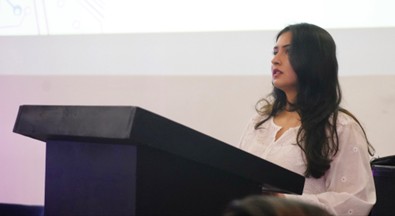 To mark International Women’s Day, Communications Lead Vaneeza Jawad spoke at COLABS shedding light on the legal frameworks protecting women in digital spaces and the resources available when those protections are tested. The session was contextualised by establishing the necessity of online safety for working women.
Tech Trends
Google Allows Email Address Change
Google’s chief executive, Sundar Pichai, took to X to announce that Gmail users would now be allowed to change their email addresses without creating completely new accounts and/or inboxes. Changes can be made through Google account settings. The update is currently only available to users in the United States with Google representatives unsure about when it will be released worldwide.
Late last month, Pakistani fintech company SadaPay announced that it was going offline for all users due to disruptions in its infrastructure. A representative from the company stated that Sadapay’s infrastructure runs on Amazon Web Services (AWS) located in Bahrain, a region that has been affected by the US-Iran-Israeli conflicts. They further stated that full app outage of users is a direct result of their cloud facilities being under drone attacks. While app functionality is still unavailable, the company guarantees that their customer’s data and money are safe and well accounted for.
In the wake of concerns raised about misinformation and TFGBV through AI-generated non-consensual imagery, OpenAI has shut down its AI video-generation app, Sora. Unveiled approximately 2 years ago, the app was known for creating ‘realistic videos’ based on basic prompts but has recently come under scrutiny for its lack of monetization and possibility of copyright infringement. Closure of SoraAI is not expected to impact image-generation capabilities within ChatGPT and OpenAI has claimed that it plans on redirecting resources towards training robots.
Tip of the Month
Rapid developments in Artificial Intelligence have resulted in AI-generated content becoming more sophisticated, and harder to spot. It’s difficult to tell what’s real online and what’s not, especially when it comes to content like images and videos. This makes it easier for misinformation. Here are a few handy tips to spot AI-generated content and avoid sharing misleading material:
- Examine Hands and Eyes: Check for malformed fingers, distorted hands, or unnaturally rendered eyes (e.g., dead, too wide, or unusual gaze).
- Check Backgrounds and Text: Look for distorted, warped, or melting backgrounds. Text within images often appears as nonsensical, jumbled letters.
- Verify Shadows and Reflections: AI frequently violates physical laws, casting shadows in multiple directions or creating impossible reflections.
- Look Out for Textures That Seem “Too Perfect”: AI often produces surfaces that are unnaturally smooth, lacking the imperfections (pores, stray hairs) of real photography.
- Reverse Image Search: Use tools like Google Images or Yandex to trace the origin of the image and see if it has been flagged elsewhere.
DRF Resources:
Digital Security Helpline
The Digital Security Helpline received 277 complaints in March 2026, of which 239 were related to cyber harassment.
If you’re encountering a problem online, you can reach out to our helpline at 0800-39393, email us at helpdesk@digitalrightsfoundation.pk or reach out to us on our social media accounts. We’re available for assistance from 9 AM to 5 PM, Monday to Sunday.
Legal Support
DRF’s Legal team processed 5 complaints in March 2026, with 4 involving women, mostly related to blackmailing and harassment.
If you’re in need of any legal support or advice, you can reach out to DRF’s Ab Aur Nahin portal.
IWF Portal
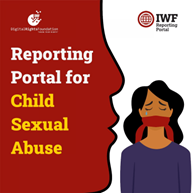
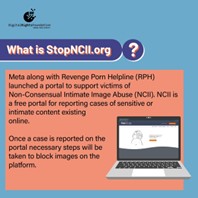
StopNCII.org