
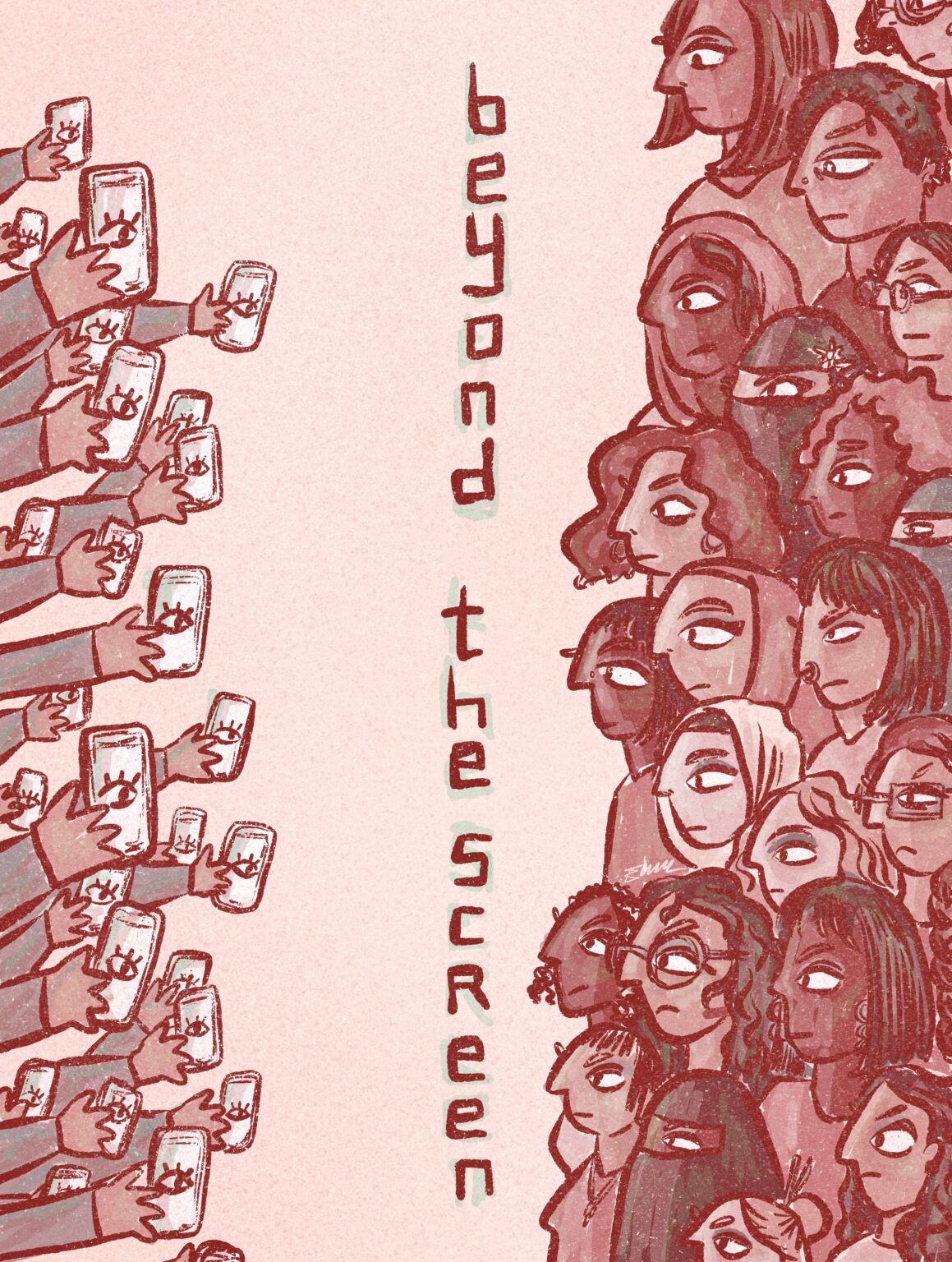
This year, under the theme “Beyond the Screen: Confronting Digital Violence, Demanding Platform Accountability,” we return with the final edition of Digital 50.50 of this year with heavy hearts, yet a clear sense of purpose. We know now, perhaps more urgently than ever, that what happens online does not stay online, if it ever did. Technology-facilitated gender-based violence (TFGBV) has become a defining feature of our digital lives, silencing women, gender and religious minorities, journalists, and activists who dare to exist, speak, and resist in public spaces.
From image-based abuse and the non-consensual sharing of intimate images to cyberbullying, trolling, and recurring threats, TFGBV is woven into the everyday experience of being visible online. With the rise of artificial intelligence (AI), these harms have evolved into new and troubling forms, including deepfakes, digitally manipulated images and audio, and targeted disinformation campaigns designed to shame, discredit, and erase marginalized voices. We also continue to witness gendered disinformation, doxxing, online stalking, the misuse of CCTV footage and surveillance technologies, coordinated harassment networks, and the growth of misogynistic online communities such as the “manosphere” and incel spaces. These trends highlight the ever-shifting and escalating nature of digital gendered violence. These are not isolated acts of harm; they are part of a systemic digital ecosystem that normalizes violence while rewarding engagement over safety.
As part of the 16 Days of Activism against Gender-Based Violence, and in alignment with this year’s global theme, “UNiTE to End Digital Violence against All Women and Girls,” this special edition explores the full spectrum of digital harassment and its real-world consequences including fear, self-censorship, exclusion from online and offline spaces, economic loss, and in far too many cases, physical violence. Through the stories and analyses featured here, we amplify voices of resistance, including feminist movements, survivors, journalists, and members of marginalized communities navigating these increasingly hostile online environments. We also critically examine what meaningful platform accountability must look like, from transparent content moderation practices to stronger safety mechanisms that prioritize people over profit.
As editors, contributors, and readers, we continue to hope for change. We hope platforms finally acknowledge their responsibility and commit to the transparency and accountability advocates have long demanded. We hope this edition encourages deeper reflection on those most impacted by TFGBV and inspires collective action toward creating safer, more inclusive digital spaces for all. And as the 16 Days conclude this year, we believe the urgency of these conversations must not end here; our demands for justice, safety, and accountability must extend far beyond these symbolic days of action.
With love,
Seerat Khan
Co-editors: Sara Imran, Maria Nazar, Ahsan Zahid, and Hassan Saeed Khan
Illustrator: Emil Hasnain