

By Annam Lodhi Social media began as a space for social interaction almost two decades ago and has since evolved into something far more significant, serving as a source of news, a marketplace, a campaigning tool, and increasingly, a space where people document issues that need urgent attention, like everyday family disputes, harassment, child labour, …

By Annam Lodhi
Social media began as a space for social interaction almost two decades ago and has since evolved into something far more significant, serving as a source of news, a marketplace, a campaigning tool, and increasingly, a space where people document issues that need urgent attention, like everyday family disputes, harassment, child labour, domestic violence, environmental violations, discrimination, and other concerns that often go unaddressed by formal institutions.
Women’s rights advocate, Anam Rathore, has witnessed this shift firsthand, “Twitter was one of those places where you can call out these things,” she said. For Rathore, social media became a way to document experiences that often go unaddressed through traditional channels publicly.
This public record has become increasingly important in a country where many women struggle to access justice through formal mechanisms. According to UNFPA Pakistan, 28 percent of women aged 15 to 49 have experienced physical violence, while 34 percent of ever-married women have experienced physical, sexual, or emotional violence from a spouse. Yet more than half of women who experience physical or sexual violence never seek help or speak to anyone about it.
Clinical psychologist Rooshan-e-Alam, who also widely speaks on social issues online, says many women speak online only after other avenues have failed, “People often speak online after they feel unheard elsewhere,” she said. “For some women, social media functions as a form of visibility when traditional avenues feel inaccessible, intimidating, or ineffective.”
For writer and activist Asma Tariq, social media created opportunities that geography could not, “When you come from a place like Gujarat, your access to big cities and major opportunities is limited,” she said, adding, “In that situation, social media becomes a huge support system.”
With approximately 116 million internet users and nearly 67 million social media identities, these platforms have become modern public squares where issues once confined to private conversations can reach thousands of people within minutes.
Through online platforms, Tariq connected with publications, built professional networks, and reached audiences far beyond her hometown. Others use these same platforms to share experiences that might once have remained confined to private conversations, which are increasingly being recorded and shared publicly; videos, screenshots, and posts are made to preserve evidence and place it in the public domain; and to tell stories online because official complaints, workplace reporting mechanisms, or legal processes leave them feeling unheard. Hence, social media is used not only to raise awareness but also as a means of creating a public record of experiences that might otherwise remain invisible.
For climate communicator Ameera Adil, social media provides something many women do not always have offline: space. “If (we have this) conversation in person, (with say) a family member…. they might undermine me in the moment, unfortunately, a very common thing for Pakistani women, especially by male family members. Social media provides a sort of private space to spread your ideas.”
For entrepreneur and content creator Alivina Talal Chhapra, social media became a way to make sense of her own experience of abuse while helping other women navigate theirs. After leaving what she describes as an abusive marriage, she began sharing her experiences online and discussing narcissistic abuse, a topic she felt was poorly understood in Pakistan, “I became the reason a lot of women walked out on their abusive engagement,” said Alivina.
She added that the response she received reinforced her belief that women often turn to digital platforms because they cannot have these conversations elsewhere,”Countless women reach out to me, and they tell me that I have been helpful.”
Not every woman is willing or able to share her experiences publicly. Increasingly, private Facebook groups and online communities such as Soul Sisters Pakistan have become spaces where women can anonymously discuss abusive marriages, harassment, reproductive health, family conflicts, and mental health struggles that are often difficult to raise offline. For many, these groups are no longer simply places for social interaction or gossip but sources of advice, solidarity, and practical support. Chhapra said she spent years reading stories shared by women in such communities before her own marriage. Many involved women are trapped in abusive relationships, struggling to find support, or are unable to leave because of family and social pressures. In some cases, women turn to these communities because they feel they offer more understanding, guidance, and safer pathways out of difficult situations than formal institutions or authorities.
Yet the same platforms that allow women to document injustice also expose them to new forms of risk. What begins as documentation can quickly become visibility, and visibility in Pakistan often comes at a cost.
The Cost of Visibility
For many women, visibility online comes at a cost. While social media creates opportunities for expression and community, it also exposes women to scrutiny, judgment, and hostility. Much of the backlash they described had little to do with the issues they were discussing. Instead, women spoke of being judged for their appearance, age, marital status, opinions, and perceived morality rather than the substance of what they were saying.
The risks are reflected in reporting trends. According to the Digital Rights Foundation (DRF), 34 percent of women in Pakistan have experienced cyber harassment, including sexual harassment, blackmail, hate speech, stalking, identity theft, and threats (2019), while women accounted for more than 55.4 percent of complaints received by DRF’s Cyber Harassment Helpline in 2023.

AS (name changed to protect identity), who regularly creates content on women’s rights and gender based violence, described a pattern that has become familiar to many women active in public conversations online.
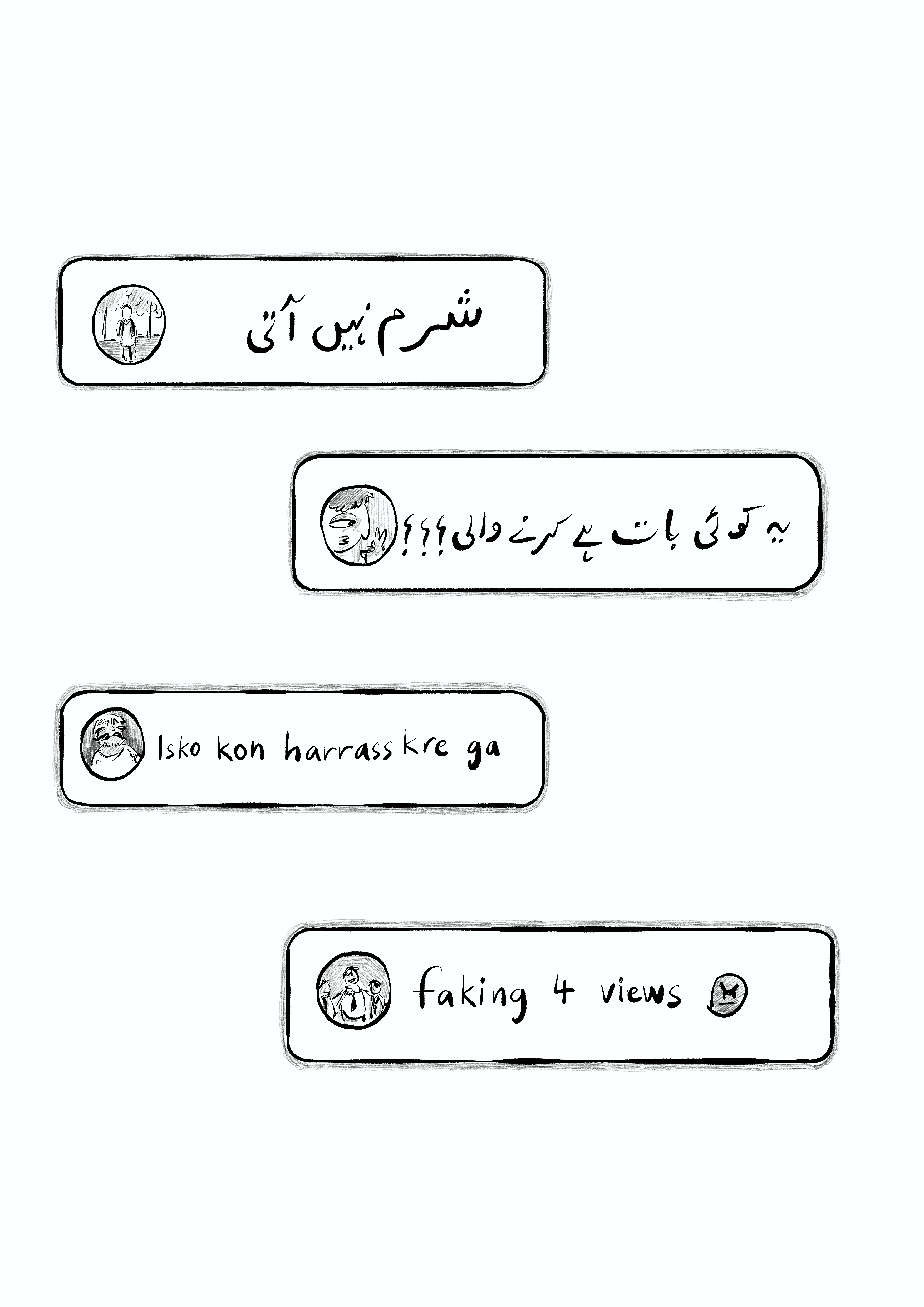
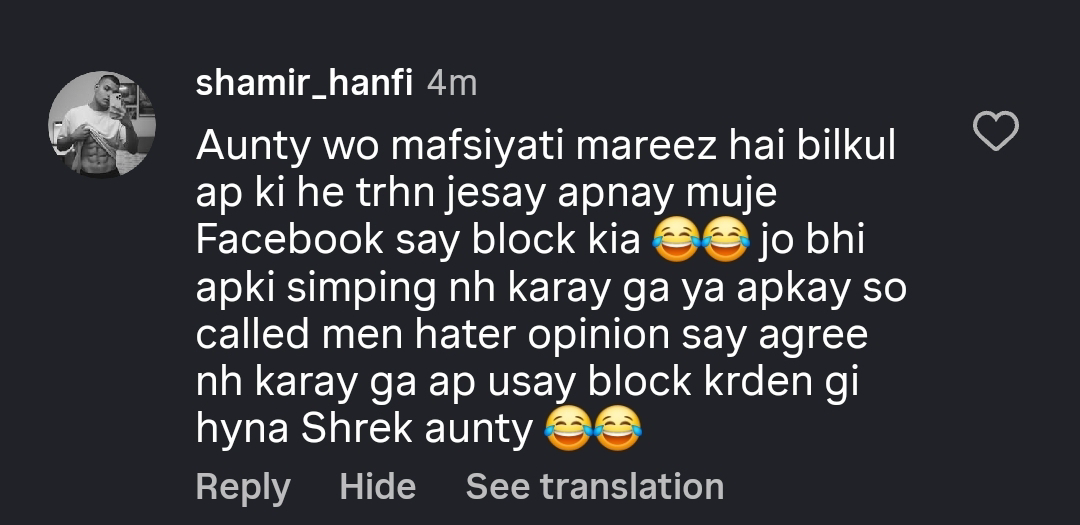
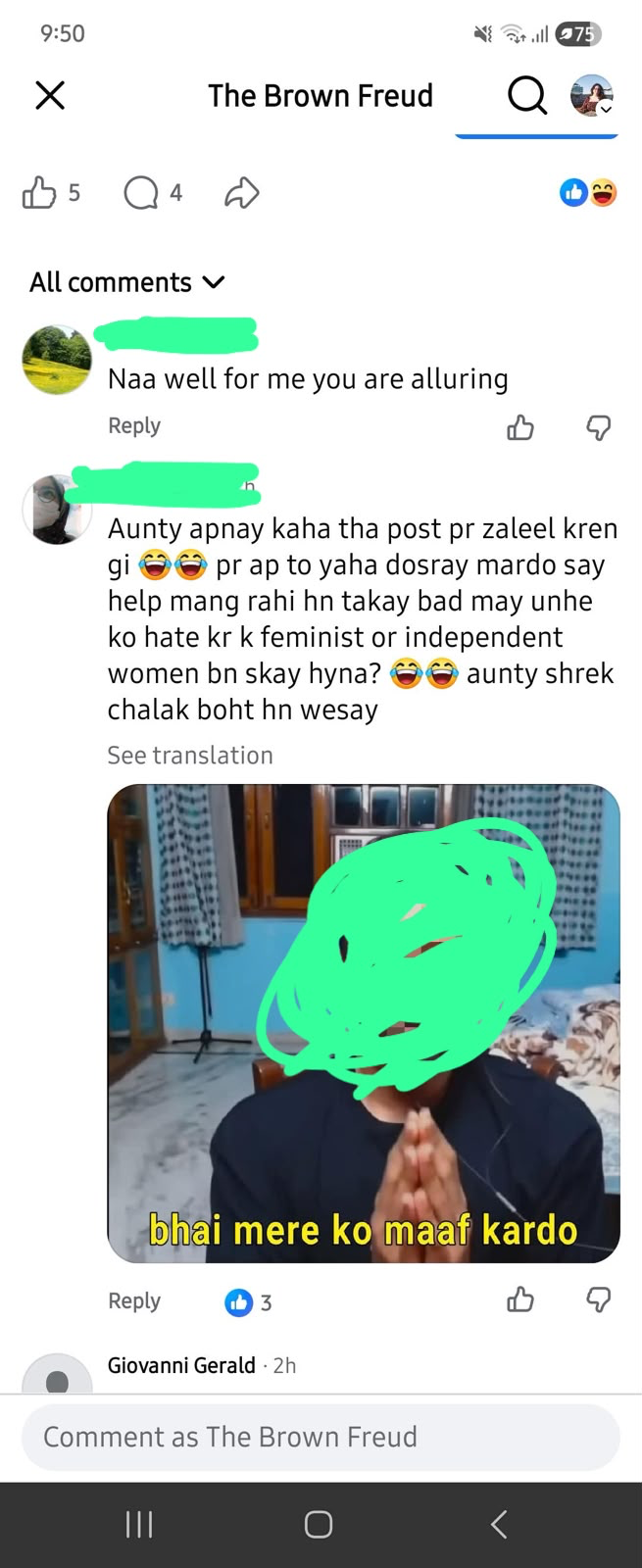
“Whenever I discuss patriarchy, harassment, or violence against women, I receive a lot of backlash; the majority of men resort to personal attacks, name-calling, and abusive language,” the attacks, she explained, often bear little relation to the subject being discussed. “I have been called a slut, a divorcee, a ‘menopausal aunty,’ and a woman who is speaking up only because she cannot find a man. These insults usually have nothing to do with the point I am making. They are simply used to shame and silence women who speak openly about uncomfortable issues.”
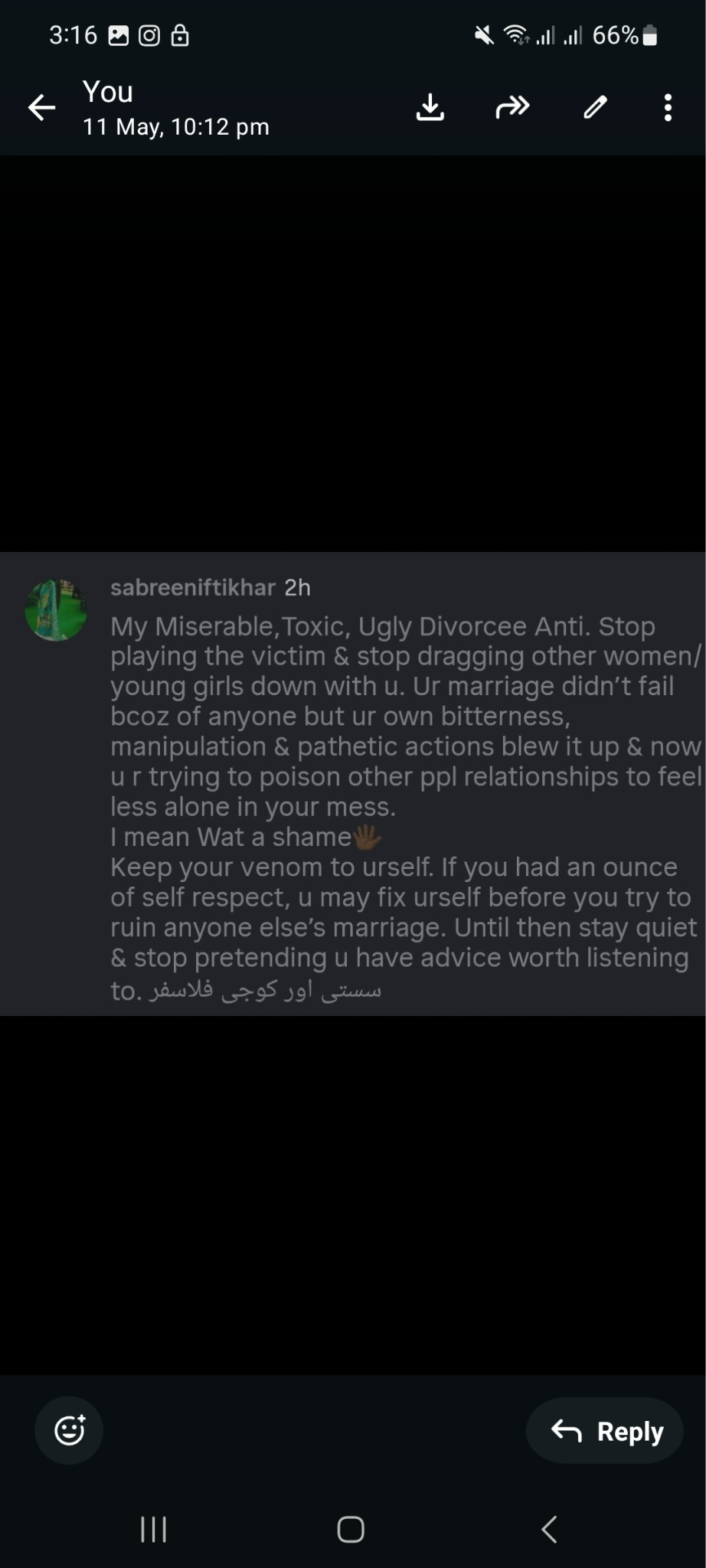
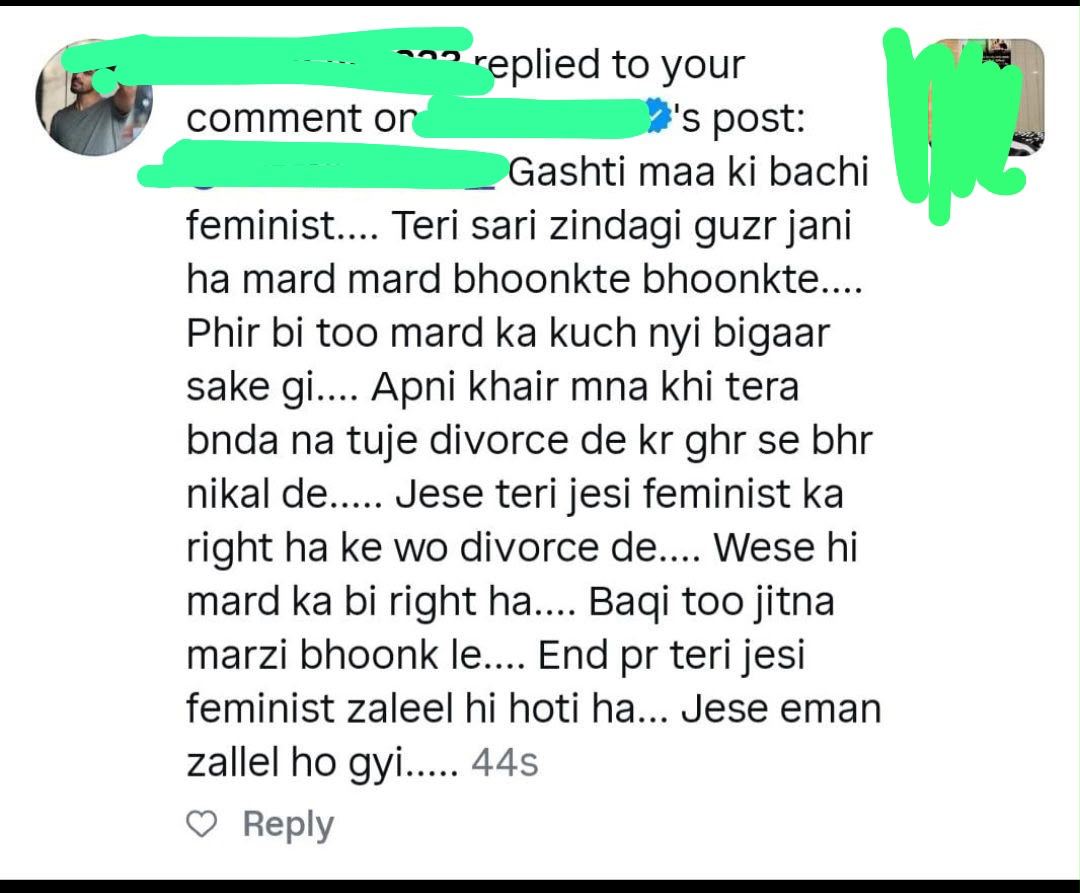
Many women described similar experiences. While some harassment appeared publicly in comments, much of it occurred in private messages, where they received threats, insults, and attempts at intimidation. Ameera noted that the tone of engagement often shifts when content reaches audiences beyond the women who primarily follow her work: “My experience hasn’t been terrible because I have a mostly female audience, but now and then, when posts become viral, men do get very abusive, especially men who don’t align with my ideas. They do reach into my personal DMs and try to school me on certain things or try to leave threats.”
https://www.instagram.com/p/DYmx-zctuUI/
These online figures employ a range of strategies to navigate online hostility. Some block, report, or restrict abusive users, while others rely on trusted friends, private communities, and support networks for advice and reassurance. Interviewees described documenting harassment through screenshots and archived messages, both as a way of preserving evidence and maintaining a sense of control. In more serious cases, women may seek legal advice to understand their options, though concerns about stigma, lengthy proceedings, and further exposure often discourage formal complaints. For many, coping with online abuse becomes less about finding a single solution and more about constantly balancing visibility with safety.
The pressure does not always come from strangers online. For Alivina, some of the backlash came from within her own family. “I think a lot of the shame comes from people’s own families. For example, I also faced backlash from my extended family, which made my mother very worried. She would ask, ‘Who is going to marry you? You’re speaking out against abuse. Men will be scared of you.'”
Many women said they face pressure to remain silent to protect family reputation and future marriage prospects. Criticism often focuses less on their views than on their decision to voice them publicly. “Generally, there is this fear of how people will perceive you. People will say that I’m ill-mannered, that I talk too much, that no one will want to marry me. They’ll say that I intimidate men because I am opinionated,” said Alivina.
For some women, these pressures result in self-censorship long before anyone else intervenes. Asma Tariq, a social activist, said, “I practiced a lot of self-censorship. Although I wanted to express my political views and opinions, I often held myself back because I was worried about my family. I could take risks for myself, but I could not risk their safety.”
The impact extends beyond online backlash. Women spoke about anxiety, exhaustion, and concerns that online hostility could spill into their offline lives, making participation in public conversations a constant calculation of risks.
Yet many continue speaking because they know they are not speaking only for themselves. Several said women regularly contact them privately to share experiences of abuse, harassment, and discrimination that they do not feel safe discussing under their own names. As Chhapra explained, “A lot of girls come to me and say, ‘This is my story, and I want you to share it.’ They cannot share it themselves, but because I speak about these issues, they ask me to do it on their behalf.”
When Documentation Becomes a Liability
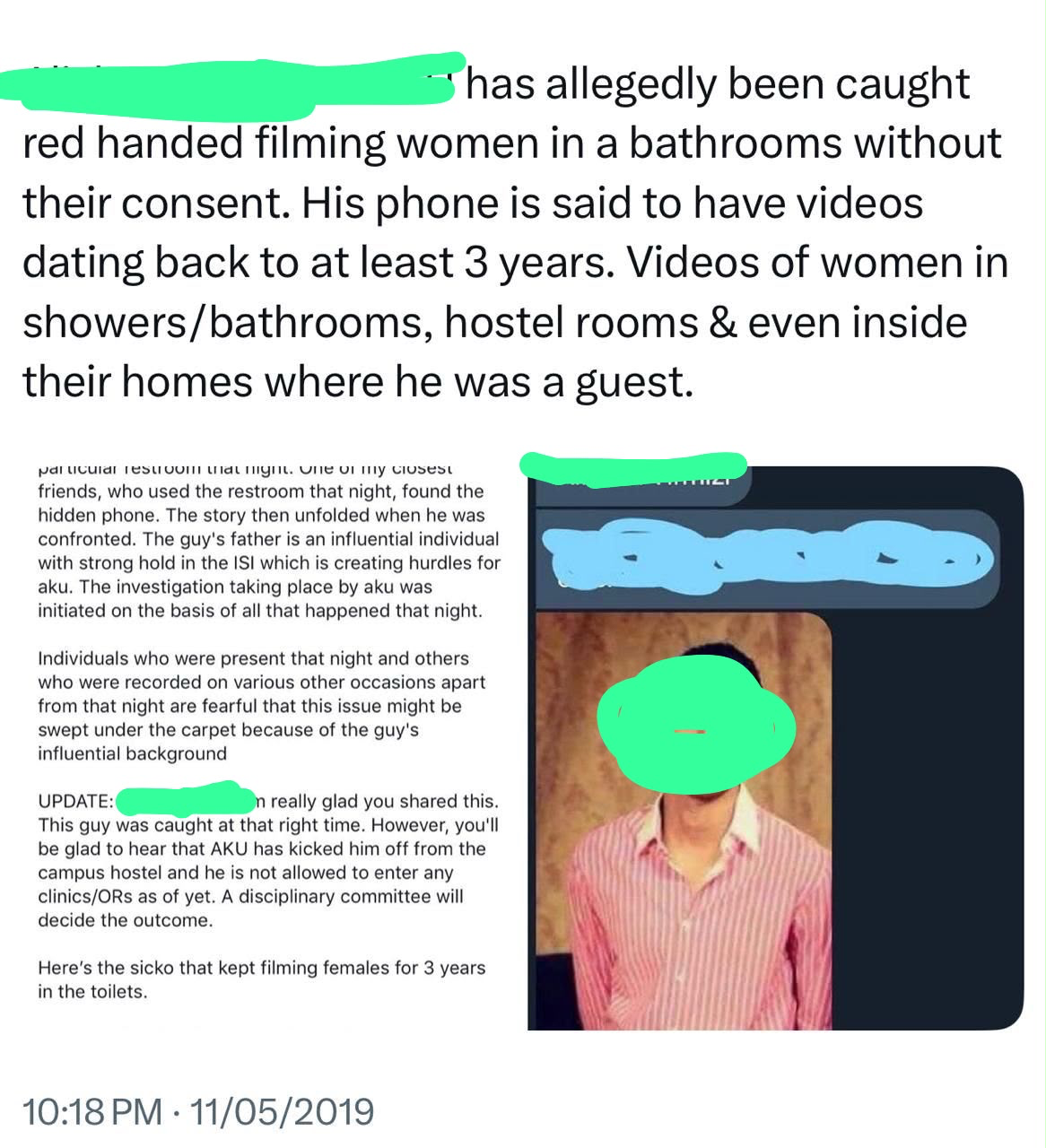
Increasingly, concerns about legal complaints, platform reporting mechanisms, and cybercrime laws are shaping what people choose to post, how they phrase their opinions, and whether they speak at all. Women’s rights advocate Anam Rathore experienced this firsthand when she received an email from X regarding a post she had shared in 2016. The tweet referred to allegations that a man linked to Aga Khan University had secretly filmed women in bathrooms, hostel rooms, and other private spaces without their consent. Rathore said she had shared information that was already being discussed publicly and used the word “allegedly” because the claims had not been proven in court. Her intention, she said, was to warn and protect other women. In 2026, she was informed that the Pakistan Telecommunication Authority (PTA) had raised concerns about the post, “I never imagined that, years later, an authority of my own government would raise my tweet with the platform. That felt much more frightening.”
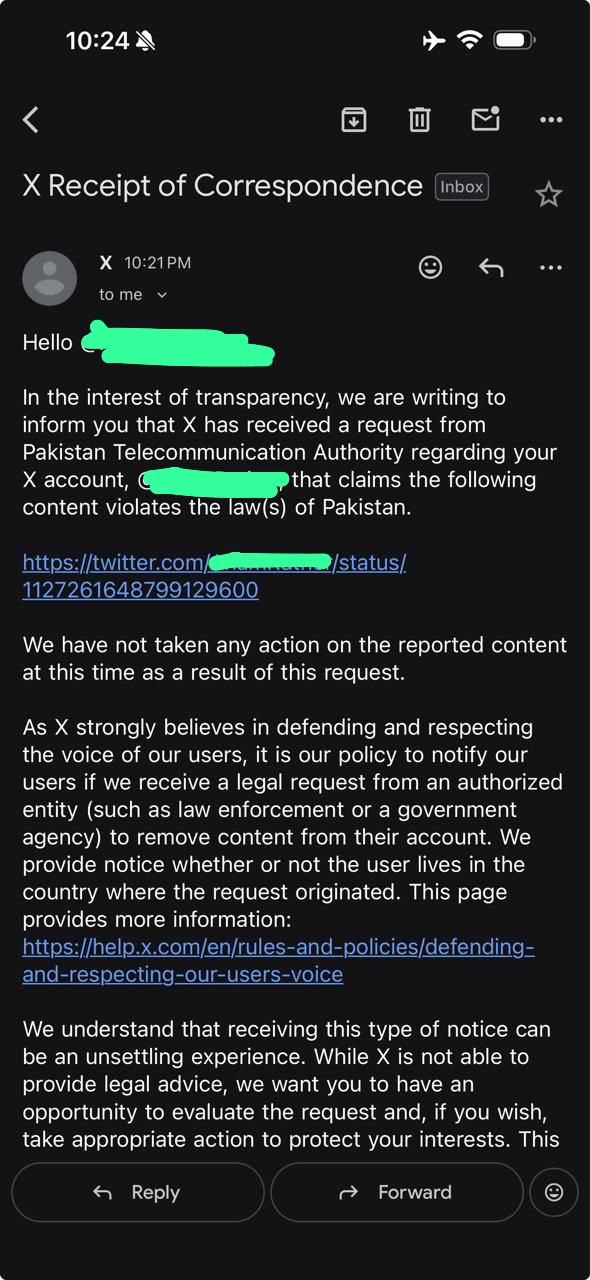
The experience left her questioning what it meant for women who use digital platforms to discuss violence and harassment, “It made me feel unsafe. Women in Pakistan already live with the fear of harassment, abuse and violence at home, at work, in universities, in public places and online. We are always told to be careful and protect ourselves. But when we speak about what is happening to us, the law can make us feel that we are the problem.”
Rathore’s experience also reflects broader concerns about the use of legal mechanisms against women who speak publicly. Recently, lawyer and human rights activist Imaan Mazari, who is currently in jail, faced multiple arrests, investigations, and legal proceedings linked to her public statements and political expression. While the circumstances of her case differ significantly from those of women documenting abuse or harassment online, digital rights advocates argue that such cases contribute to a wider climate of uncertainty. When public speech repeatedly becomes the subject of complaints, investigations, or legal action, the message many women receive is not necessarily about the outcomes of those cases but about the personal, financial, and emotional costs of becoming involved in one.
Farieha Aziz, co-founder of Bolo Bhi, said women are becoming more cautious because they are routinely targeted for their expression, even years later and legal mechanisms are often used in ways that discourage participation rather than protect it, “While the law should not allow retrospective action, whether older content is to shame, report against community guidelines or rules, or to the authorities, we see this is becoming common. The risk is very real, and the way the law is being implemented means it can – and is being – weaponised broadly.”
Pakistan’s Prevention of Electronic Crimes Act (PECA), introduced in 2016 and subsequently expanded, has frequently been criticised by digital rights organisations for creating broad and vaguely defined offences that can be used against journalists, activists, and ordinary citizens. Critics argue that the fear generated by complaints, notices, investigations, and lengthy legal proceedings can be as powerful as actual prosecutions.
Rooshan-e-Alam observed that fear itself often changes behaviour long before any legal action occurs: “Fear does not require a formal legal case to influence behaviour. When individuals fear harassment campaigns, complaints, reputational attacks, professional repercussions, or legal consequences, they often begin monitoring and restricting their own expression. Over time, this can contribute to self-censorship.”
The effects of online backlash often extend beyond the immediate moment. Rooshan-e-Alam noted, “One of the biggest misconceptions is that speaking out ends when someone publishes a post. In reality, that is often where a new challenge begins.” Women who disclose experiences of abuse or discrimination may find themselves repeatedly defending their experiences, responding to strangers, clarifying details, and navigating public scrutiny. This is emotionally exhausting and, in some cases, retraumatizing, “Public audiences sometimes expect survivors to be perfectly consistent, perfectly composed, and perfectly credible at all times. Unfortunately, trauma does not work that way.”
She added that repeated exposure to online hostility can contribute to anxiety, emotional exhaustion, hypervigilance, avoidance behaviours, and a reduced willingness to seek support in the future. Interviewees for this story described weighing every post against potential consequences. Some avoided discussing politics altogether, while others altered how they phrased opinions or abandoned topics they once felt comfortable discussing.
Barrister Abdullah Nizamani, who has represented survivors of online abuse and advised women facing legal notices under PECA, says the fear of legal action often influences behaviour long before any formal case is filed: “Given the current circumstance, I can confidently say that freedom of expression is slowly fading behind the shadow of informal legal action. A simple tweet can turn out to be an invitation to the wrath no one can imagine.”
According to Nizamani, women face vulnerabilities that extend beyond the law itself: “The social stigma and character assassination have been expressed by women as reasons which stop them from calling out the abuse. While discussing abuse, violence, and harassment, women are more concerned about the reaction to their anticipated action and whether their family or society approves of their action.”
For Farieha, this uncertainty has contributed to a broader chilling effect on online expression: ” Post “#MeToo,” many women received call-up notices, and FIRs were also registered for call-outs. Some also had to undergo trials. People are constantly checking themselves on where to post or even react to posts.”
Why Women Continue Speaking
Despite the harassment, family pressure, reputational risks, and growing legal concerns, the women interviewed for this story continue to speak publicly because they know they are not speaking only for themselves. Interviewees said women regularly contact them privately to share stories of abuse, harassment, discrimination, and violence that they do not feel safe discussing under their own names.
For Alivina Talal Chhapra, those messages are a reminder of why these conversations matter, “A lot of girls come to me and say, ‘This is my story, and I want you to share it.’ They cannot share it themselves, but because I speak about these issues, they ask me to do it on their behalf.”
Women repeated the same concern: the absence of trusted systems where experiences of abuse, harassment, and discrimination can be reported without fear of stigma, retaliation, or disbelief. Until those systems exist, many believe women will continue to rely on digital spaces to document what happens to them and to each other.
As Anam reflected, “Women should not have to stay silent to stay safe.”
Social media was never intended to replace institutions, legal systems, or community support structures. Yet for many women in Pakistan, it has increasingly become a place where evidence is preserved, stories are shared, and solidarity is built. As long as women continue to feel unheard elsewhere, they are likely to keep turning to these platforms. The question is whether the costs of speaking will continue to rise, or whether the systems around them will finally begin to listen.