
Regional Engagements and Domestic Initiatives DRF on First UN Global Dialogue on AI Governance On 6 and 7 July 2026, Digital Rights Foundation’s Founder and Executive Director, Nighat Dad, reflected on the first UN Global Dialogue on AI Governance, which brought all 193 UN Member States together to shape the future of AI governance. The …
Regional Engagements and Domestic Initiatives
DRF on First UN Global Dialogue on AI Governance
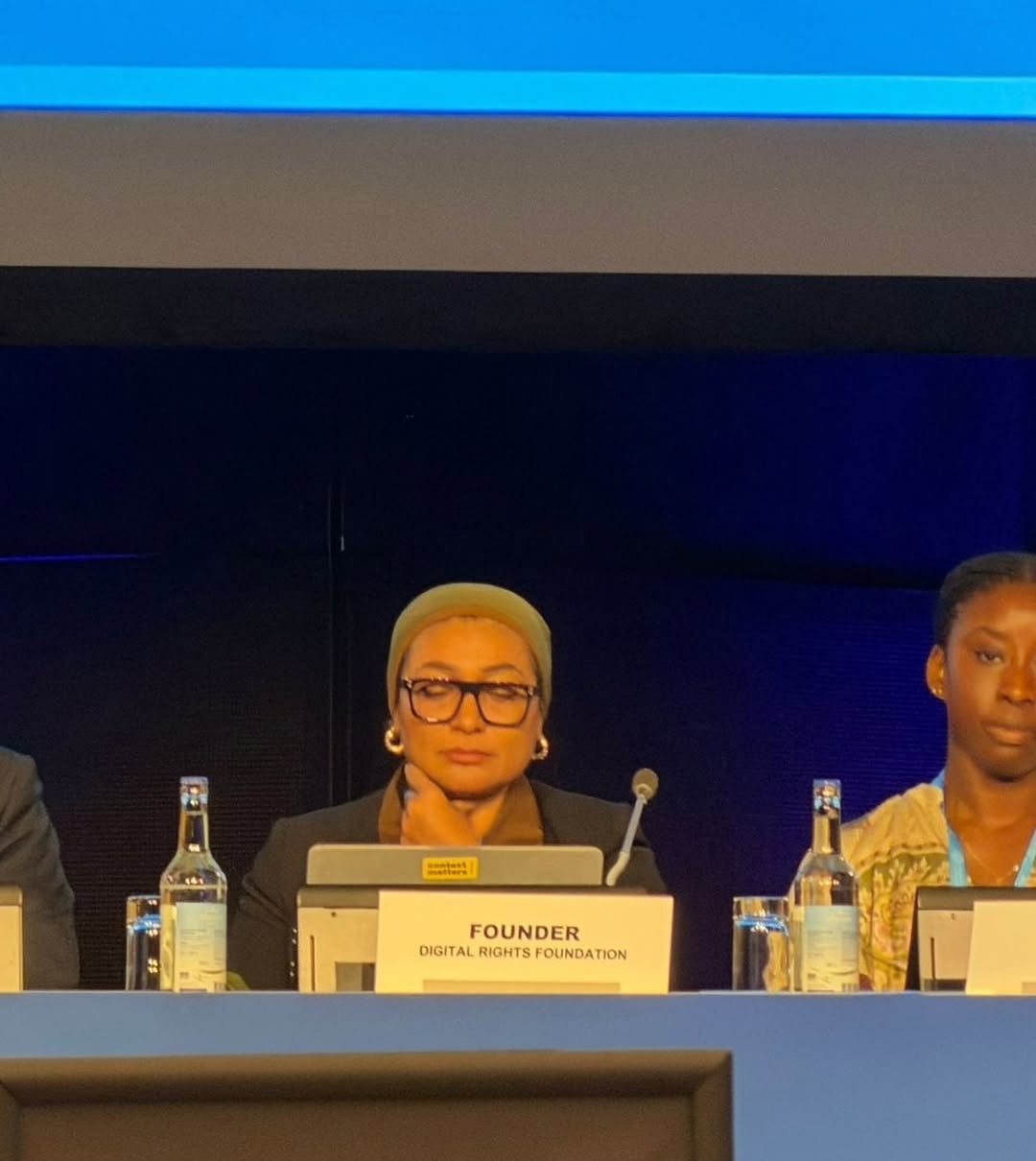
On 6 and 7 July 2026, Digital Rights Foundation’s Founder and Executive Director, Nighat Dad, reflected on the first UN Global Dialogue on AI Governance, which brought all 193 UN Member States together to shape the future of AI governance. The Dialogue was among the recommendations she put forward as UN Secretary-General’s High-Level Advisory Body on AI in Governing AI for Humanity. At the Dialogue, Nighat Dad talked about how, in 2026, the Global South must move beyond serving as AI’s testing ground and demand accountability from the companies shaping its digital futures. She also highlighted the distance between the people who bear the costs of unaccountable AI and the institutions where its rules are written.
Regional Webinar on Comparative Protection and Response Mechanisms Against TFGBV
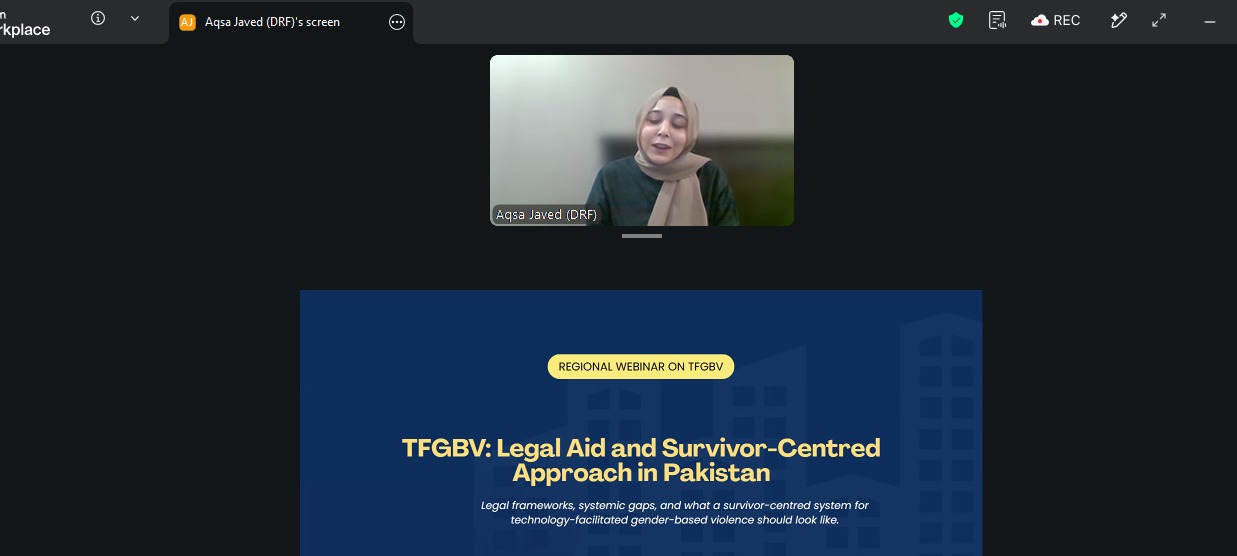
On 14 July 2026, DRF’s Legal Team, represented by the Legal Lead, Aqsa Javed, spoke at a regional webinar organised by Bangladesh Legal Aid and Services Trust (BLAST), the secretariat of the Cyber Support for Women and Children Platform. Bringing together experts from Bangladesh, India, and Pakistan, the webinar examined legal frameworks, platform accountability, implementation challenges, and the need for accessible, survivor-centred remedies.
IFJ–FES Rising Together: Strategies for Gender Equality and Diversity in Pakistan’s Unions
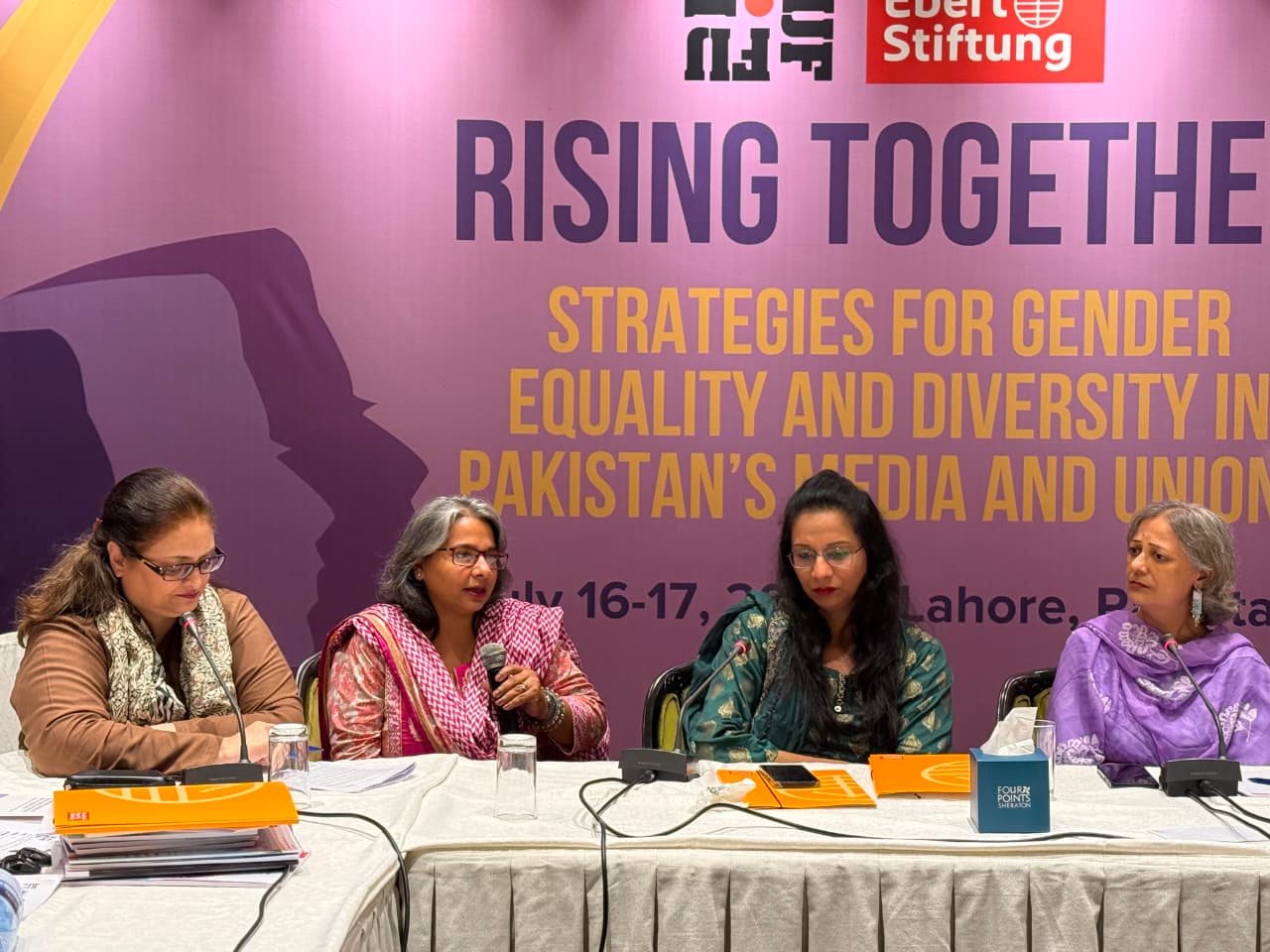
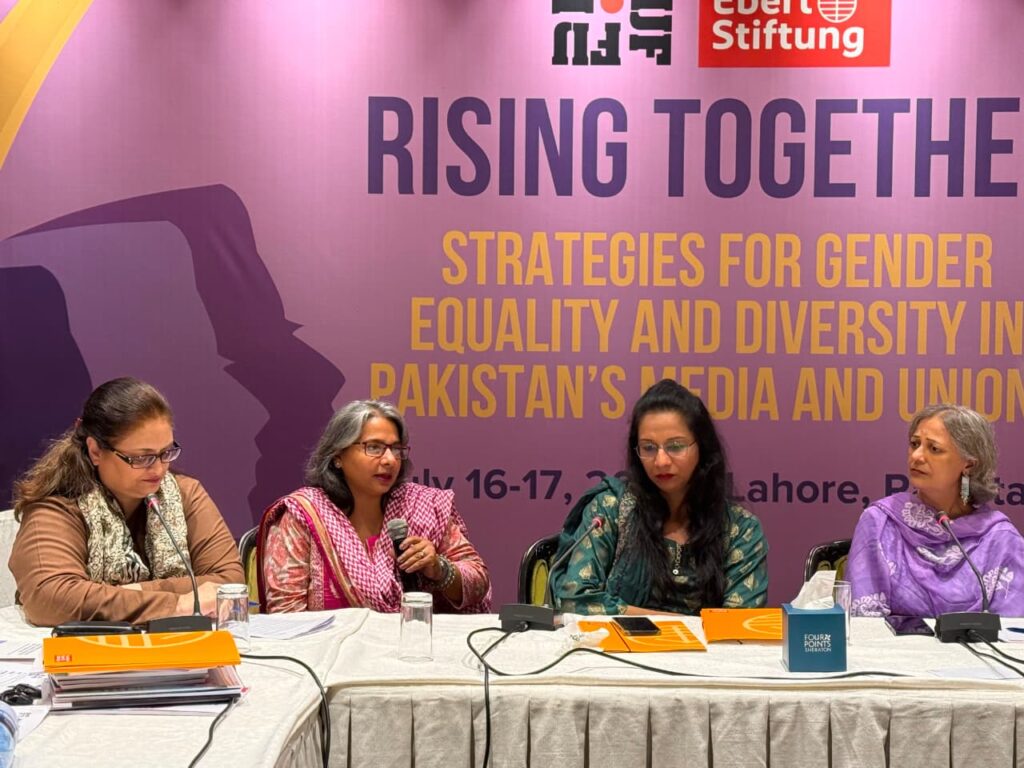
On 16 and 17 July 2026, DRF’s Program Manager, Umaima, attended the International Federation of Journalists and the Friedrich-Ebert-Stiftung Rising Together: Strategies for Gender Equality and Diversity in Pakistan’s Unions. The event brought together women journalists and union representatives from across Pakistan to advance women’s leadership, gender-sensitive union policies, collective bargaining, diversity, and inclusive decision-making. During the event, Umaima also highlighted DRF’s Digital Security Helpline and its support for women facing online harm.
Digital Citizens for Peace: Countering Hate and Disinformation
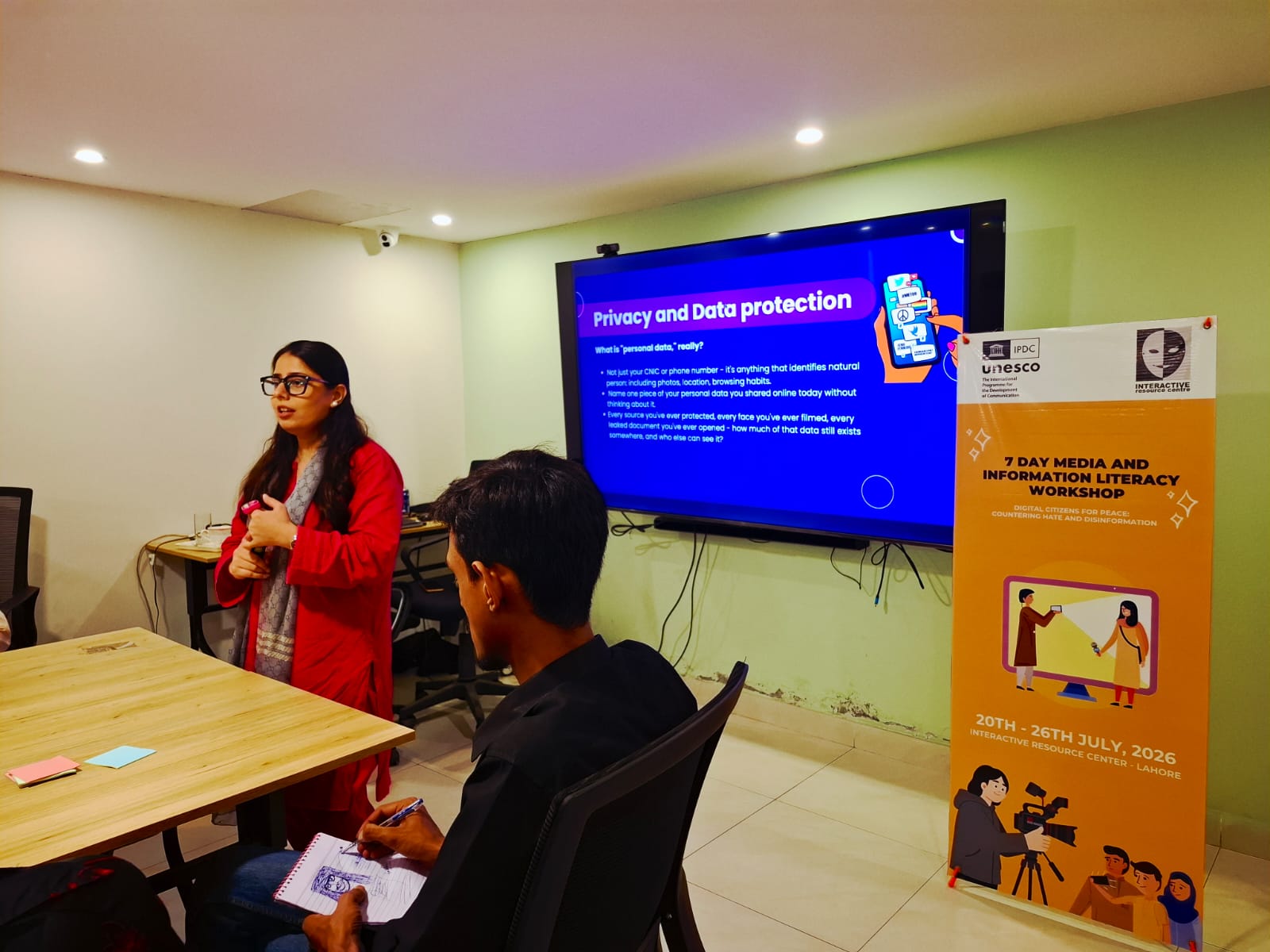
On 22 July 2026, DRF Senior Legal Associate, Minahil Farooq, and Program Manager, Umaima, conducted an interactive session at the Interactive Resource Centre for aspiring journalists, media students, content creators, digital-literacy advocates, and citizen journalists. The session addressed cyberbullying and digital harassment, responsible digital citizenship, technology-facilitated gender-based violence, gender sensitivity, consent and boundaries, misinformation, social-media safety, digital footprints, mental health, and Pakistan’s digital laws, including privacy and data protection.
Research and Advocacy
DRF Recommendations on the Draft National Data Governance Policy 2026
DRF submitted recommendations on the Draft National Data Governance Policy 2026, calling for stronger privacy safeguards, independent oversight, transparent data practices, and clear accountability mechanisms. DRF also urged the government to address regulatory gaps, protect vulnerable communities, and ensure that data governance strengthens constitutional privacy rights rather than exposing citizens to additional risks. Read the full recommendations here.
Press Coverage
NCCIA Sets Up Special Cell in Punjab for Cases Involving Women and Children
“A particularly alarming trend identified in the report is the continued increase in cases involving minors.” Dawn highlighted findings from DRF’s 2025 Digital Security Helpline Annual Report, including the rise in cyber-harassment cases and continuing barriers to justice. Read Dawn’s coverage here.
Pakistan’s Mobile Gender Gap Narrows, but Women Still Rely on Shared Phones
“This is not digital inclusion, it is digital dependence.” Arab News featured DRF Founder and Executive Director Nighat Dad’s analysis of how shared-phone access can limit women’s privacy, autonomy, and ability to seek help online. Read Arab News’ coverage here.
Events
Roundtable on the Proposed Punjab Control of Habitual Offenders and Anti-Social Behaviour Bill
On 9 July 2026, DRF’s Legal Team attended a roundtable in Lahore organised by the Human Rights Commission of Pakistan to examine the proposed Punjab Control of Habitual Offenders and Anti-Social Behaviour Bill 2026. Civil society activists, lawyers, and journalists raised concerns that the bill could weaken human rights protections and discussed collective steps to oppose its passage.
Closed-Door Discussion on the UN Cybercrime Convention
On 14 July 2026, DRF’s Legal Team attended a closed-door discussion organised by the Global Network Initiative and Global Partners Digital on developments concerning the Rules of Procedure for the UN Cybercrime Convention. The discussion covered implementation, negotiations for the Conference of the States Parties, and the possibility of an Additional Protocol to the Convention.
From Data to Reporting: Strengthening Civil Society Engagement with International Human Rights Mechanisms
DRF’s interns and research team attended a training conducted by the United Nations Development Programme under its EU-funded Huqooq-e-Pakistan II programme. The training provided civil society organisations, journalists, and human rights defenders with practical guidance on preparing alternative treaty-body submissions, including reporting formats, procedures, and deadlines.
Tech Trends
Meta Introduces and Withdraws Muse Image and Video

In early July, Meta introduced Muse Image, an AI tool that allowed Meta AI users in the United States to tag public Instagram accounts and generate images based on their likeness or content. Available across platforms such as Instagram and WhatsApp for the US users, the tool raised concerns amongst various civil society groups and digital rights experts who pointed out that this feature raises multiple privacy and consent concerns. Meta subsequently withdrew the feature, stating that it had taken the feedback into consideration. The episode highlights the need for meaningful consent and accountability in AI product development.
Tip of the Month
AI Safety Checklist: Don’t Get Tricked!
- Keep Secrets Secret: Treat AI chatbots like complete strangers on a bus—never feed them your passwords, bank details, or personal ID numbers, because once it’s typed, it’s out there forever.
- Pause Before You Pay: Got a frantic call from a loved one begging for emergency cash? Always hang up and dial their real number directly, because AI can clone anyone’s voice in just three seconds to trick you.
- Don’t Bite the Bait: Scammers now use AI to write flawless, super-convincing emails with zero spelling mistakes. If an unexpected message asks you to click a link or reset a password, pause and double-check the sender first.
- See It? Doubt It: AI can effortlessly create hyper-realistic fake photos and mind-blowing videos of people or wild news events. If something looks totally unbelievable or shocking, verify it on trusted news sites before hitting that share button.
DRF Resources:
Digital Security Helpline
The Digital Security Helpline received 419 complaints in July 2026, of which 362 were related to cyber harassment.
If you’re encountering a problem online, you can reach out to our helpline at 0800-39393, email us at helpdesk@digitalrightsfoundation.pk or reach out to us on our social media accounts. We’re available for assistance from 9 AM to 5 PM, Monday to Friday.
Legal Support
DRF’s Legal team processed six (6) complaints in July 2026, all involving women, primarily related to blackmail, sextortion and non-consensual sharing of intimate content.
If you’re in need of any legal support or advice, you can reach out to DRF’s Ab Aur Nahin portal.
IWF Portal
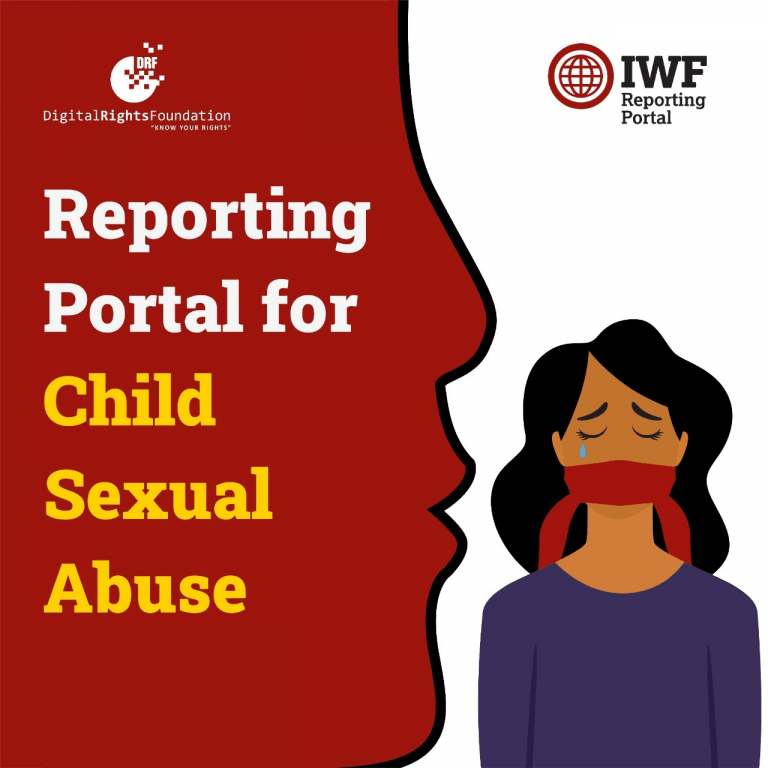
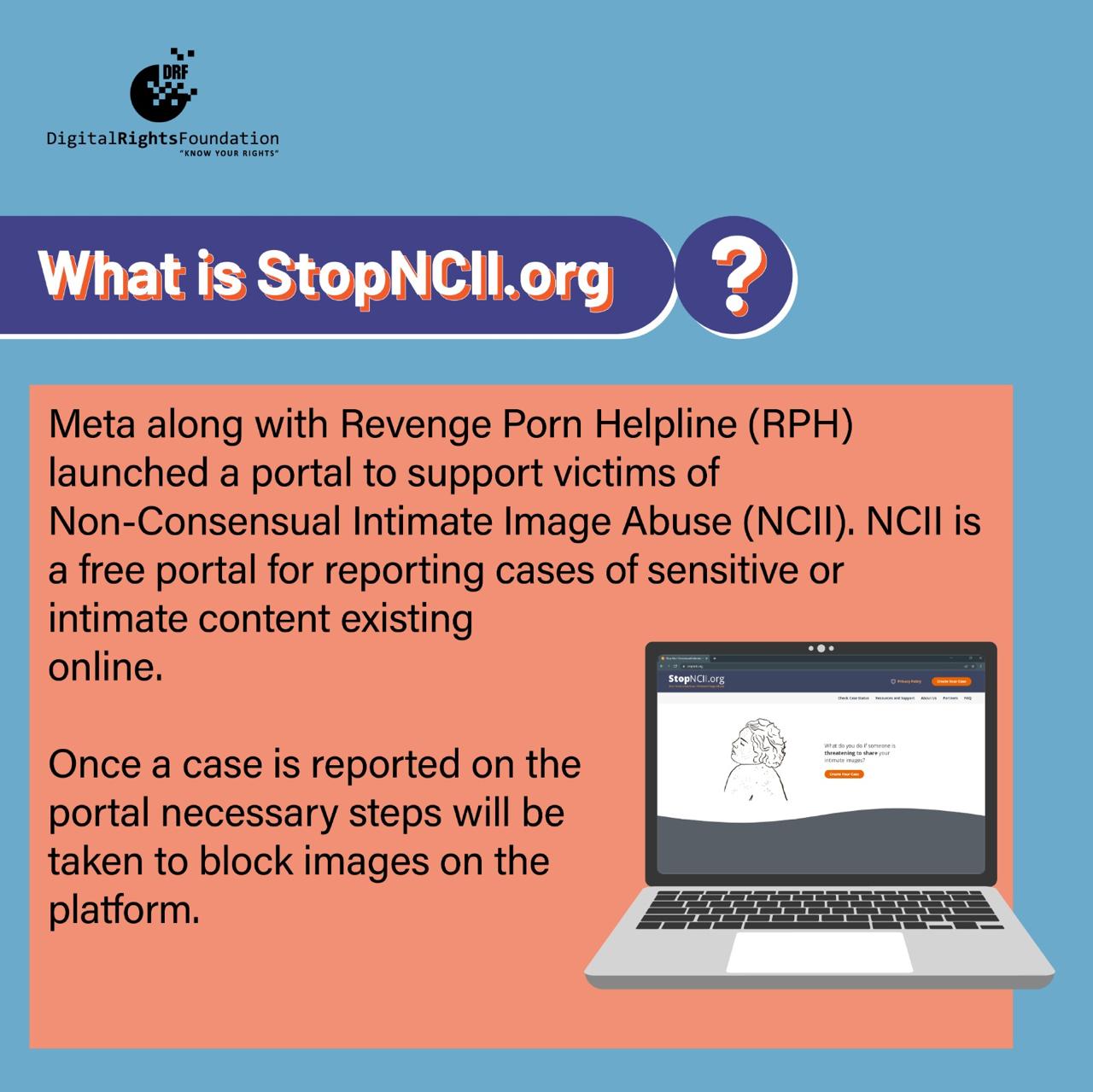
StopNCII.org