

By Mehak Mustafa Bajwa We live in communities where stories do not disappear because nobody witnessed them. They disappear because entire systems of belonging, survival, and silence just someday, somewhere quietly decide what can be spoken before a journalist ever arrives. Years ago, I witnessed a domestic violence case disappear in real time in …

By Mehak Mustafa Bajwa
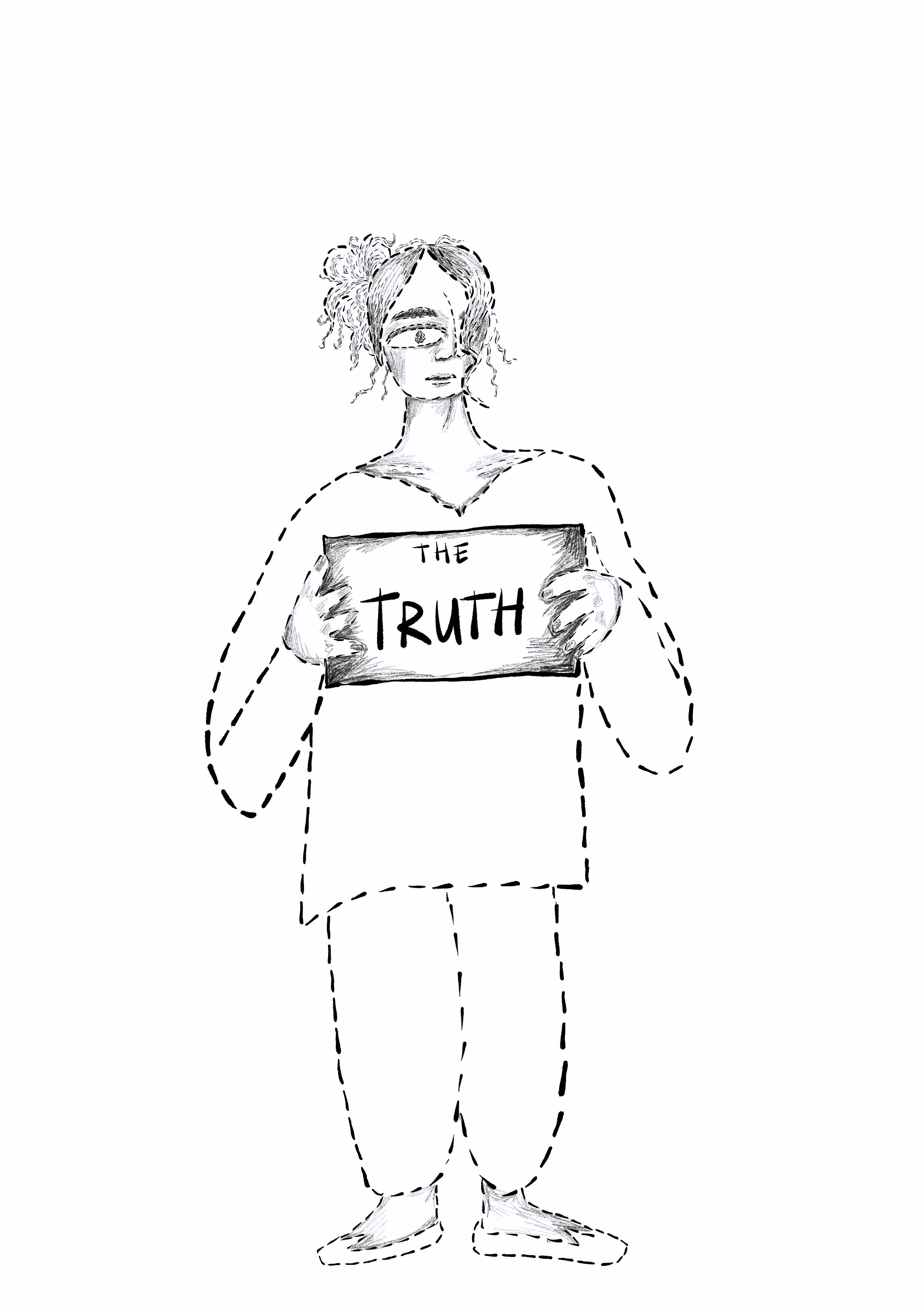
We live in communities where stories do not disappear because nobody witnessed them. They disappear because entire systems of belonging, survival, and silence just someday, somewhere quietly decide what can be spoken before a journalist ever arrives.
Years ago, I witnessed a domestic violence case disappear in real time in front of my eyes. She had her arm fractured by her husband after years of abuse. Although her father was a respected lawyer, but still the incident never became a complaint, a case or even a conversation beyond a few homes. What survived was not a record, but a memory. That memory has stayed with me because it revealed how stories disappear long before anyone has a chance to report them.
I’ve lived my 21 years around many such disappearances.
When people think about stories that never make the news, they often imagine it as secrets. Hidden crimes. Closed rooms. Things that happen in darkness only.
What I am talking about is something else actually.
The stories I grew up around were rarely secrets. They were discussed over tea. They travelled through whispers. They sat in village gatherings. They moved from one courtyard to another. Everybody seemed to know enough to have an opinion on. Every one of them knows a woman who was beaten. A family dispute had turned violent. A young couple had run away. Someone had been killed. Somebody’s land had been taken unjustly. The details changed but the patterns never did.
Yet somehow, years later, there would be nothing left. No complaints. No public memory. No record. No story.
When we discuss threats to journalism, we usually imagine a reporter whose work is censored, blocked, attacked or removed. Those threats are real. But there is another challenge that receives far less attention. What happens when a journalist never encounters the story in the first place? What happens when witnesses have already been persuaded to remain silent? When families have already decided not to pursue a complaint? When victims have already been taught that speaking will only make their lives harder? What happens when an entire community has spent months negotiating a story into silence before a reporter even hears a rumor of it?
I sometimes think villages contain entire archives that have never been written down, made of conversations, warnings, compromises, favors, loyalties, fears and things that everyone remembers but chooses not to repeat.
As a child born in a family of the Chaudhrys of the area, I watched people arrive at our house carrying problems that seemed too large for them to carry alone. Some came looking for advice. Some came looking for influence. Others came looking for protection. Others still came looking for a way out. And almost all of them came carrying a story.
But what actually happens? Such discussions rarely began with what had happened. They begin with a very different question. Can this be managed? Can this be settled? Can this be contained? Can this be kept within the village or perhaps just within the family? Long before anyone speaks about courts, police stations, journalists, or legal rights, discussions are made about something else – the future of the story itself. Most of such disappearances are not dramatic. Nobody gathers in a room and decides that the truth must die. Nobody announces that a story will be buried. It is usually very much quieter than that.
It begins with concern.
When a woman first arrives at her parents’ home with bruises on her body. The very initial conversations are about her injuries. Then they become conversations about her future. Will she go back? Will the marriage survive? What will people say? What will happen to the children? How can the matter be resolved?
Now notice the pattern here.
Violence remains in the room, but it is no longer at the center of the discussion. The story very quietly begins to move away from what happened and toward what should happen next. This is the shift that actually makes all the difference. Because once a story becomes a problem to be managed rather than a truth to be told, priorities change.
Now, Reputation enters. Relationships enter. Influence enters. The possibility of public embarrassment enters. And very gradually, the question changes. Now the question at hand is certainly not what had happened but now it shifts to what do we do with what happened?
The facts are rarely denied. The bruises exist. The witnesses exist. The suffering exists. Yet the conversation moves around them as if everyone has silently agreed that the truth is no longer the most important thing in the room. No matter which crime, a similar transformation happens every time.
For instance, years ago, two young men in my own neighbourhood got into a fight. One pulled a gun. A shot was fired and a life ended. Months later, another life was taken in retaliation. Everybody knew why. The killings were discussed openly. Names were circulated. Explanations were made. Rumors travelled. And yet over time, the events dissolved into settlement, negotiation and memory. What remained was not justice but an agreement that life had to continue.
One of the strangest things about the communities we grew up around is that people often assume silence comes from ignorance. But my experience has been quite the opposite of that. Silence comes from knowledge. People know exactly what happened. But they also know the consequences of speaking about it. The choice is rarely between truth and lies. More often, it is between truth and belonging. Between truth and survival. Between truth and the possibility of returning to the same streets, the same fields, the same family gatherings the next day. That is exactly why so many stories disappear long before a journalist has the chance to find them.
By the time somebody from the outside arrives looking for facts, the facts have already been negotiated into something safer. Witnesses become reluctant. Families become cautious. Victims become tired. And entire communities learn to speak about an event without ever fully telling it.
To see whether this experience extended beyond my own observations, I posted an anonymous call on Instagram asking people if they had ever witnessed a story disappear before it reached any formal record. The responses below are drawn from those submissions and have been anonymised to protect identities.
One told me about a journey she took as a child in a local vehicle. There, a young woman sitting near the driver was repeatedly being harassed by him. She tried to move away, but he continued. Eventually, she raised her voice. For a brief moment, the story existed. It had a victim. It had witnesses. It had words. Then something remarkable happened. The driver dismissed her complaint. Others intervened. Not to confront him, or support her, but to restore peace. She was told not to make an issue of it, there would be a scene that might not have been handled. Subsequently, she was moved to another seat. The journey continued. Years later, one of them who shared the memory with me remembered one detail more clearly than anything else.
“Everyone saw. Nobody said anything.”
And I keep returning to that sentence. Because it captures something, statistics cannot. Stories do not always disappear because powerful people suppress them. Sometimes they disappear because ordinary people decide silence is easier than disruption. A confrontation is avoided. An argument is prevented. The day moves on. And somewhere in the process, a story is abandoned. The driver kept his job. Passengers reached their destination. The woman carried her humiliation home. And the story disappeared before it had travelled further than a few rows of seats.
Another response was about a girl who was repeatedly harassed by her male cousin in their joint house. When the girl’s mother found out, she did not report it. She did not confront the wider family. Instead, she beat her daughter and instructed her never to tell anyone. In that exact moment, the girl learned that the possibility of speaking is more frightening than the memory itself. We often imagine stories disappearing through force. We imagine threats, violence, and power. But sometimes it’s done by making a child learn that being silent is a much safer option. A mother learns that surviving matters more than justice. A family learns that reputation is easier to protect than truth. And eventually silence no longer feels imposed. It feels normal.
Stories disappear when people stop imagining speech as a possibility at all. The more I think about it, the more I realize that many of the stories I grew up around did not disappear because there were no witnesses. They disappeared despite the witnesses. Entire communities carried detailed knowledge of what had happened – who had been beaten, threatened, dispossessed, or wronged. Information circulated widely everywhere nearby, yet still very little of it ever entered an actual formal record.
This is where the actual distinction lies.
We often talk about information as though it either exists or does not exist. The reality is far messier. Here, information exists and that too, in abundance. What does not exist is a safe pathway for that information to travel. Information travels constantly through whispers, family gatherings, late-night conversations, and village meetings. It circulates among those who already know the story but rarely reaches institutions capable of documenting it. What it only does is it keeps returning repeatedly to the people who already know it. What it rarely does is escape. And that is where the disappearance of stories intersects with press freedom.
The absence of information looks exactly like the absence of injustice. And the absence of documentation often creates the illusion that injustice is absent as well. Villages seem peaceful, families appear stable, and conflicts look resolved because the story disappeared before it could leave a trace.
This is why I find the phrase “nothing to report”.
Sometimes there is nothing to report not because nothing happened but because everything happened.
What needs to be understood is that such disappearance carries consequences. Not only for victims or such communities. But for how a society understands itself. Every story that disappears takes something with it. A lesson. A warning. A pattern. A truth. A possibility for accountability. When enough stories disappear, entire realities disappear with them. And once that happens, silence begins to resemble normality. Things that should shock us become ordinary. Things that should be documented become private matters. Things that should be remembered become whispers. Things that should become stories of deterrence for preparators become nothing at all.
Normally, there is a tendency to think of archives as physical things. Files stacked in cabinets. Court records. Newspaper clippings. Databases. Photographs. Documents preserved against the erosion of time. But the archive I grew up around looked different. It existed in people’s memories. It sat in conversations. It appeared in unfinished sentences. In lowered voices. In the way people looked at one another when a certain name was mentioned.
Here, an archive that only survives as long as the people carrying it remain alive. I often wonder how many experiences survive only in memory, the women who returned to abusive homes, children carrying experiences they were never allowed to name, acts of violence that became family matters, crimes that became disputes, and rumours that remain the only surviving evidence that something happened there at all.
The disappearance of stories is often mistaken for the disappearance of events. Events happen. Lives are altered. Damage is done. Fear is felt. What disappears is the path between experience and public memory. The path that allows a private reality to become a shared truth. The path that transforms suffering into documentation, documentation into accountability and accountability into change. When that path breaks, stories do not simply remain untold. They become difficult to imagine altogether. Future generations inherit silence instead of knowledge. Communities inherit myths instead of records. Researchers inherit gaps. Journalists inherit absences. And victims inherit the burden of remembering what everyone else has agreed to move beyond.
The disappearance of stories should concern us. Not every story must become a headline. Not every conflict should belong to the courtroom. Not every whisper should become public. But stories that survive help define what a community believes is normal, acceptable, tragic or unjust. Stories that disappear shape beliefs too. Only they do so invisibly. Every silenced account leaves behind a distorted picture of reality. A village that appears more peaceful than it is. A family that appears more stable than it is. A community that appears more just than it is. An absence mistaken for harmony. A silence mistaken for consent. A disappearance mistaken for resolution.
And perhaps that is why the question of press freedom begins much earlier than we often think. It begins long before publication. It begins with whether a person feels safe enough to speak, whether a witness believes they will be heard and whether a community allows uncomfortable truths to remain visible rather than negotiating them into silence. Whether a victim can be believed. Whether a witness can remain a witness. Whether a family can tolerate discomfort. Whether a community can bear the consequences of honesty.
Before there is reporting, there is telling. Before there is telling, there is permission. And before there is permission, there is fear.
The stories I grew up around taught me that silence is rarely accidental. It is sustained through fear, loyalty, obligation, exhaustion and the belief that protecting relationships matters more than exposing uncomfortable truths. People often believe they are preserving a family, a reputation or a fragile peace. Yet that protection comes at a cost, and the cost is frequently paid by the story itself.
Years from now, many of the incidents I remember may survive only as fragments. Their details will fade. Names will be forgotten. Witnesses will disappear. Memories will blur. What will remain is a feeling that something happened here. Something that never quite became part of the record. That is the tragedy of disappearing stories. Not that nobody knew. But everybody did. And somehow, that still wasn’t enough.