

By Syeda Noor Fatima In Pakistan’s rural and underserved communities, access to information is increasingly shaped by content on digital platforms rather than traditional journalism. While radio and television once played an important role in shaping public understanding, social media platforms such as TikTok, Facebook, and WhatsApp have become major sources of news and everyday …

By Syeda Noor Fatima
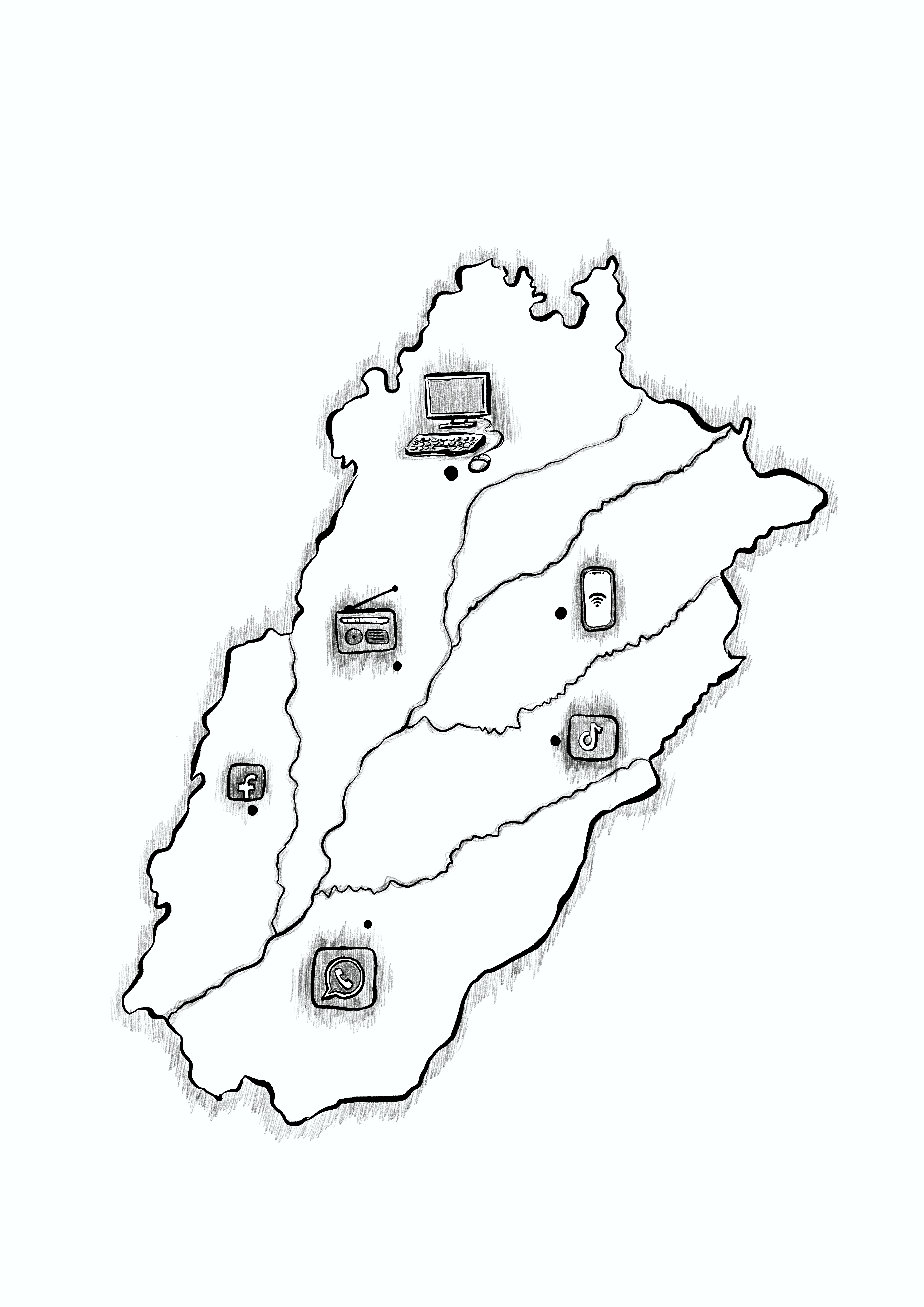
In Pakistan’s rural and underserved communities, access to information is increasingly shaped by content on digital platforms rather than traditional journalism. While radio and television once played an important role in shaping public understanding, social media platforms such as TikTok, Facebook, and WhatsApp have become major sources of news and everyday information. This shift has raised important digital rights concerns, including unequal access to information, misinformation, and algorithm-driven visibility that often replaces editorial judgment.
These changes are also reshaping press freedom in rural Pakistan. The ability of journalists to report, distribute, and gain visibility for their work is increasingly influenced by platform algorithms, digital infrastructure, and unequal access to technology. As a result, both journalists and audiences face unique challenges that affect how information is produced, consumed, and trusted.
UNEQUAL ACCESS TO INFORMATION AND TECHNOLOGY
Digital participation in rural Pakistan is shaped by unequal access to devices and internet connectivity, particularly for women. According to digital rights expert Zainab Durrani, access to digital devices within households is often gendered, with boys receiving smartphones and internet access earlier than girls.
Women’s access is frequently shared, restricted, or controlled by male family members. These patterns are reflected in the experiences of rural women. Eman Zaher Shah, a 25-year-old journalist from Shaidu in Nowshera District, Khyber Pakhtunkhwa, has noticed that men in her village generally have greater control over smartphones.
Similarly, climate activist Khanzadi from Sindh explained that very few women in her community own personal mobile phones and often receive information indirectly through husbands or male relatives.
National data reflects these inequalities. According to a report by Geo News, 52 percent of women in Pakistan own a mobile phone, compared to 81 percent of men.
A Dawn report, based on GSMA data, stated that 45 percent of women have access to the internet. This, however, is further exacerbated in rural areas, where only 26 percent of women and 49 percent of men have access to mobile internet, compared to 45 percent of urban women and 60 percent of urban men.
This difference is not only about ownership but also about autonomy. When women do not have independent access to mobile phones or the internet, their ability to access information, express opinions, participate in public discussions, and engage in journalism becomes restricted. In rural areas, where resources are already limited, these barriers can make women largely invisible in digital spaces, as added by Durrani.
MISINFORMATION AND VERIFICATION CHALLENGES
In rural communities, where access to a reliable verification source is often limited, false information can spread rapidly.
Eman Zaher Shah recalled a viral AI-generated video that appeared to show a cat in a graveyard reciting the name of Allah. Many older residents interpreted the video as a religious sign, viewing it as a sign of Qayamat, and believed it to be authentic until younger users explained that it had been artificially generated.
Khanzadi described similar challenges in Sindh, where false weather alerts and climate-related rumours frequently circulate through Facebook and WhatsApp groups. Although information now travels faster than ever before, she noted that it is often difficult for community members to verify whether claims are accurate or not.
Digital rights expert Yasal Munim from Media Matters for Democracy (MMfD) noted that while rural communities may face distinct challenges in areas such as digital scams, financial fraud, or targeted exploitation, lower digital familiarity or limited access to digital education can create additional vulnerabilities. But when it comes to misinformation more broadly, susceptibility is universal. We have seen devastating real-world consequences of misinformation.
In the Karbi Anglong lynching Incident, two men were killed after villagers falsely believed WhatsApp rumours claiming child abductors were operating in the area in 2018.
Similarly, in Pakistan, the case of Mashal Khan Lynching demonstrates how false accusations of blasphemy, amplified through public outrage and misinformation, can lead to lethal consequences without accountability, Munim added.
These observations align with the experiences of a fact-checking journalist from Geo News, Saman Ayub, who explained that misinformation often spreads much faster than corrections. AI-generated videos and misleading thumbnails on social media are increasing the risk of manipulation, making it harder for users to identify authentic content.
She further highlights that political misinformation often begins on X (formerly Twitter) and then spreads to Facebook, while health-related misinformation often originates on Facebook in Pakistan. Saman also pointed out that misinformation increases when official communication is weak or delayed. In the absence of transparent information from authorities, speculation fills the gap.
In a 2025 study, Characterizing AI-Generated Misinformation on Social Media, researchers analyzed more than 91,000 misleading posts identified through X’s Community Notes system and found that AI-generated misinformation exhibited higher virality and engagement than non-AI-generated misleading content within the dataset.
Fact-checking requires evidence, documentation, and expert verification, while false claims can reach thousands of users within minutes. By the time a correction is published, misleading information has often already shaped public perceptions.
She further argued that mainstream media should integrate fact-checking content into regular programming, rather than treating it as a separate or occasional initiative, as television remains a key information source in rural areas. In her view, embedding verification practices within everyday news production could help build audience trust and reduce the speed at which misinformation spreads, particularly in environments where digital literacy is low.
Algorithmic Control and Information Inequality
The challenges facing rural audiences are closely connected to the systems that determine what information becomes visible online.
As Zainab Durrani explains, when algorithmic trends replace editorial judgment, it shifts power away from journalism and toward automated systems that are not accountable to the public. According to her, algorithms are designed for efficiency and automation, but they often reproduce bias and reduce space for human judgment. She notes that public interest journalism should prioritize social value, not engagement metrics such as likes, shares, or trends.
When algorithms decide visibility, it can create echo chambers where people repeatedly see similar content, limiting exposure to diverse or local perspectives. In rural contexts, this means that important local issues often remain invisible unless they go viral. This also creates a form of information inequality, where people who understand digital systems and trends have more influence over what gets seen, while marginalized communities struggle to make their voices visible.
When algorithms determine visibility, deciding what is seen, what is ignored, and what goes viral, they also create echo chambers that shape public perception. However, this influence is not limited to information flow alone; it is also reshaping the economic foundations of journalism.
Shifting Journalism Economies
Digital media outlets depend on social media platforms for the distribution and spread of their content. As a result, most of the ad revenue generated from social media sites goes directly to Facebook and Google, leaving minimal space for the direct monetisation of content and creating complete dependence on platform-based monetization, as added by Munim.
These are the findings of a 2022 research study conducted by MMfD on the State of Media Economy. The overreliance on platform monetisation may seem favourable at the start, but it might work against media outlets in the long term. Moreover, there is a lack of transparency in the way platform monetisation works. This includes how ad-tech works, platform algorithms, and the implementation of community standards.
Research also suggests that platform-driven monetisation systems can indirectly reward misinformation. A 2018 study by MIT researchers found that false news spreads significantly farther, faster, and more broadly online than factual information. In digital environments where visibility and revenue are often linked to engagement metrics such as clicks, shares, and watch time, sensational or emotionally charged content can attract greater attention than verified reporting.
For rural journalism in particular, this economic structure has direct implications for sustainability and visibility, as local reporting often lacks the commercial scale required to attract stable funding. Reporting on local governance, agriculture, education, climate impacts, or community concerns may struggle to compete with content designed primarily to maximise engagement. As a result, public-interest journalism serving rural communities can face both reduced visibility and financial instability within platform-driven media systems.
Overall, while content distribution has increasingly moved to social media platforms, sustainable business models for journalism have not fully adapted, leaving many organisations dependent on unstable and externally controlled revenue systems.
Engagement-Driven Digital Journalism in Rural Media
These dynamics also affect journalists. Saba Chaudhary, a journalist from a rural area who writes for both national and international outlets, is also concerned about the growing influence of engagement-driven reporting. In her observation, many local digital platforms are operated by individuals running YouTube channels, Facebook pages, TikTok accounts, or small media organizations. Their success is often measured by views, shares, and audience engagement rather than by the quality or accuracy of their reporting. This creates incentives for sensational content that attracts attention quickly, even when information has not been properly verified.
This shift does not only influences what type of content is produced, but also how journalism itself is structured in digital environments.
Visibility Without Accountability
For many rural communities in Pakistan, digital platforms have transformed how information circulates and how journalism is experienced. According to Chaudhary, smartphones and social media have enabled community members to document and share local issues that previously received little attention from mainstream media. However, she cautions against equating visibility with accountability. While online attention can generate immediate public reaction, it does not always lead to sustained follow-up or institutional action. As public attention shifts, many issues disappear from online discourse without resolution.
This reflects a broader shift in the information ecosystem, where visibility is increasingly shaped by speed and engagement rather than sustained verification or long-term scrutiny. These dynamics also influence how journalism itself is produced and valued in digital spaces.
Barriers Faced by Rural Journalists
For journalists working in rural areas, these challenges intersect with broader concerns about press freedom. Chaudhary believes that digital expansion has strengthened the ability to share information quickly, but it has not necessarily strengthened press freedom itself. Rural journalists continue to face obstacles when investigating sensitive issues, including limited access to information, weak institutional support, and pressure from influential local actors.
Journalists who attempt to report on politically or socially sensitive issues may face intimidation, threats, or other forms of pressure. These conditions can encourage self-censorship and make independent reporting more difficult.
Chaudhary also highlighted the persistent underrepresentation of rural women in both local and international media coverage. While rural areas are often covered through stories about accidents, crime, or infrastructure problems, reporting rarely captures the everyday realities and lived experiences of women.
Even when women-related issues are reported, they are frequently treated as secondary stories rather than central concerns. International media, meanwhile, often focuses on urban centers or high-profile cases, leaving many of the systemic challenges facing rural women largely invisible.
Toward a Digital Rights Framework
The shift from traditional media to digital platforms has expanded access to information in rural Pakistan, but it has also introduced new challenges related to unequal access, misinformation, and platform-driven visibility. Across the interviews, a clear pattern emerges: digital technologies have created new opportunities for participation while also reinforcing existing inequalities. A rights-based approach is therefore essential.
For Chaudhary, the future of rural journalism depends not only on expanding digital access but also on strengthening professional reporting practices, accountability mechanisms, and opportunities for meaningful representation. Munim added that strengthening press freedom in rural and marginalised communities requires both legal and technological reforms, including protections for freedom of expression, affordable internet access, digital literacy programmes, greater algorithmic transparency, and stronger content moderation in local languages.
These reforms are particularly important for rural communities because they address the structural barriers that limit both access to information and the ability of journalists to report independently. Improving connectivity and digital literacy can help audiences access and verify information more effectively, while greater transparency and stronger protections for journalists can support the production, visibility, and sustainability of reliable public-interest reporting in underserved areas.